
English
A petrochemical plant expansion in Taiwan called for four metal tube rotameters split across two duties. Two DN25 and DN20 (1 inch and 3/4 inch) units needed 316 stainless steel bodies with PTFE lining, 4-20 mA HART output, and NEMA 4X or IP65 enclosures for ultrapure water at 0-250 kg/h and nitrogen gas at 0-50 Nm3/h. A fourth line only needed local indication, so the spec called for a clear PVC tube rotameter at 0-7 Nm3/h. Silver Automation Instruments builds both configurations on the same HH50 metal tube rotameter platform, with accuracy of ±0.5% of span across the range.
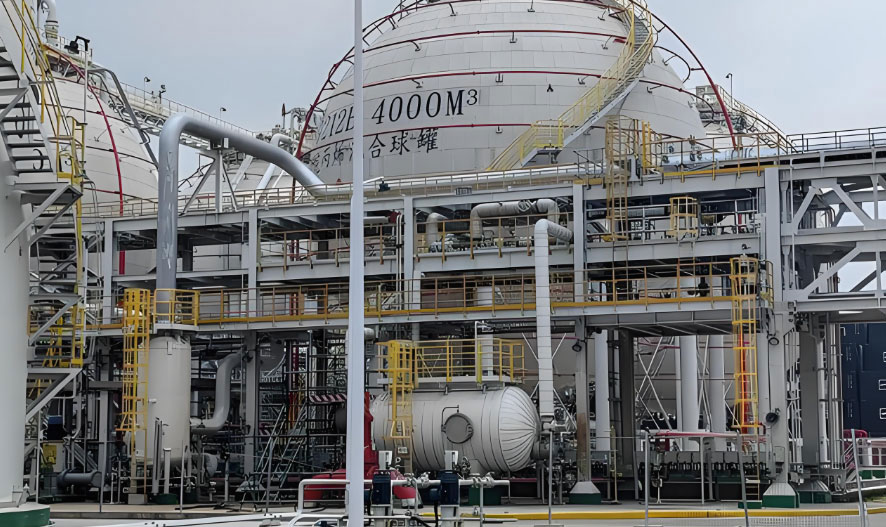
This case comes from an actual instrumentation procurement package for a plant expansion at a petrochemical facility in Taiwan. The project called for four rotameters on four separate tags. Two carried ultrapure water and nitrogen gas duty with full transmitter output. The other two were nitrogen services, one requiring HART output for DCS integration and one needing nothing more than a local scale.
That mix is common on brownfield expansions. Utility lines rarely get the same instrumentation budget as process lines. An engineer sizing four rotameters for one project often ends up specifying two or three different build levels, not one standard unit repeated four times.
We have seen this pattern many times with petrochemical and chemical fiber plants across Taiwan and Southeast Asia. A new production train needs tight monitoring with 4-20 mA HART for DCS trending. Meanwhile a purge or vent line, one an operator only checks by walking past it, gets a cheaper local-read unit with no electronics at all.
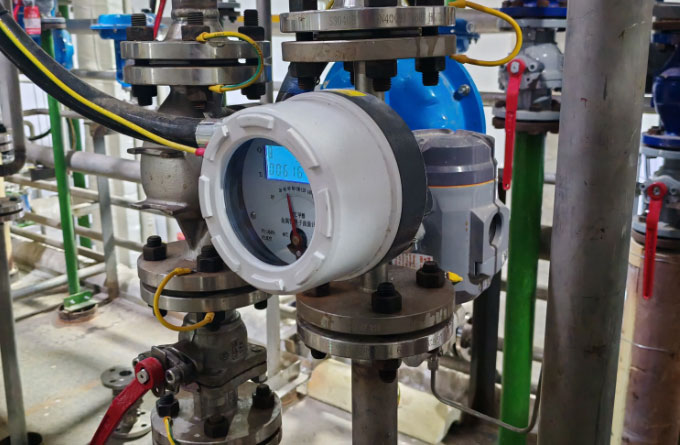
The first tag called for a 1 inch (DN25) metal tube rotameter on an ultrapure water (UPW) line, in-line mounted, vertical flow, bottom to top. Body and float were specified as 316 stainless steel with PTFE lining, connected by a 1 inch 150# RF flange. Because UPW picks up contamination easily, a tube material that will not shed particles or leach ions into the stream matters more here than in a typical process water application.
Normal flow was set at 150 kg/h, with a maximum of 250 kg/h. In volumetric terms, at a specific gravity of 1000 kg/m3, that works out to roughly 0.15 to 0.25 m3/h, or about 0.66 to 1.1 GPM. This is a small line by petrochemical standards, and it is exactly the kind of duty a metal tube rotameter handles well, since glass tube units are not rated for the working pressure specified here.
Working pressure ran up to 5 kg/cm2G (about 4.9 bar, or 71 psi) with a normal condition of 3 kg/cm2G (43 psi), and temperature topped out at 60°C (140°F). The spec allowed 0.5 kg/cm2G (0.49 bar, 7.1 psi) of pressure drop across the meter, which is typical for a metal tube rotameter at this size and flow range. Output was 4-20 mA with HART, loop powered from 24 VDC, with a NEMA 4X or IP65 enclosure and rated accuracy of ±0.5% of span.
Two tags on this project carried near-identical nitrogen gas flow measurement duty, both on 3/4 inch (DN20) lines with 3/4 inch 150# RF flanges, 316 stainless steel bodies with PTFE lining, and the same 4-20 mA HART output and NEMA 4X/IP65 enclosure as the UPW meter. Flow range was 0-50 Nm3/h, about 29.4 SCFM, with a normal operating point of 15 Nm3/h (8.8 SCFM).
Nitrogen blanketing and purge lines like this show up constantly in petrochemical plants. Tank blanketing, instrument purge, seal gas, all draw from the same utility header, and each branch usually gets its own local flow indicator so operators can confirm the right amount is going where it should.
Gas density matters for rotameter sizing in a way it does not for liquid service. This spec listed a molecular weight of 28, which is nitrogen, and a viscosity of 0.01 cP. A rotameter calibrated against a different gas or a different reference pressure will read wrong, sometimes by a wide margin, so the float and scale here needed calibration against the actual service gas and the stated 5 kg/cm2G (71 psi) maximum and 2 kg/cm2G (28 psi) normal working pressure. Maximum temperature was again 60°C (140°F), with normal operation at ambient.
The fourth tag was the outlier. Same 3/4 inch (DN20) line size and 3/4 inch 150# RF connection as the two HART units above, but no transmitter output at all, just a local scale. Tube and float material switched from 316 stainless with PTFE lining to clear PVC. Flow range dropped to 0-7 Nm3/h, about 4.1 SCFM, and the pressure rating was lower too, 5 kg/cm2G (71 psi) maximum but only 1 kg/cm2G (14 psi) under normal operation.
This is a common cost-saving move on lower-criticality utility branches. A clear PVC tube rotameter costs a fraction of a stainless steel HART transmitter unit, and for a line an operator just needs to glance at during a walkdown, that is often the right call. But PVC tube rotameters carry lower pressure and temperature limits than metal tube units, so the working pressure on this branch needs to stay well inside the tube's rated limit, not just inside the process design pressure.
| Parameter | UPW Duty (DN25) | N2 Duty, HART (DN20) | N2 Duty, Local Only (DN20) |
| Line size | 1" (DN25) | 3/4" (DN20) | 3/4" (DN20) |
| Process connection | 1" 150# RF | 3/4" 150# RF | 3/4" 150# RF |
| Tube / float material | 316SS body, PTFE lining | 316SS body, PTFE lining | Clear PVC |
| Fluid | Ultrapure water (UPW), liquid | Nitrogen (N2), gas | Nitrogen (N2), gas |
| Flow range | 0-250 kg/h | 0-50 Nm3/h | 0-7 Nm3/h |
| Max flow | 250 kg/h (1.1 GPM) | 50 Nm3/h (29.4 SCFM) | Not specified |
| Normal flow | 150 kg/h (0.66 GPM) | 15 Nm3/h (8.8 SCFM) | Not specified |
| Max pressure | 5 kg/cm2G (71 psi) | 5 kg/cm2G (71 psi) | 5 kg/cm2G (71 psi) |
| Normal pressure | 3 kg/cm2G (43 psi) | 2 kg/cm2G (28 psi) | 1 kg/cm2G (14 psi) |
| Max temperature | 60°C (140°F) | 60°C (140°F) | Ambient |
| Output signal | 4-20 mA HART | 4-20 mA HART | Local scale only |
| Power supply | DC24V loop powered | DC24V loop powered | None |
| Enclosure class | NEMA 4X / IP65 | NEMA 4X / IP65 | Not specified |
| Allowable pressure drop | 0.5 kg/cm2G (7.1 psi) | 0.5 kg/cm2G (7.1 psi) | 0.5 kg/cm2G (7.1 psi) |
| Accuracy | ±0.5% of span | ±0.5% of span | ±0.5% of span |
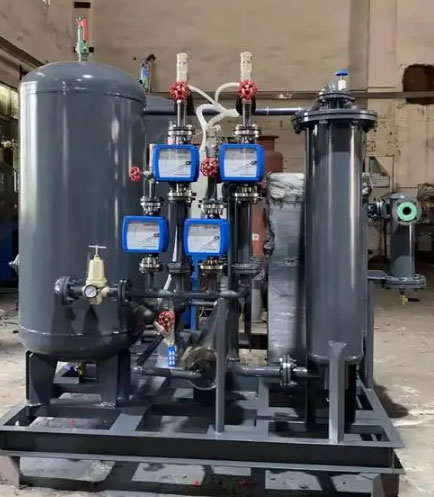
None of these four flow points needed the accuracy or repeatability that would justify a Coriolis or electromagnetic meter. UPW dosing at under 1.1 GPM and nitrogen utility branches under 30 SCFM sit right in the range where a metal tube rotameter's ±0.5% of span accuracy is more than adequate, and where the lower installed cost matters.
The trade-off is worth naming honestly. A rotameter's reading depends on the density of the fluid passing through it. Change the gas, change the pressure significantly, or change the specific gravity of the liquid, and the calibration no longer applies unless the meter was sized and calibrated for that exact condition. That is why each tag on this project specified its own fluid, pressure, and temperature rather than reusing one calibration across all four.
For points where the flow reading feeds a DCS or gets logged for a batch record, we recommend the 4-20 mA HART output, as specified on three of the four tags here. For a purge or vent line where a quick visual check is enough, the clear tube, local-indication-only version keeps the cost down without giving up anything the application actually needs.
If you are sizing metal tube rotameters for a similar mix of process and utility duties, send us the line size (DN or NPS), fluid and phase, pressure (bar or kg/cm2G), temperature (°C), and flow range (kg/h or Nm3/h) for each tag, along with whether you need 4-20 mA HART output or local indication only.
Email sales@silverinstruments.com and we will size and quote each point individually.