English
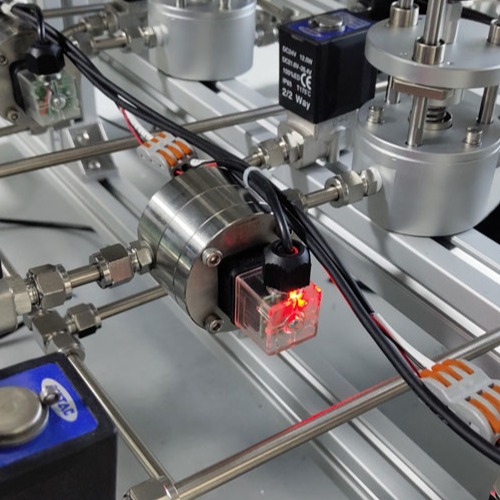

LC-M2,M5 to M25 micro liquid flow meter can detect as low as 0.5ml/min flow. It is a PD flow meter for liquid such as water, fuel, oil, resin. it still keeps 0.5%F.S accuracy.
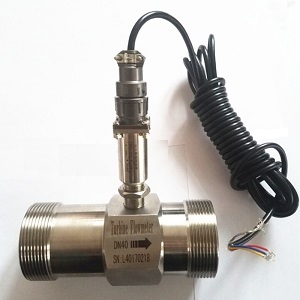
Low cost turbine flow sensor.
Pulse output. Fast response.
For low viscosity and low corrosive liquid .
Such as water, diesel,alcohol.
For DEF (32.5% aqueous urea, ISO 22241 fluid) dosing at flows up to 2.0 L/min (0.53 GPM), the LC-M9-SS oval gear micro flow meter is the right fit.
Flow range 6 to 600 L/H (0.1 to 10 L/min) covers the target flow with room to spare on both ends, and the standard 316L stainless wetted body and gear set avoid aluminum contact with the fluid.
Standard process connection is G1/4" BSPP thread, not 1/4" NPT, so confirm thread type with Silver Instruments before you place an order.
A DEF (Diesel Exhaust Fluid) dosing equipment builder in Ontario, Canada reached out to Silver Automation Instruments for a small flow meter to monitor dosing rate on a SCR (selective catalytic reduction) skid. Their engineer had a tight spec sheet ready, which made the selection process quick.
DEF, also sold as AUS32, is a 32.5% aqueous urea solution used to reduce NOx emissions in diesel exhaust after-treatment. It is not aggressive like an acid, but it is corrosive to several common metals. That single fact drives most of the material decisions in a DEF flow meter, more than the flow rate itself.
The inquiry came with a full requirement list, which we have reproduced below without the customer's contact details.
| Parameter | Requirement |
| Fluid | DEF, 32.5% aqueous urea solution (AUS32) |
| Flow range | Up to 2.0 L/min (0.53 GPM) maximum |
| Wetted body material | 316 or 316L stainless steel |
| Seals | EPDM preferred |
| Wetted internals | PVDF, PEEK, ceramic, or other DEF-compatible material |
| Process connection | 1/4" NPT preferred |
| Supply voltage | 24 VDC |
| Max operating pressure | 10 bar (145 PSI) |
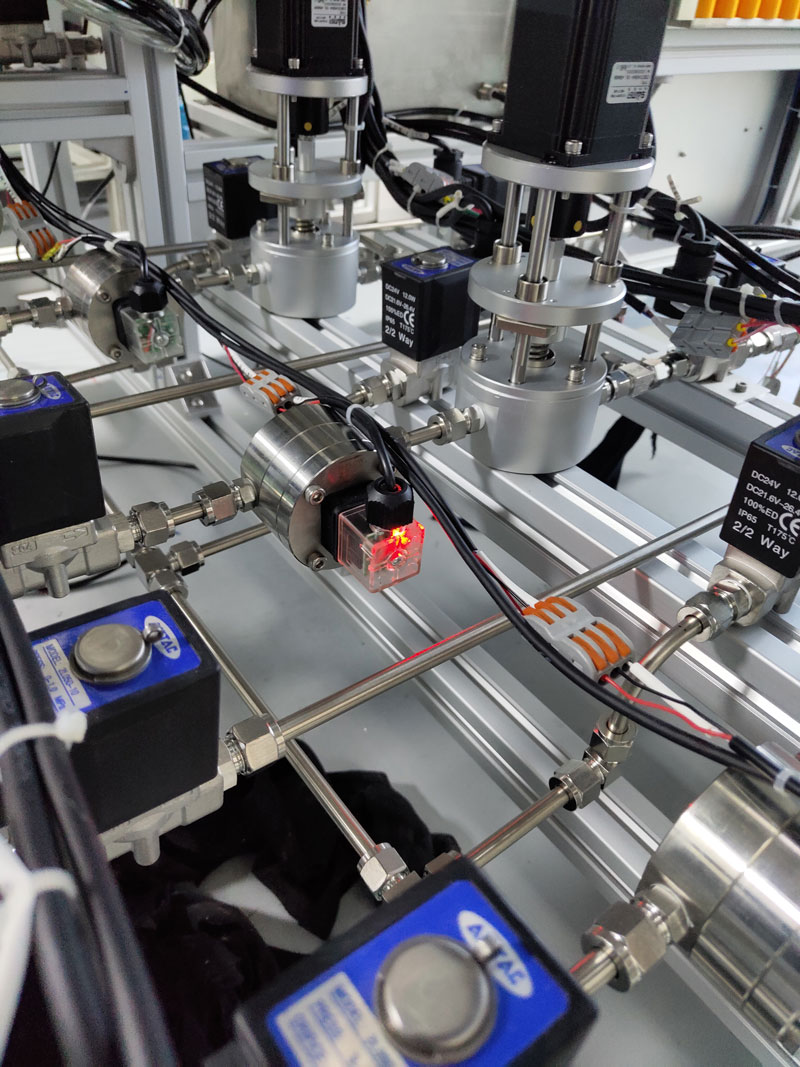
Small oval gear flow meter for DEF Dosing
At 2.0 L/min or below, most flow technologies stop working well. Electromagnetic meters need a minimum velocity and a conductive fluid; DEF is conductive enough, but a DN15 mag meter at 2 L/min gives almost no signal to work with. Vortex meters need turbulence, which a flow this small will not generate. Coriolis meters can do it, but the price jumps sharply for a duty this light, and a full mass flow measurement is more than a dosing skid usually needs.
A positive displacement (oval gear) meter is built for exactly this range. The LC-M series low flow liquid meter measures down to 0.5 ml/min at plus or minus 0.5% of full scale, so a 2.0 L/min duty point sits comfortably inside its working band rather than at the ragged edge of it.
Two models in the LC-M line could technically cover 2.0 L/min. The LC-M6 tops out at 100 L/H, which is 1.67 L/min, too close to the customer's stated maximum to leave any margin. The LC-M9 covers 6 to 600 L/H, or roughly 0.1 to 10 L/min, which puts 2.0 L/min well inside the range rather than near the top.
We recommended LC-M9-SS, the all stainless steel version, over the aluminum-body LC-M9-AL. Here's the thing: DEF attacks aluminum, zinc, and copper alloys over time, forming deposits and eventually pitting the metal. A stainless body and stainless gear set sidestep that problem entirely, which is why we steered the customer away from the AL and PPS-gear options and toward full 316L wetted parts.
Good technical selling means saying what does not fit, not just what does. Three points needed a straight answer instead of a workaround.
We also do not hold CE certification for the LC-M series. DEF compatibility here is based on the well-established industry practice of using 316L stainless and PPS in AUS32 service, not on a formal certificate. Customers running certified after-treatment systems should confirm this against their own qualification requirements.
Based on the requirements, the configuration below covers the application. Model code follows Silver Instruments' standard build: series and shell, gear material, pressure class, temperature class, explosion-proof code, and options.
| Item | Selection |
| Model code | LC-M9-SS-SS-P1-T1-Non-D |
| Flow range | 6 to 600 L/H (0.1 to 10 L/min) |
| K factor | 2.5 mL per pulse |
| Shell material | SUS 316L |
| Gear material | 316L stainless steel |
| Process connection | G1/4" BSPP (NPT thread or adapter to be confirmed) |
| Pressure rating | P1, 1.6 MPa / 232 PSI (covers the 10 bar / 145 PSI requirement) |
| Temperature range | T1, minus 40 to 80°C |
| Power supply | 4 to 26 VDC (24 VDC compatible) |
| Output | 4-20 mA and RS485 Modbus RTU, integral display |
| Accuracy | ±0.5% of full scale |
DEF dosing loops are usually low-flow and precision-sensitive, since dosing too little urea under-treats NOx and dosing too much wastes fluid and can leave deposits downstream. An oval gear meter's pulse output feeds directly into a PLC or dosing controller as a totalized or rate signal, which is why the Modbus RTU and 4-20 mA combination worked for this application. We keep seeing this pairing on emissions after-treatment skids across North America and Europe, not just for DEF but for ammonia water dosing on industrial SCR systems too.
One practical point worth flagging for anyone speccing a similar system: DEF crystallizes below about minus 11°C and degrades above roughly 30°C over extended exposure. The LC-M9's minus 40 to 80°C rating covers both ends comfortably, but heat tracing or an insulated enclosure is still worth considering if the skid sits outdoors through a Canadian winter.
Frequently Asked Questions
Send us your flow range (L/min or GPM), fluid concentration, process connection preference, supply voltage, and maximum operating pressure (bar or PSI), and we will confirm the right LC-M configuration along with seal material and thread options for your DEF dosing skid.
Email sales@silverinstruments.com and we will confirm sizing and battery configuration within one business day.
we will contact you within 24 hours..