
English
Radar Level Sensors for Wheat and Flour Silos: A Practical Guide to Accurate Stock Height Measurement
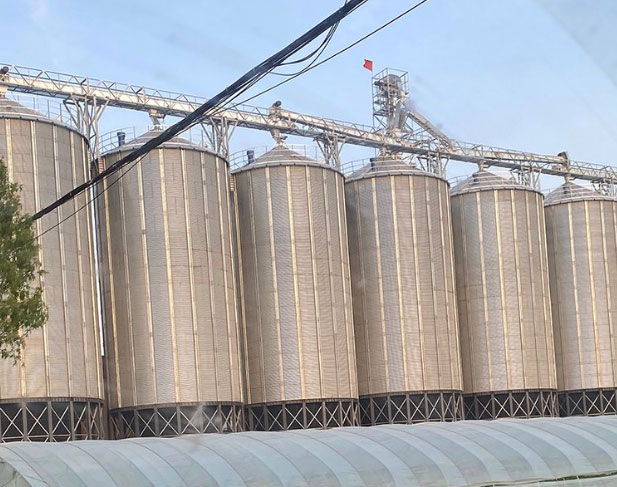
An 80 GHz FMCW radar level sensor, such as the Silver Instruments 80G radar level meter is the right choice for wheat and flour silo height measurement. It handles ranges up to 120 m, works through dust, and needs no contact with the grain.
One sensor family covers both tall wheat silos (around 30 m) and shorter flour silos (around 8 m); only the antenna extension and mounting length change.
The 4-20 mA/HART and RS485 Modbus RTU outputs feed a PLC or SCADA system, which then builds the tank graphic and stock value on screen. Silver Instruments supplies the sensor and the signal; the visualization software runs on your automation platform.
Besides radar level meters, we supply capacitance, ultrasonic, and magnetic float level instruments. See our full level measurement product range to compare options for your application.
A silo full of wheat or flour is not a calm liquid surface. It is a pile. The center sits higher than the edges, the surface shifts as material loads or draws down, and dust fills the headspace every time the fill stream runs. Guided wave probes can bend or wear against moving grain. Ultrasonic signals lose accuracy in dusty air. A high-frequency radar beam passes through dust with very little loss, which is why non-contact radar is the standard choice here.
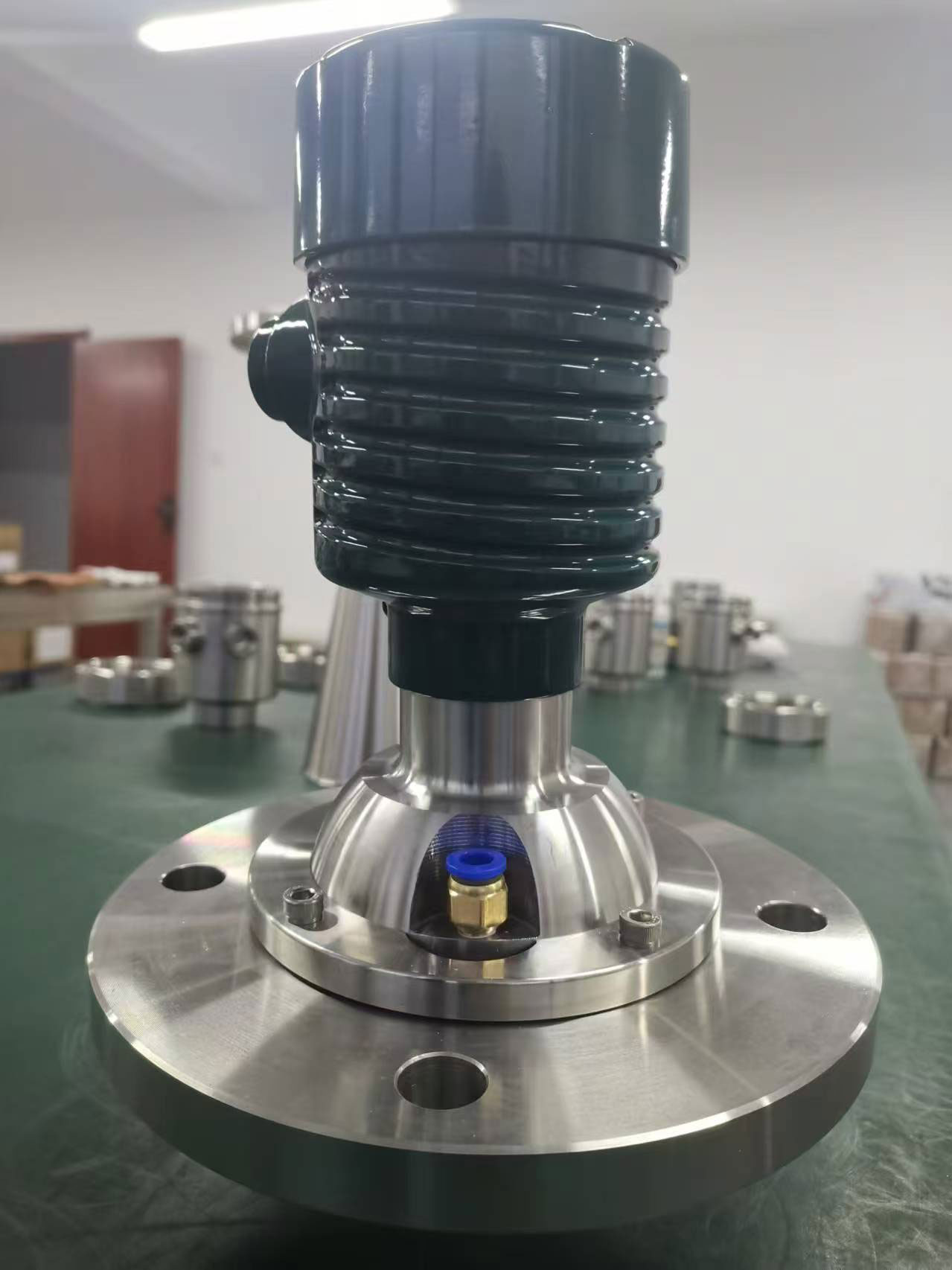
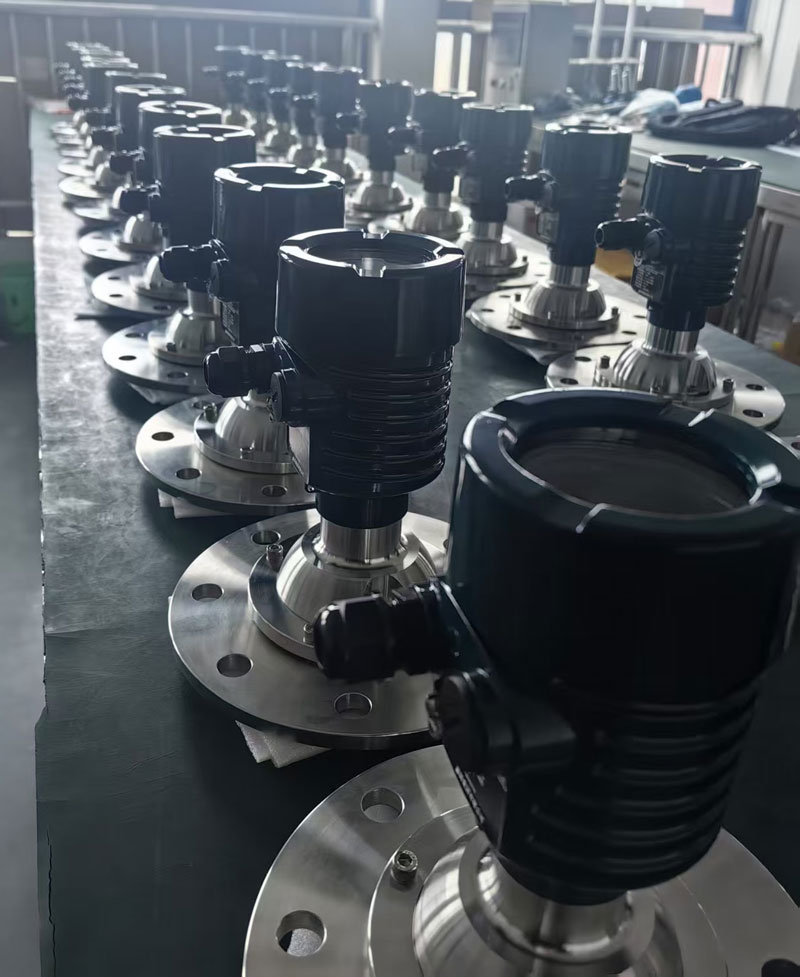
80G radar level transmitter for wheat and flour
Silver Automation Instruments builds the SDRD87 around an 80 GHz frequency modulated continuous wave (FMCW) signal. Three things about this frequency matter for grain and flour storage. The beam angle stays narrow, around 4 degrees, so it avoids ladders, limit switches, and support beams that would otherwise cause false echoes. Range reaches up to 120 m on solids, covering a 30 m wheat silo with margin, while the antenna stays compact enough for a standard roof nozzle. And the concentrated microwave energy resists interference from dust and vibration, so readings stay stable even while the loading auger is running.
The same SDRD87 platform covers both silo groups on your site. Only the antenna extension length and mounting connection change from one group to the other, as shown below.
Wheat silos, 4 units, approx. 30 m: flange-mounted antenna with a longer extension pipe, to clear the roof structure and reach a stable measurement zone above the pile.
Flour silos, 14 units, approx. 8 m: shorter antenna extension, or thread/holder mounting where the roof nozzle allows it.
Because flour is finer and dustier than wheat, mounting position matters more than antenna choice on this group. Keep the sensor away from the fill stream and at least 200 mm from the silo wall, with the beam pointed straight down at the pile.
Here is the part that needs a clear separation of responsibility. The SDRD87 measures distance and converts it into a level or height value, then outputs that value as 4-20 mA with HART or as RS485 Modbus RTU. Only Modbus RTU is supported over RS485, not Modbus TCP/IP, so plan the PLC or SCADA gateway connection around that.
Turning that number into a graphic of the silo, and rolling it up into a stock value in tons, is a software task on your automation side, typically a PLC, HMI, or SCADA platform already common in grain handling. Silver Instruments supplies the sensor and a stable signal, not the visualization software. Most system integrators in the milling industry have already built silo graphics of this kind from Modbus RTU inputs, and we can send the register map to make that job easier.
| Parameter | Value |
| Frequency | 80 GHz FMCW |
| Measurement range | Up to 120 m (solids) |
| Accuracy | ±5 mm |
| 3 dB beam angle | About 4 degrees |
| Process temperature | -40°C to 195°C, depending on antenna material |
| Antenna material options | PP, PTFE, PEEK (316L wetted parts) |
| Process connection | Flange (DN100, DN125, DN150, and others) or thread/holder |
| Signal output | 4-20 mA/HART; RS485 Modbus RTU |
| Power supply | 2-wire 24 V DC or 4-wire 10.8-26.4 V DC |
| Protection rating | IP66/IP67 |
| Housing options | Aluminum, plastic, or stainless steel 316L, single or 2-chamber |
We regularly hear from flour mills and grain terminals across South America with this exact combination: tall wheat silos, shorter flour silos, and a need to see stock value on one screen instead of checking each silo by hand. The technical answer is almost always the same 80 GHz radar platform, sized per silo group. Dust load, roof nozzle size, and whether the silo is steel or concrete still shape the final antenna and mounting choice, so we confirm these details before finalizing a quote.
Silver Instruments exports directly to Chile, Argentina, and other South American markets from our factory in Nanjing, China. If a dedicated in-country agent is required for your project, our sales team can confirm current arrangements for your location, since coverage varies by region and product line.
Next Step:
To prepare an accurate quotation and the technical datasheet for wheat silos and flour silos level measurement, please send us:
Send these details to sales@silverinstruments.comand we will return a formal quotation, the SDRD87 technical datasheet, and a wiring reference for your automation team.