English
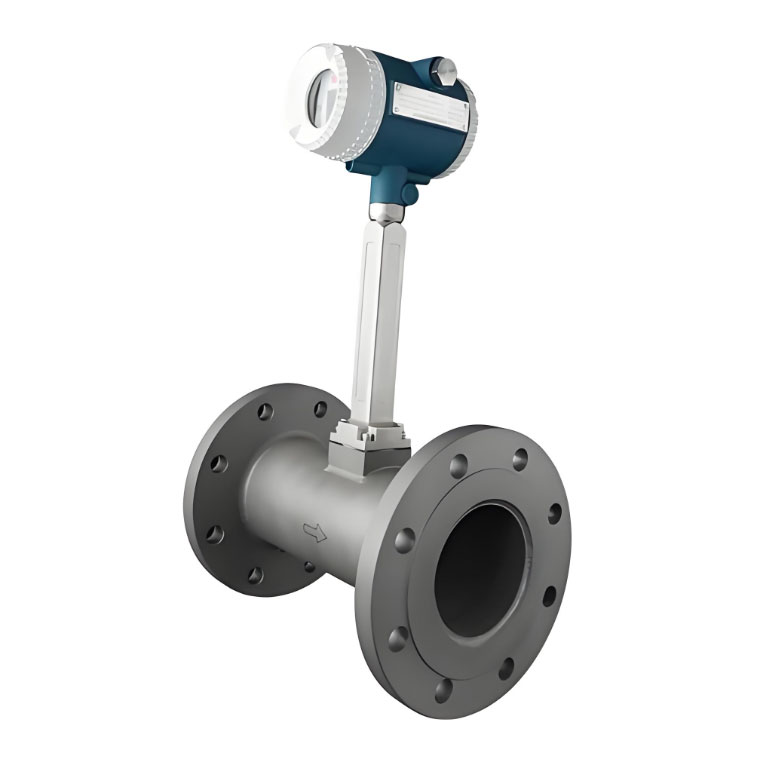
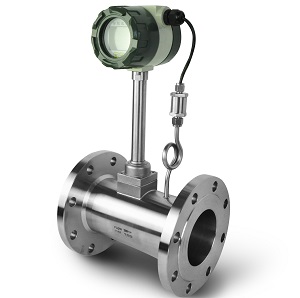
What is 4 inch steam flow meter ?4 inch steam flow meters means the 4 inch dia flow meter to measure steam flow rate, normally it is steam mass flow rate , the flow unit normally be kg/h or Ton/Hr. 4 ...
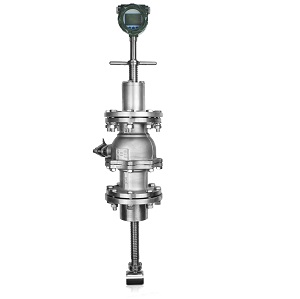
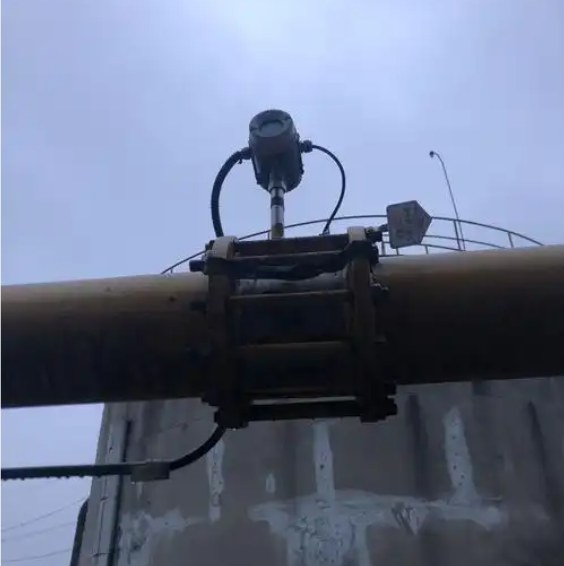
Insertion vortex flow meter is designed for large pipeline size over 10 inches, users can install and removal the vortex sensor without closing down the whole running system. Customers can get volumet...
For an 8 inch (DN200) steam line, a vortex flow meter is the standard choice. It has no moving parts, handles saturated and superheated steam, and outputs mass flow directly when paired with built-in pressure and temperature compensation.
At DN200, both flanged or wafer inline and insertion-style vortex meters are used. Flanged or wafer is the more common choice up to and including this size; insertion becomes more common on larger headers where a full-bore meter gets expensive.
Estimated flow range at DN200, based on standard steam velocity limits (5 to 70 m/s), runs roughly from 570 m3/h to 7,900 m3/h. Confirm exact figures against the datasheet for your specific meter body before ordering.
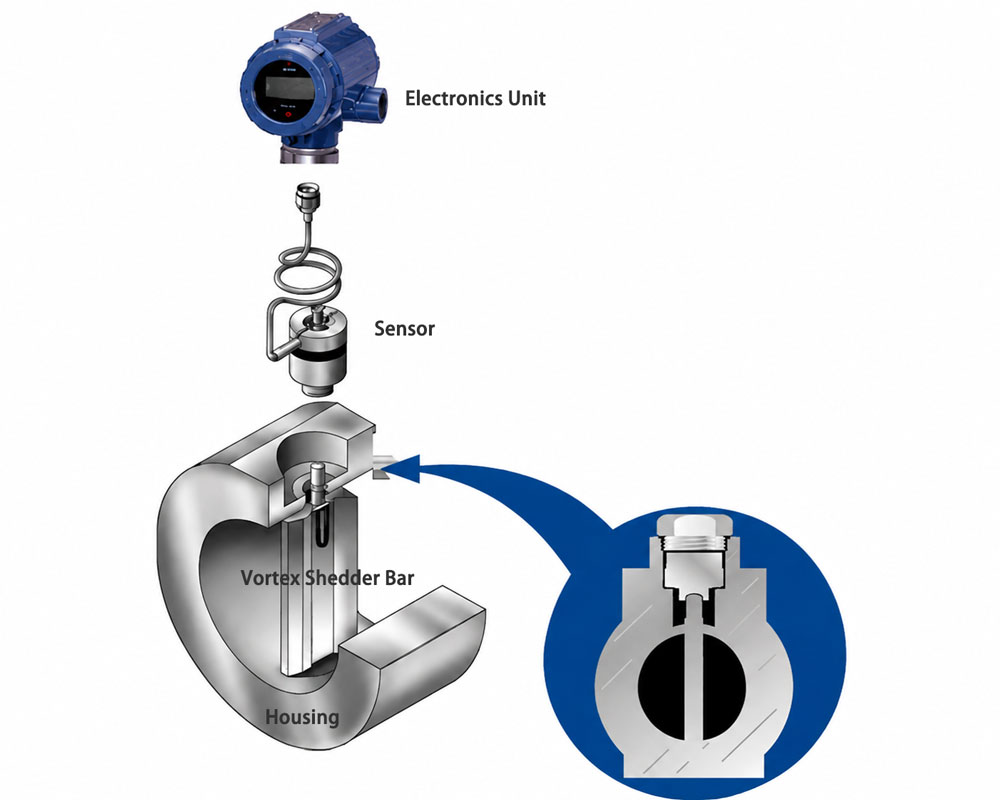
A vortex flow meter counts the vortices shed by a bluff body placed across the pipe. Shedding frequency is proportional to velocity, and from velocity the transmitter calculates volumetric flow. Add a pressure sensor and a PT100 temperature element and the same vortex flow sensor outputs compensated mass flow in kg/h, without an external flow computer.
Steam rules out most other technologies before the comparison even starts. Oval gear flow meter and turbine flow meters wear quickly at steam temperatures. Thermal mass meters are built for near-ambient gas, not saturated or superheated steam. Electromagnetic meters need a conductive liquid, and steam is not one. Vortex, by contrast, has no moving parts in the flow path, so an 8 inch meter on a plant steam header can run for years between checks.
Related article: [ Four Ways To Measure Steam Flow ]
| Parameter | Typical Value at DN200 |
| Gas / steam velocity range | 5 ~ 70 m/s |
| Estimated gas/steam flow range | Approx. 570 ~ 7,900 m3/h |
| Liquid velocity range | 0.5 ~ 7 m/s |
| Estimated liquid flow range | Approx. 55 ~ 790 m3/h |
| Accuracy, gas/steam | +/- 1.5% of reading (typical) |
| Accuracy, liquid | +/- 1.0% of reading (typical) |
| Reynolds number range | 2x10^4 ~ 7x10^6 |
| Turndown ratio | Typically 1:10 ~ 1:15 on steam |
Actual usable range depends on the vortex flow sensor's true internal bore, which is not identical to the nominal DN200 pipe diameter, and on your steam pressure and temperature at operating conditions. Send silverinstruments.com your line steam pressure, temperature, and expected minimum and maximum flow, and we will confirm the correct meter body size and whether a reducing or expanding configuration around the meter is needed.
A vortex flow meter measures velocity, not mass directly, so the mass flow number changes with steam density even though the meter sees the same velocity range. The table below converts the 565 to 7,917 m3/h actual volumetric range at 8 inch vortex flow meter into mass flow at common saturated steam pressures, using standard steam density data (IAPWS-IF97). These are calculated figures, not a copy of a certified datasheet, so treat them as a sizing reference and confirm against your transmitter's compensation table before ordering.
| Pressure (gauge) | Saturation Temp. | Mass Flow Range (kg/h) |
| 0.1 MPa | 120°C | 640 ~ 8,990 |
| 0.2 MPa | 134°C | 940 ~ 13,120 |
| 0.3 MPa | 144°C | 1,230 ~ 17,180 |
| 0.4 MPa | 152°C | 1,510 ~ 21,180 |
| 0.5 MPa | 159°C | 1,800 ~ 25,140 |
| 0.6 MPa | 165°C | 2,080 ~ 29,080 |
| 0.8 MPa | 175°C | 2,640 ~ 36,900 |
| 1.0 MPa | 184°C | 3,190 ~ 44,670 |
| 1.2 MPa | 192°C | 3,740 ~ 52,420 |
| 1.6 MPa | 204°C | 4,850 ~ 67,910 |
Higher pressure means denser steam, so the same velocity range at 1.6 MPa carries roughly ten times the mass flow it does at 0.1 MPa. This is why sizing on mass flow alone, without stating pressure, leads to the wrong meter body.
Superheated steam density depends on both pressure and temperature, so a single by-pressure table is not enough here. The figures below are sample points calculated the same way, using IAPWS-IF97 steam properties at representative process conditions, to show how much mass flow shifts as superheat increases for 8 inch overheated steam mass flow meter.
8 inch vortex flow meter flow range for superheated steam
| Pressure (absolute) | Temperature | Mass Flow Range (kg/h) |
| 1.0 MPa | 250°C | 2,430 ~ 34,020 |
| 1.6 MPa | 300°C | 3,560 ~ 49,900 |
| 2.5 MPa | 350°C | 5,150 ~ 72,110 |
| 4.0 MPa | 400°C | 7,700 ~ 107,810 |
| 6.0 MPa | 450°C | 10,840 ~ 151,760 |
If your process runs at a pressure and temperature combination not shown here, send us both values together. Mass flow cannot be estimated from pressure or temperature alone on superheated steam; the transmitter needs both inputs for the compensation calculation to be accurate.
More details about [ How To Size A Steam Flow Meter ]
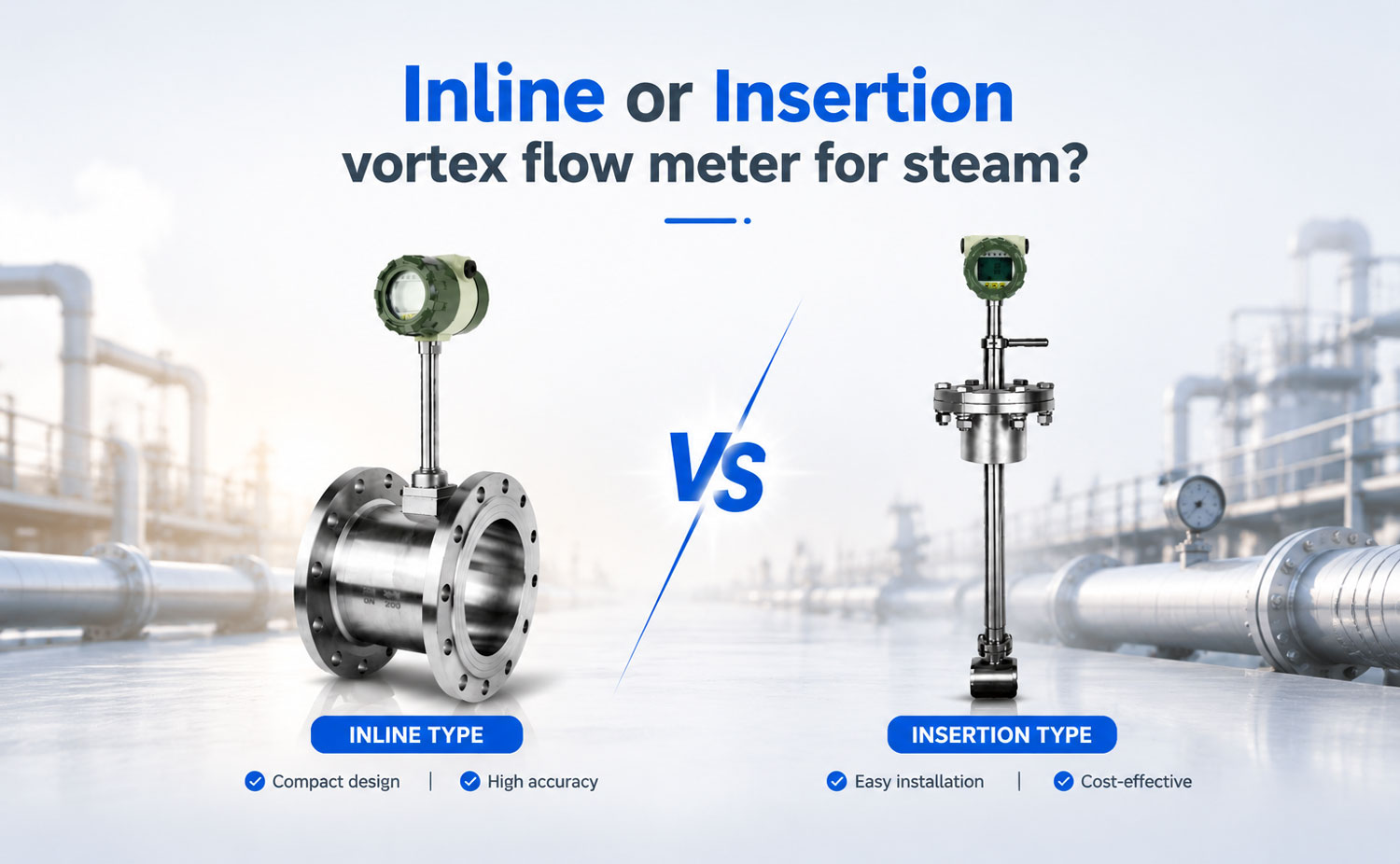
DN200 sits at the size where both configurations are common. A flanged, full-bore vortex steam flow meter gives the best accuracy and repeatability, and remains the default recommendation up through DN200 on most steam headers. Above DN200, meter body cost and weight climb quickly, which is when plants start looking at insertion probes instead.
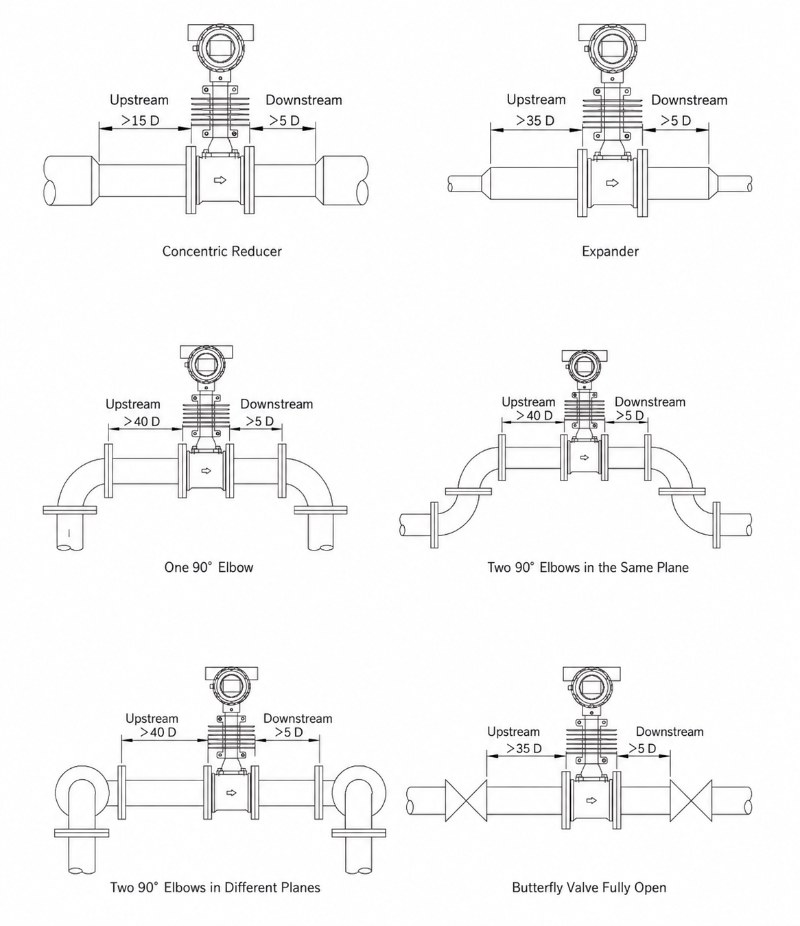
Straight pipeline for 8 inch vortex flow meter install
Vortex meters are sensitive to disturbed flow profiles, so straight pipe run matters more here than on most other flow technologies. As a general rule, provide at least 15 diameters of straight pipe upstream of the meter and 5 diameters downstream, with more required after two elbows in different planes or after a partially open valve. On an 8 inch line, that works out to roughly 3 m upstream and 1 m downstream as a starting point.
Avoid to install 8 inch vortex flow meter with below position
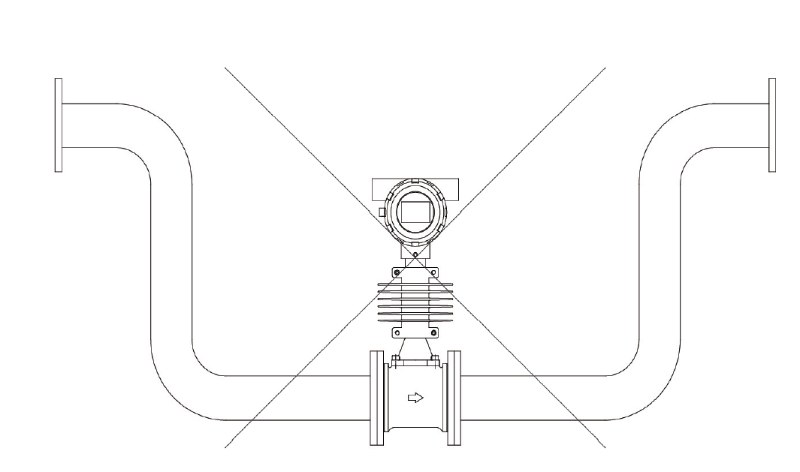
Avoid installing the meter directly after a control valve or a pipe reducer without a settling length in between. For steam lines specifically, mount the meter in a horizontal run wherever possible, and keep it clear of low points where condensate can collect against the sensor.
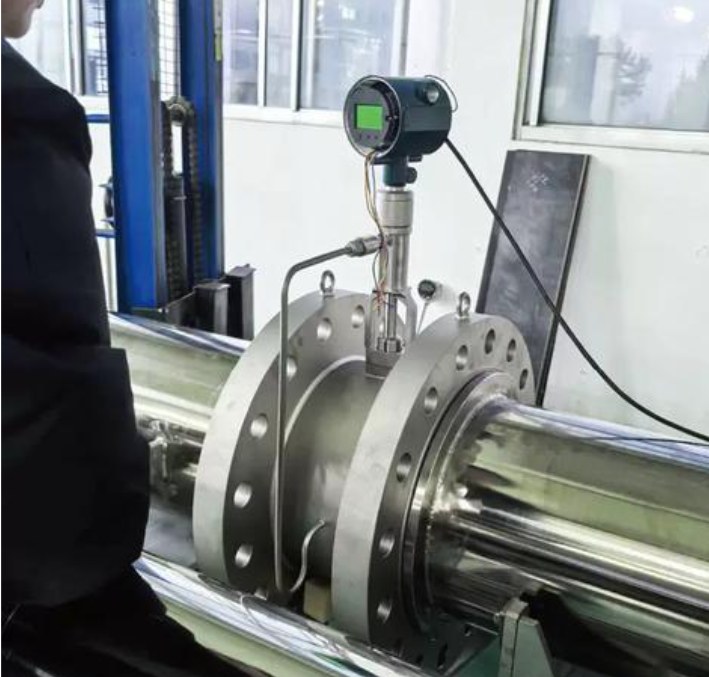
We see this pattern often on food and beverage or chemical plant utility steam systems: an 8 inch header feeding several process areas, with the plant needing a single custody-style number for boiler efficiency reporting. A flanged vortex meter with integrated pressure and temperature compensation, HART or RS485 Modbus RTU output, fits this role well because it removes the need for a separate flow computer. This is a general pattern based on the kind of DN200 steam enquiries we receive, not a specific completed project; send us your actual site conditions and we will size the meter against your real numbers rather than a generic case.
To confirm the exact flow range and prepare a formal quotation, please send us:
Email these details to sales@silverinstruments.com and we will confirm the correct STLU meter body, send the technical datasheet, and return a formal quotation.
we will contact you within 24 hours..