
English
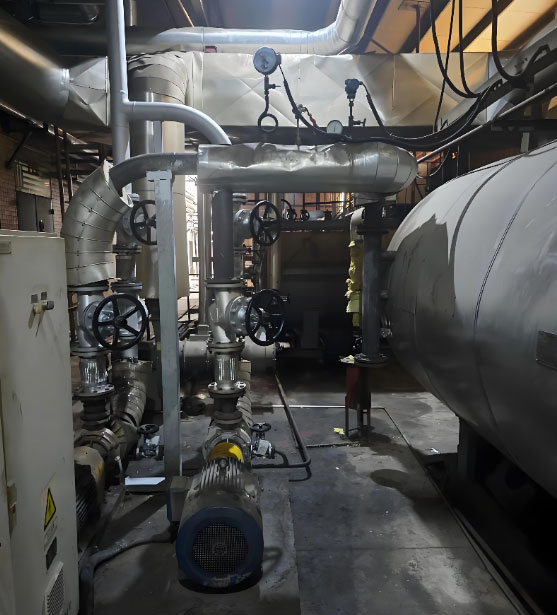
For natural gas boiler feed at DN100, 190-250 Nm3/h, and 2.2 bar operating pressure, a thermal mass flow meter is the recommended choice. It measures standard volumetric flow (Nm3/h) directly without external temperature or pressure compensation.
Silver Instruments supplies the SRK-100 thermal mass flow meter in DN100 with 4-20 mA output and RS485 Modbus RTU, rated for natural gas service at low to medium pressure.
Vortex (Silver STLU) and gas turbine (Silver SGW) meters are both viable alternatives at this pipe size and pressure, but both measure actual volumetric flow at line conditions and require external temperature and pressure compensation to output Nm3/h.
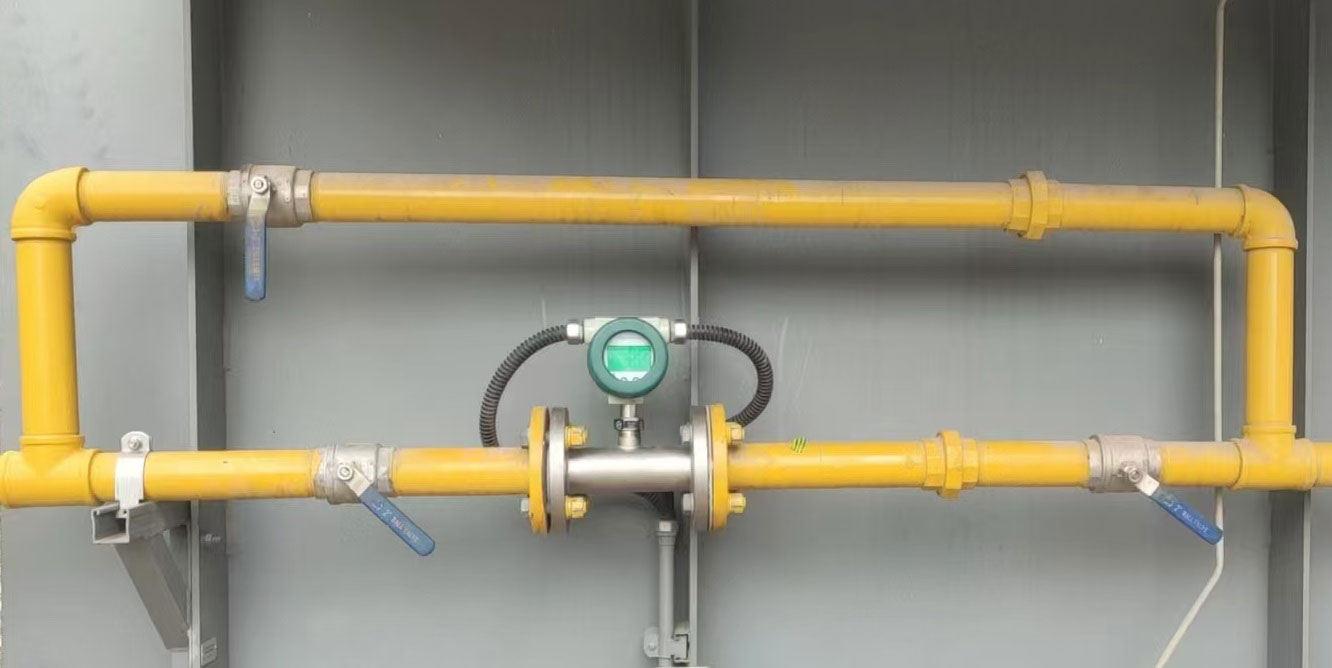
Natural gas flow measurement for boiler combustion control comes down to one requirement: you need to know how much gas is actually burning, in standard conditions, at any given moment. Boiler control systems work in Nm3/h or SCFH, not in actual cubic metres at line pressure. This is where thermal mass flow meters have a practical edge over other technologies.
A thermal mass flow meter measures gas flow by detecting the heat transfer from a heated sensor element to the flowing gas. Mass flow rate is directly proportional to the heat carried away. The output is already in mass or standard volumetric units. No external pressure transmitter, no temperature transmitter, no flow computer performing real-time density corrections. The meter does it internally.
At 2.2 bar operating pressure and 190-250 Nm3/h through a DN100 pipe, this application sits comfortably within the operating envelope of a standard insertion-style or inline thermal mass flow meter. Actual velocity in the pipe at these conditions is roughly 3.5 to 4.5 m/s, which is well within the measurable range and gives good signal-to-noise ratio on the sensor.
For boiler operators in Brazil and across Latin America, the ability to log gas consumption directly in Nm3/h via Modbus RS485 to a SCADA or BMS system simplifies commissioning and ongoing energy audits. There is no need to apply correction factors in the control system logic.
| Parameter | Value | Note |
| Application | Natural Gas (NG) boiler feed | Combustion air/fuel ratio control and consumption monitoring |
| Line Size | DN100 (4 inch) | Inline or insertion mount available |
| Working Flow Range | 190 to 250 Nm3/h | 7.2 to 9.4 MSCFH (at 0 degC, 1 atm reference) |
| Operating Pressure | Max 2.2 bar g | 31.9 psi g; low pressure gas service |
| Gas Temperature | Ambient to 60 degC typical | Confirm with site conditions |
| Output Signal | 4-20 mA | Scalable to 0-300 Nm3/h full scale |
| Communication | RS485 Modbus RTU | Register map on request; Modbus TCP not available |
| Power Supply | 24 Vdc | Standard loop power |
| Wetted Material | 316L SS probe | Compatible with dry natural gas |
| Accuracy | +/-1.5% of reading | Typical for thermal mass at this range |
| Meter Type | Silver SRK-100 | Inline or insertion thermal mass, DN100 |
| Installation Site | LG Electronics factory, Fazenda Rio Grande, Parana, Brazil | New construction project |
Three technologies come up consistently for natural gas boiler metering at DN100. All three work at 2.2 bar and 190-250 Nm3/h. The differences come down to output units, installation complexity, and long-term maintenance requirements.
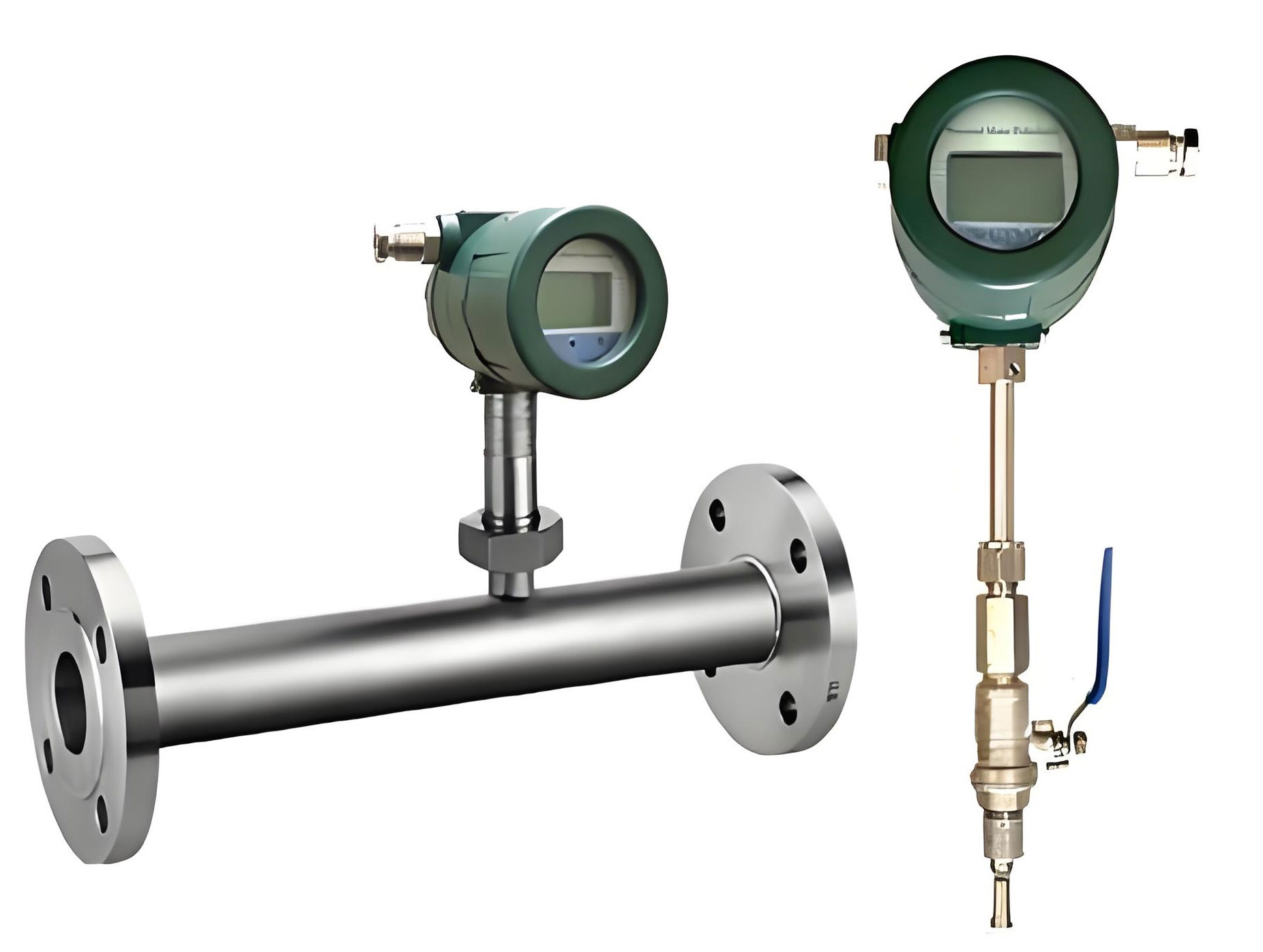
The SRK-100 outputs Nm3/h or kg/h directly. For a boiler application where the control system or energy monitoring platform expects standard volumetric flow, this matters. No separate instrumentation needed. One cable to the 4-20 mA input, one RS485 wire to the Modbus network, done.
At 2.2 bar and ambient temperature, the gas density is approximately 0.93 kg/Nm3 for pipeline natural gas. The SRK-100 is factory-calibrated to the customer's reference condition. If the gas composition or pressure changes significantly, a recalibration or correction factor is needed, but for a stable utility gas supply to a factory boiler, this is rarely an issue.
No moving parts. Pressure drop at DN100 and 250 Nm3/h is less than 0.05 bar. In a low-pressure gas line at 2.2 bar, this is negligible. The SRK-100 supports 4-20 mA and RS485 Modbus RTU on 24 Vdc, matching the project requirements exactly.
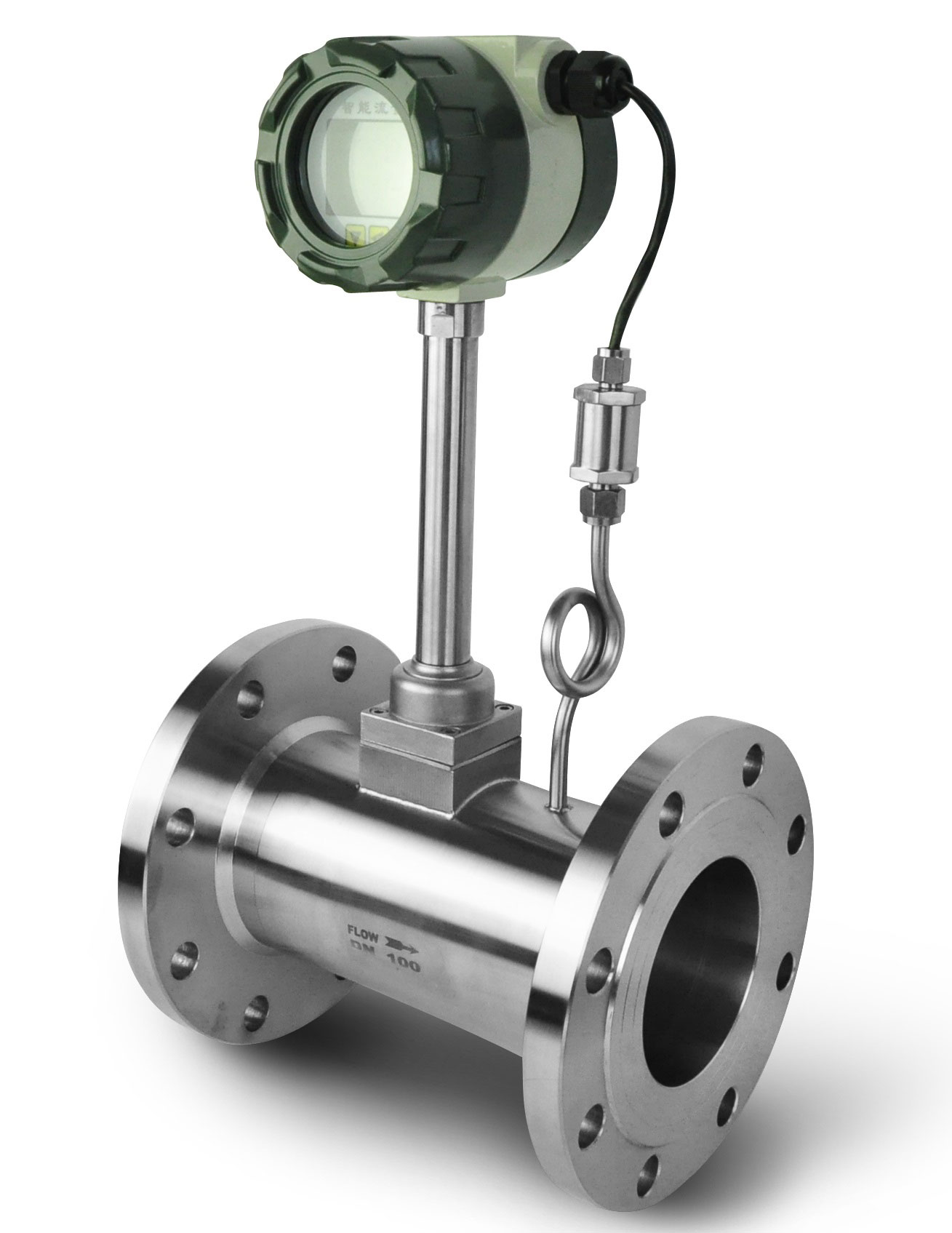
The STLU vortex meter at DN100 is a proven option for natural gas. It handles pressures up to 4.0 MPa and temperatures from -40 degC to +260 degC. This is significantly over-specified for a 2.2 bar boiler line, which is not a problem in itself. Turndown ratio is typically 10:1 to 15:1, which covers the 190-250 Nm3/h operating band without difficulty.
The limitation is measurement output. The STLU measures actual volumetric flow at line conditions, not standard flow. Converting to Nm3/h requires continuous knowledge of actual gas pressure and temperature. That means adding a pressure transmitter and a temperature element, then either selecting a vortex model with integrated P/T compensation or running the calculation in the PLC. For a simple boiler metering application where the customer wants Nm3/h directly on the Modbus network, this adds engineering cost and field wiring.
Where the STLU wins is long-term calibration stability. Vortex meters count vortex shedding frequency and do not drift the way thermal sensors can after years of service in dusty or varying gas compositions. For fiscal metering or applications requiring infrequent recalibration, the STLU with integrated temperature/pressure compensation is the more defensible choice.
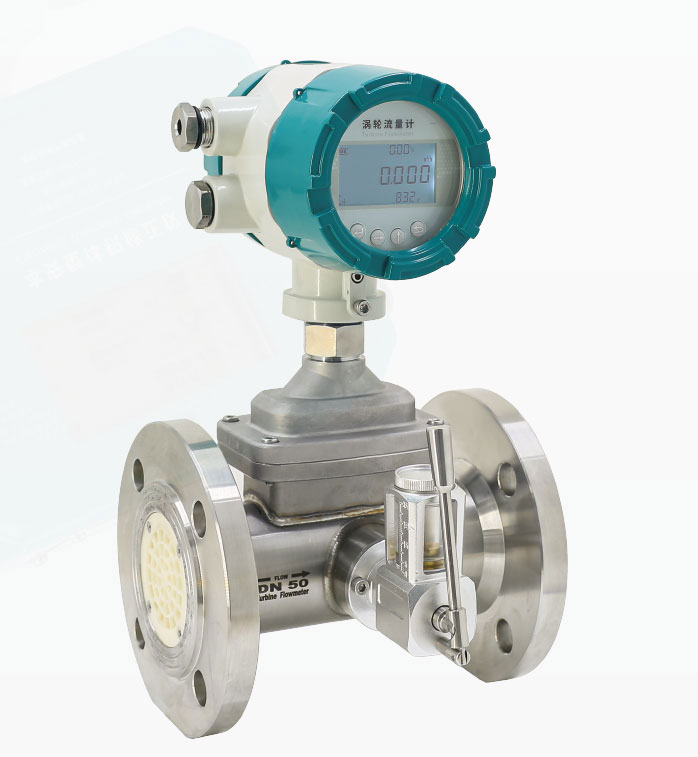
The SGW gas turbine meter is worth considering when higher accuracy and rangeability are required. Turbine meters for gas typically achieve +/-0.5% of reading or better, and turndown ratios of 10:1 to 20:1 are common. At DN100 and 190-250 Nm3/h, a gas turbine meter operates well within its calibrated range.
Like the vortex, the SGW measures actual volumetric flow. The output is a pulse frequency proportional to actual volume at line conditions. Conversion to Nm3/h requires a flow computer or temperature/pressure compensation built into the transmitter. This is standard practice in gas custody transfer applications where turbine meters are the dominant technology globally.
The maintenance consideration with turbine meters is the rotor. Natural gas is generally a clean, dry medium and rotor bearing life is long, but it is not zero. Any particulate contamination in the gas supply accelerates bearing wear. For a factory utility gas line that is reliably filtered and dried at the utility inlet, this is not a practical concern. But it is worth noting alongside the thermal mass and vortex options, which have no moving parts at all.
For this boiler feed application at 2.2 bar and a relatively narrow flow range of 190-250 Nm3/h, the SGW is technically capable but adds complexity (flow computer or P/T compensation) that is not justified when the SRK-100 delivers the required output directly. Where the SGW makes more sense is in applications where fiscal accuracy at higher pressure or wider turndown is needed.
| Criterion | SRK-100 Thermal Mass | STLU Vortex | SGW Gas Turbine |
| Output unit | Nm3/h or kg/h direct | Actual m3/h (P/T comp needed) | Actual m3/h (P/T comp needed) |
| External transmitters needed | None | Pressure + temperature | Pressure + temperature + flow computer |
| Moving parts | None | None | Rotor and bearings |
| Pressure drop at 250 Nm3/h | Less than 0.05 bar | 0.02 to 0.08 bar | 0.05 to 0.15 bar |
| Accuracy (typical) | +/-1 to 1.5% of reading | +/-0.75 to 1.0% of reading | +/-0.5% of reading or better |
| Long-term stability | Sensor drift possible over years | Very stable, no drift | Stable; rotor wear affects cal. at high hours |
| Turndown ratio | 50:1 or better | 10:1 to 15:1 | 10:1 to 20:1 |
| Maintenance requirement | None; no moving parts | None; no moving parts | Periodic rotor inspection |
| Best for this application | Yes: direct Nm3/h, lowest complexity | Workable, needs P/T compensation | Over-engineered for 2.2 bar boiler duty |
| Relative instrument cost | Low | Medium (+ P and T transmitters) | Medium-high (+ flow computer) |
Thermal mass flow meters for gas require a minimum straight pipe run upstream and downstream of the sensor. For an inline meter at DN100, the typical requirement is 10 to 15 pipe diameters upstream and 5 diameters downstream, free of elbows, valves, and reducers. For the factory installation at Fazenda Rio Grande, this should be planned into the piping layout during the engineering phase.
Insertion-style thermal mass meters are also available at DN100. These install through a single process connection (compression fitting or ball valve isolation), which allows hot-tapping and removal without shutting the gas line. For a new installation where the pipe will be shut down for commissioning anyway, an inline meter is preferable for accuracy. For existing lines where access is limited, insertion is a practical alternative.
At 2.2 bar, the gas line is low pressure and does not require high-pressure process connections. Standard flanged or threaded connections are appropriate. Confirm the flange standard with the project engineering team, as Brazilian industrial projects often use ANSI 150 lb or DIN PN16 depending on the origin of the pipe specification.
For RS485 Modbus RTU wiring, use shielded twisted pair cable (Belden 9841 or equivalent) and limit the segment to 1200 m without repeaters. The 4-20 mA output can run to the nearest DCS or BMS analog input card simultaneously.
We see this regularly on customer sites. The project specification says 'gas flow meter, DN100, 4-20 mA.' The instrument gets installed. Commissioning happens. Then the control engineer realises the 4-20 mA signal is in actual m3/h, not Nm3/h, and the boiler management system is expecting standard flow. Someone has to add a density correction factor in the PLC logic, which then needs to be updated if supply pressure changes.
Specifying the measurement basis at the start, Nm3/h or kg/h at a defined reference condition (usually 0 degC, 101.325 kPa for Brazilian industrial standards, or 15 degC, 101.325 kPa for some gas utility contracts), prevents this problem. A thermal mass flow meter configured to the correct reference condition outputs the right units from day one.
The other common issue is ignoring gas composition variation. Pipeline natural gas in Brazil, particularly in the south and southeast regions, has a relatively stable calorific value and specific gravity, typically around 0.58 to 0.65 relative to air. A thermal mass meter calibrated to this composition will perform accurately in normal operation. If the site has any dual-fuel capability or receives gas from different supply points, confirm the composition range with the gas utility before ordering.
A manufacturing plant in Parana state contacted us for natural gas metering on two boiler feed lines, each DN100, running at approximately 2.0 bar supply pressure and 200-280 Nm3/h per line. The plant used a building management system with Modbus RTU network for energy monitoring.
We supplied two SRK-100 inline thermal mass flow meters, DN100, 316L SS wetted parts, configured for natural gas at 0 degC / 101.325 kPa reference. Both meters were set up with 4-20 mA outputs scaled to 0-350 Nm3/h and RS485 Modbus RTU with individual slave addresses. Installation was straightforward with 12D upstream straight run available on both lines.
The plant energy manager reported that monthly gas consumption reconciliation with the utility invoice improved significantly after installation. Previously they had been estimating consumption based on burner runtime hours. Direct Modbus logging to the BMS gave them hourly consumption data per boiler, which they used to identify a faulty burner on one unit that was consuming 15% more gas than the parallel boiler for the same steam output.
To receive a formal proposal for a natural gas thermal mass flow meter for your boiler application, email sales@silverinstruments.com with the following details:
We respond with model code, datasheet, price, and lead time within one business day for standard configurations.
Website: www.silverinstruments.com
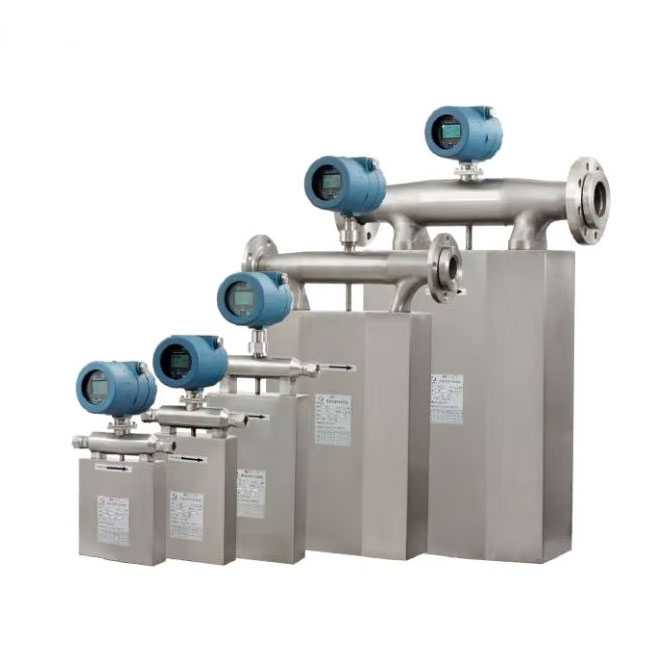 Coriolis Flow Meter for Natural Gas
The precise measurement of natural gas is directly related to trade handover, production process control, and carbon emission monitoring, and is the key to the efficient and fair operation of the ener...
VIEW
Coriolis Flow Meter for Natural Gas
The precise measurement of natural gas is directly related to trade handover, production process control, and carbon emission monitoring, and is the key to the efficient and fair operation of the ener...
VIEW
 Thermal mass flow meter for natural gas
Why need thermal mass flow meter for natural gas measurement?Thermal mass flow meter fully meets the requirements of natural gas measurement accuracy, and has small size, high reliability, and easy in...
VIEW
Thermal mass flow meter for natural gas
Why need thermal mass flow meter for natural gas measurement?Thermal mass flow meter fully meets the requirements of natural gas measurement accuracy, and has small size, high reliability, and easy in...
VIEW
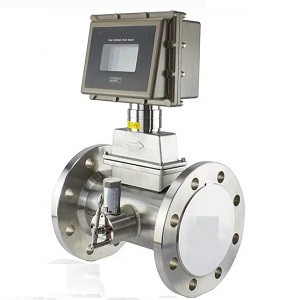 2“ natural gas meter
What is 2” natural gas meter?2” natural gas meter means 2 inch size or we can say DN50 flow meter to measure natural gas flow rate and total flow. Turbine flow meter is acknowledged a perfect flow m.....
VIEW
2“ natural gas meter
What is 2” natural gas meter?2” natural gas meter means 2 inch size or we can say DN50 flow meter to measure natural gas flow rate and total flow. Turbine flow meter is acknowledged a perfect flow m.....
VIEW
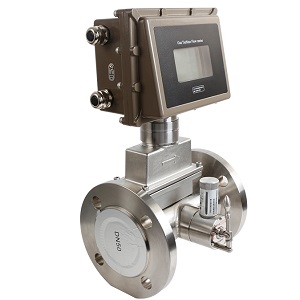 Turbine flow meter for natural gas
What is natural gas?Natural gas is mainly composed of methane (85%) and a small amount of ethane (9%), propane (3%), nitrogen (2%) and butane (1%).
VIEW
Turbine flow meter for natural gas
What is natural gas?Natural gas is mainly composed of methane (85%) and a small amount of ethane (9%), propane (3%), nitrogen (2%) and butane (1%).
VIEW
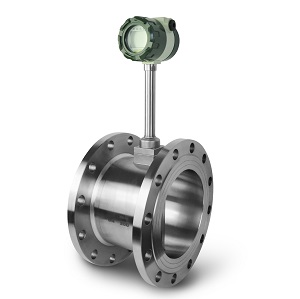 Vortex flow meter for natural gas
What Is Natural Gas?Natural gas is a combination of gases thatexist rich in hydrocarbons. Natural gases such as methane, nitrogen, and carbondioxide also found in the air. Natural gas reserves are dee...
VIEW
Vortex flow meter for natural gas
What Is Natural Gas?Natural gas is a combination of gases thatexist rich in hydrocarbons. Natural gases such as methane, nitrogen, and carbondioxide also found in the air. Natural gas reserves are dee...
VIEW
 Natural Gas Flow Meter
Thermal mass flow meter . Low pressure gas measurement. No moving parts flow sensor. 4-20mA, MODBUS -RTU.
VIEW
Natural Gas Flow Meter
Thermal mass flow meter . Low pressure gas measurement. No moving parts flow sensor. 4-20mA, MODBUS -RTU.
VIEW