
English
Natural Gas Flow Meters: A Practical Guide to Thermal Mass, Vortex, and Coriolis Measurement
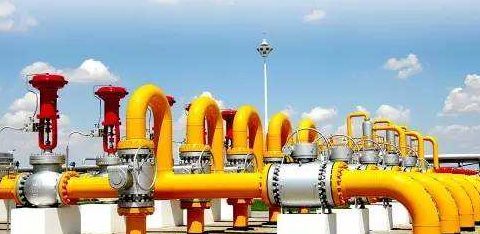
Thermal mass flow meters are the most widely used technology for natural gas measurement on industrial and utility pipelines from DN15 to DN300 (1/2 inch to 12 inch), because they read mass flow directly and skip the separate temperature and pressure compensation that volumetric meters need. Silver Automation Instruments supplies the SRK-100 insertion type and the SRK-DL inline type, both with 4-20 mA, HART, and RS485 Modbus RTU output. For high pressure transmission lines, custody transfer, or very large diameters, vortex or Coriolis meters are usually the better fit.
Global natural gas demand grew by close to 2.8 percent in 2024, then slowed to under 1 percent in 2025 as high spot LNG prices and softer industrial activity weighed on consumption across Asia. Growth is expected to pick back up in 2026, with the International Energy Agency projecting demand growth near 2 percent as new LNG supply comes online from the United States, Canada, and Qatar. Asia Pacific markets are forecast to account for roughly half of that growth on their own.
The Middle East has followed a different curve. Gas use in the power sector there has climbed quickly as utilities switch away from oil for electricity generation. That shift alone opens up new metering points, at gas turbines, compressor stations, and distribution headers.
For flow meter buyers this comes down to one practical fact. Whether national gas demand is climbing or holding flat, the number of individual measurement points, at wellheads, city gate stations, industrial boilers, and biogas digesters, keeps growing. Getting the meter selection right at each point the first time avoids expensive rework later.
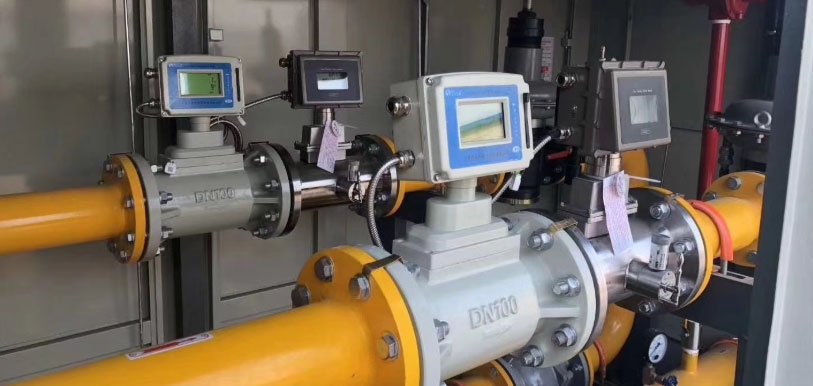
Gas flow meters show up across the whole natural gas value chain. Energy metering and custody transfer sit at one end of it. Process control on furnaces, boilers, and gas engines sits in the middle. Environmental monitoring, CNG and LNG fueling stations, and lab or pilot plant test rigs round out the list. Because the right meter technology depends heavily on where in that chain the measurement point sits, picking a meter just because the fluid is natural gas is rarely enough on its own.
China's flow meter manufacturers, Silver Automation Instruments included, build several different gas meter technologies for natural gas duty. Each one suits a different pressure range, pipe size, and budget.
This guide focuses mainly on thermal mass flow meters, since that is where most of the technical questions from engineers in Southeast Asia, the Middle East, and Africa tend to land.
Natural gas measurement splits into two basic approaches, volume flow and mass flow. Volume flow meters, turbine and orifice types among them, report a value in m3/h or standard cubic feet per hour at actual line conditions. Gas is compressible, so that volume shifts with temperature and pressure, and needs external compensation to convert back to a standard reference condition before it means much.
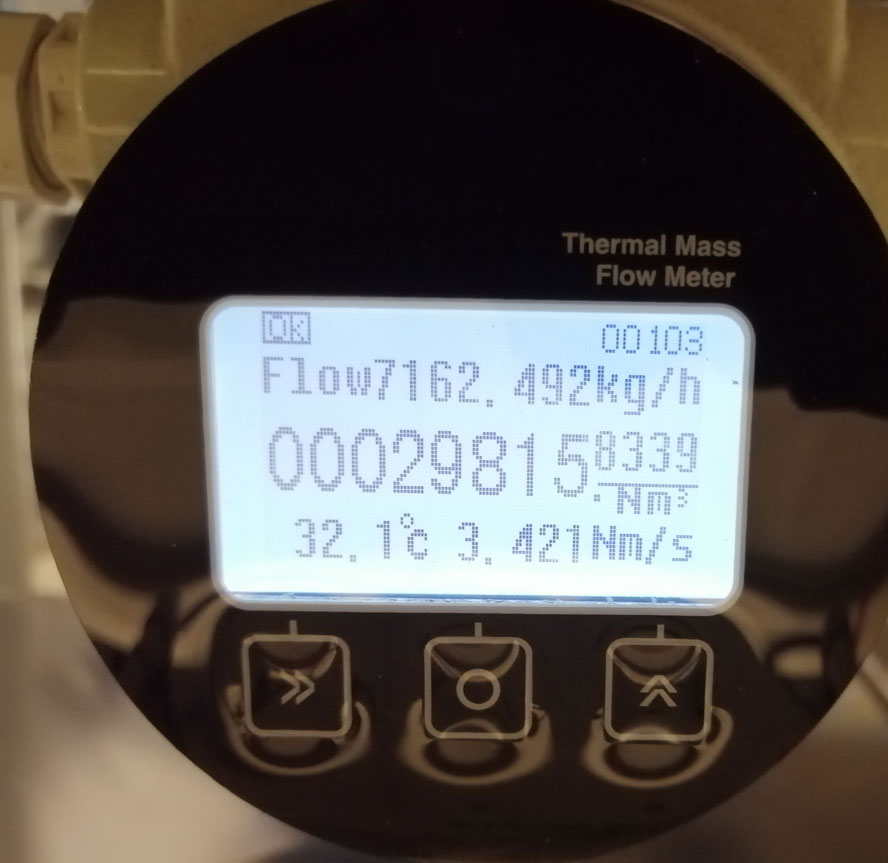
Mass Flow units for natural gas measurement
Mass flow skips that problem entirely. A kilogram of gas is a kilogram of gas no matter what the pressure or temperature is doing at that moment. That is the main reason thermal mass flow meters have become popular for natural gas metering over the last two decades, in biogas plants especially.
Natural gas is mostly methane, usually with smaller amounts of ethane and other light alkanes mixed in. It is flammable, and depending on the source it can carry hydrogen sulfide or other sulfur compounds. That combination is why gas metering equipment for natural gas duty almost always needs an ATEX, IECEx, or equivalent hazardous area rating.
Measurement units differ by region too. In the United States, gas volumes are usually reported in standard cubic feet, referenced to 14.73 psia and 60°F. Most of the rest of the world uses normal cubic meters, referenced to 101.325 kPa and 0°C. Typical heating value runs close to 10.8 kWh per normal cubic meter, or roughly 1,000 BTU per standard cubic foot, though this number shifts whenever the gas composition shifts.
That last point matters for thermal meters specifically. A sensor calibrated against one gas composition reads differently on a mixture with a different balance of methane, ethane, nitrogen, or CO2. If your supply gas composition drifts by season or by source field, tell your flow meter supplier before you order, not after the meter is already welded into the line.
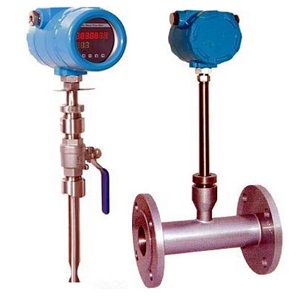
A thermal mass flow meter uses two temperature sensors, one heated and one left as a reference. Gas moving past the heated sensor carries heat away at a rate tied to the mass flow rate and the thermal properties of the gas. The meter electronics turn that cooling rate into a direct mass flow reading, in kg/h or Nm3/h, without a separate pressure transmitter, temperature transmitter, and flow computer working together to back-calculate mass from volume.
That is the core advantage over orifice plates and turbine meters, both of which need external compensation to reach a usable mass or standard volume value.
Thermal mass flow meters are not the right answer for every natural gas application, and we would rather say that upfront than have a customer find out the hard way six months after startup.
The table below lists the parameters engineers usually ask about first when they are shortlisting a gas meter. Send us your process conditions, pipe size, pressure, temperature, and gas composition, and we will confirm exact figures against the current SRK-100 and SRK-DL datasheets before you place an order.
| Parameter | SRK-100 (Pipeline, Insertion & In-Line) | SRK-DL (Micro Flow Meter/Controller) |
| Typical duty | Industrial gas pipelines, ducts, and process headers | Lab-scale, calibration, and specialty small gas streams |
| Line size / connection | Probe fits Ø6 to Ø6000 mm bore (insertion); standard flanges DN15 to DN100 per catalog, larger sizes on request | Tube fittings: Φ3, Φ6, 1/8 inch, 1/4 inch |
| Flow range | 0.05 to 80 Nm/s (air, 20°C, 101.33 kPa), scaled to pipe size | 2 SCCM to 30 SL/M |
| Accuracy | ±1% of reading, ±0.5% of full range | ±1% of full scale |
| Repeatability | ±0.5% of full range | ±0.2% of full scale |
| Turndown ratio | 100:1 typical, set by calibrated range | 50:1 (controller), 100:1 (meter) |
| Process pressure | Negative pressure up to 3.0 MPa (about 30 bar), in selectable ranges | Operating dP 0.05 to 0.5 MPa; max rating 3 MPa or 10 MPa depending on model |
| Process temperature | -20°C to 300°C across 5 selectable bands | 0°C to 50°C |
| Wetted materials | 316 stainless steel standard, Hastelloy and titanium sensor options | Stainless steel body, with Viton, neoprene, or nitrile rubber seals |
| Output / communication | 4-20 mA (1000 ohm max load), HART, RS485 | 0-5V, 4-20 mA, or 1-5V, with RS232 or RS485 Modbus |
Vortex meters, such as the STLU series, handle higher pressure and higher velocity gas than thermal meters, and plenty of plants run them on compressed air and steam alongside natural gas, which simplifies spares planning across the site.
Coriolis meters go a step further on pressure rating and repeatability. The density output most Coriolis meters advertise applies to liquid service though, not gas, so it will not add real value on a natural gas line. For most low pressure process and utility gas metering points below roughly 10 bar (145 psi), thermal stays the more cost effective pick.
In Southeast Asia, palm oil mills and food processing plants running biogas digesters are among the steadiest sources of thermal meter inquiries we see, usually on lines under 5 bar feeding a boiler or gas engine.
In the Middle East, associated gas from oil production and fuel gas metering into turbines drive a lot of the demand, often paired with a request for ATEX or IECEx certified housings.
African utilities and independent power producers ask us about flare gas recovery and LPG metering fairly often, usually tied to emissions reduction targets rather than fiscal billing.
In South America, industrial boiler gas metering on process plants is the common thread, frequently retrofitted onto existing lines through a hot tap to avoid a shutdown.
Across Australia and New Zealand, mining sites running gas gensets and remote LNG satellite plants come up most, where low power draw and RS485 output for SCADA both matter.
This is not a specific customer file, just a pattern we see often enough to be worth walking through. A biogas digester feeding a gas engine needs to measure raw biogas flow before it enters a scrubber. Line size sits around DN80 (3 inch), pressure runs low, under 0.5 bar, and the gas composition includes methane along with meaningful amounts of CO2 and moisture.
In practice, orifice plates struggle here because the differential pressure signal at low flow gets lost in the noise, and moisture fouls the tap lines over time. An insertion thermal meter like the SRK-100 handles the low pressure and low velocity fine, as long as the moisture level is checked against the sensor's rated tolerance and a coalescing filter is added upstream if condensate is a known issue. We have walked several customers through this exact tradeoff before finalizing an order, and it usually comes down to how wet the gas actually is at that specific site.
Send us your process parameters and we will recommend the right meter technology and size for your line, along with a quote. Include:
Email sales@silverinstruments.com with these details, or send the datasheet or P&ID for the line and we will size it directly.
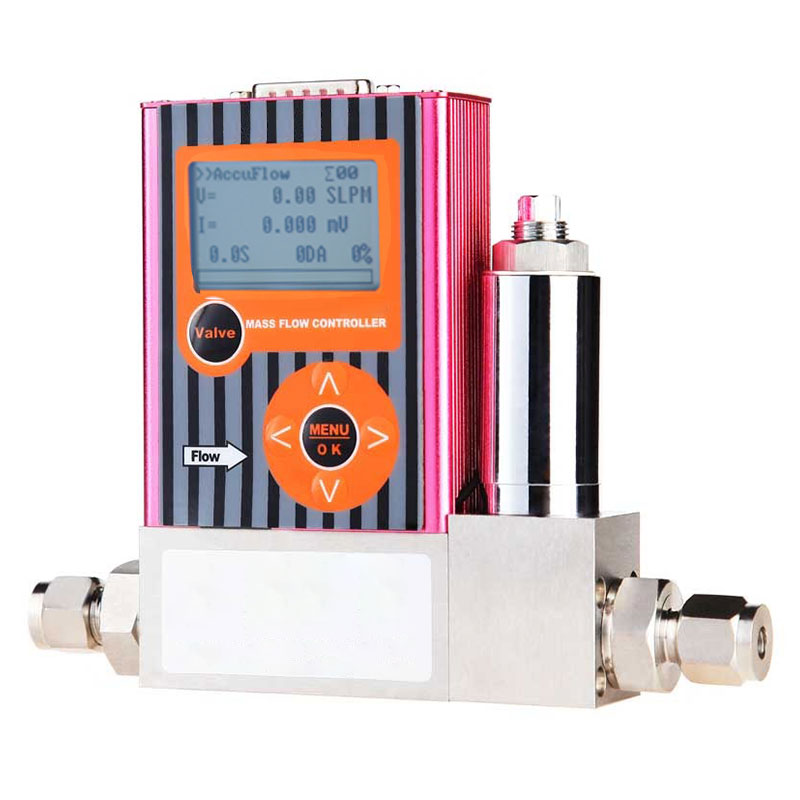 Digital mass flow controllers
Thermal dispersion principle. Gas mass flow meter/ controller. Min flow starts from 2 sccm. For air, CO2,N2, natural gas .....
VIEW
Digital mass flow controllers
Thermal dispersion principle. Gas mass flow meter/ controller. Min flow starts from 2 sccm. For air, CO2,N2, natural gas .....
VIEW
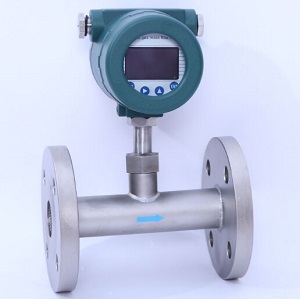 In-line type thermal dispersion flow meter
Gas mass flow measurement. Flange or thread process connection. Large turndown ratio-100:1. Without any temp & press compensation.
VIEW
In-line type thermal dispersion flow meter
Gas mass flow measurement. Flange or thread process connection. Large turndown ratio-100:1. Without any temp & press compensation.
VIEW
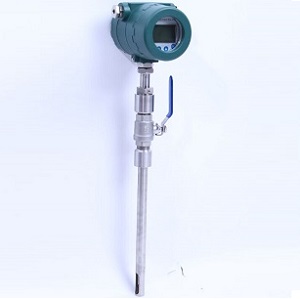 Insertion type thermal mass flow sensor
Insertion gas flow sensor and easy install. Low cost meter for large pipeline. Factory thermal mass flow meter price For large pipe or rectangular duct or stacks.
VIEW
Insertion type thermal mass flow sensor
Insertion gas flow sensor and easy install. Low cost meter for large pipeline. Factory thermal mass flow meter price For large pipe or rectangular duct or stacks.
VIEW
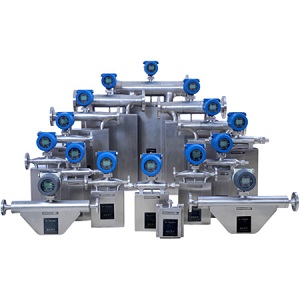 Coriolis Mass Flow Meter
Direct mass flow measurement. High accuracy: 0.1 %~0.2%. Also measure density, temperature, pressure. For all fluids measurement.
VIEW
Coriolis Mass Flow Meter
Direct mass flow measurement. High accuracy: 0.1 %~0.2%. Also measure density, temperature, pressure. For all fluids measurement.
VIEW
 Vortex Flow Meter
Vortex Flow meter is for clean liquid, gas and steam flow measurement. Contact us to choose proper type flow sensor and get the competitive quotation.
VIEW
Vortex Flow Meter
Vortex Flow meter is for clean liquid, gas and steam flow measurement. Contact us to choose proper type flow sensor and get the competitive quotation.
VIEW
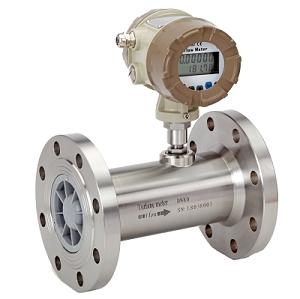 Gas Turbine Flow Meter
Robust Gas flow meter for natural gas,LPG,biogas flow measurement.Inquiry Gas TUF Flowmeter price with EVC directly from China manufacture.
VIEW
Gas Turbine Flow Meter
Robust Gas flow meter for natural gas,LPG,biogas flow measurement.Inquiry Gas TUF Flowmeter price with EVC directly from China manufacture.
VIEW