
English
Stainless Steel Flow Meter: Types, Models, and How to Choose
A stainless steel flow meter uses 304, 316, or 316L wetted parts to handle corrosive fluids, hygienic process lines, or high temperature service that a cast iron or plastic body cannot survive. Silver Automation Instruments builds six stainless steel flow meter types on this platform: oval gear, sanitary electromagnetic, sanitary turbine, Coriolis mass, vortex, and metal tube rotameter. Each one fits a different fluid and a different industry, so the right choice depends on whether the line carries water, oil, steam, gas, or a food grade liquid.
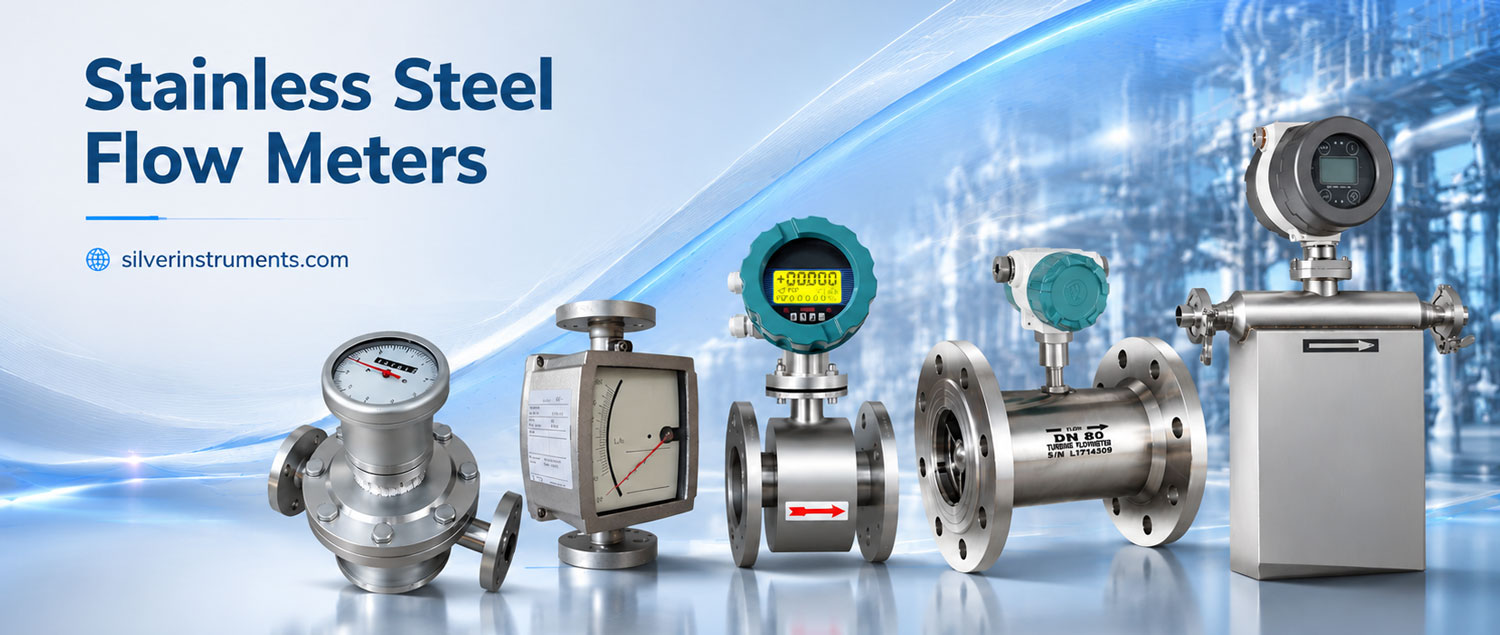
A flow meter body fails long before the electronics inside it do, and in most cases it fails at the material, not the sensor. Cast iron housings pit and crack under salt spray or acid exposure within a year or two. Plastic bodies soften or crack under steam temperature. Stainless steel avoids both failure modes, which is why it shows up as the default wetted material across chemical, food, pharmaceutical, marine, and oil and gas installations.
Silver Automation Instruments offers 304, 316, and 316L stainless steel across its flow meter range, selected by application rather than applied as a blanket upgrade. 304 covers general duty and dry gas lines. 316 and 316L carry the molybdenum content that resists chloride pitting, which matters for seawater, produced water, and CIP cleaning chemicals. These flow meters come in wafer, flange, tri-clamp, or insertion connection styles, in line sizes down to DN3 or DN6 for low flow work, with accuracy classes from 0.2 percent up to 1.5 percent depending on the technology. Output options include Modbus RS485 RTU as our standard digital protocol, alongside 4 to 20 mA and HART, with Profibus DP available on request for plants standardized on that bus.
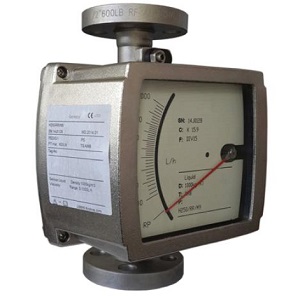
Some of stainless steel flow meters lines still ship as simple mechanical indicators, a direct reading dial driven straight off the rotor or float with no electronics involved. The metal tube rotameter is the clearest example, and plenty of utility gas lines still run one today because there is nothing to fail electrically and nothing to calibrate against a power supply. The tradeoff is that someone has to walk out and read the dial, and there is no signal to feed into a SCADA system or a billing record.
Digital versions of the same technologies add a transmitter, a local display for instantaneous and totalized flow, and an output signal your control system can actually use. Most of our customers now specify digital, even on rotameters, once they realize how little the electronics add to the price compared to the value of having the reading available remotely. We build both versions on request, so if your site still runs on manual log sheets, that does not rule out a stainless steel meter, it just changes which variant we quote.
Here is the thing. There is no single stainless steel flow meter that covers every fluid. A meter built for hygienic milk service will not hold up on abrasive slurry, and a meter sized for viscous bitumen will not read accurately on compressed air. The six types stainless steel flow meter families below cover the fluid classes we see most often from customers across water, chemical, food, and energy sectors.
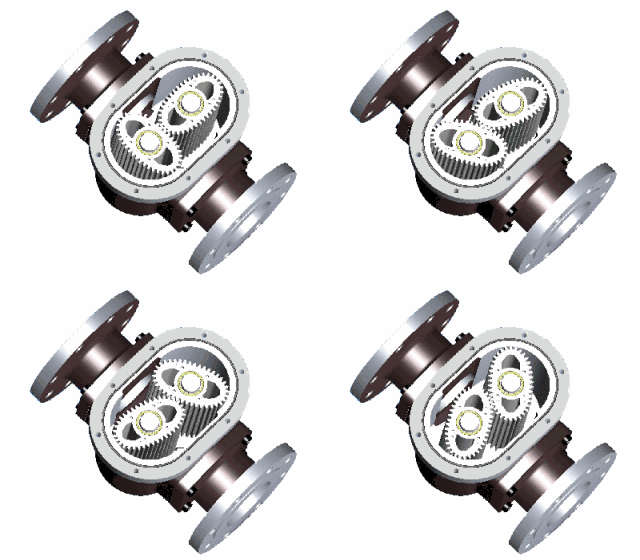
Oval gear meters use two interlocking gears that trap a fixed volume of fluid per rotation, so they read accurately on liquids too thick or too non-conductive for other technologies. We build the stainless steel oval gear flow meter housing and gear set in 304 or 316 stainless steel as standard, and offer a jacketed version for hot, viscous products like bitumen or heavy fuel oil that need heating medium circulating around the meter body to keep flowing.
This is our recommended technology for diesel, lubricating oil, edible oil, and viscous chemical blends. It is not the right choice for large diameter, low viscosity water lines, where the pressure drop and moving parts cost more in maintenance than an electromagnetic meter would.
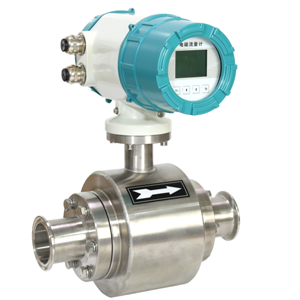
The SHD-SE13 is our hygienic magmeter, built with a stainless steel 304 or 316 body and a tri-clamp or DIN 11851 sanitary fitting so it drops straight into a CIP cleaning line without a gasket that traps product residue. We ship this model for tap water, drinking water, tomato paste, liquid egg, molasses , juice, vinegar, and similar conductive food fluids where a standard industrial magmeter body would not meet the plant's hygiene standard.
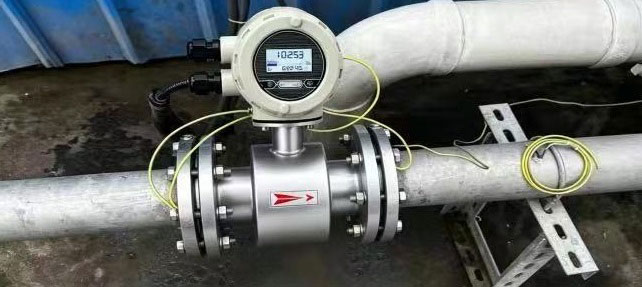
Stainless steel magnetic flow meter for portable water flow measurement
As with any mag flow meterr, the fluid has to be conductive. Edible oils and fats will not register a reading on this technology, no matter how food grade the wetted material is. For oil based hygienic fluids we point customers to the sanitary turbine meter below instead.
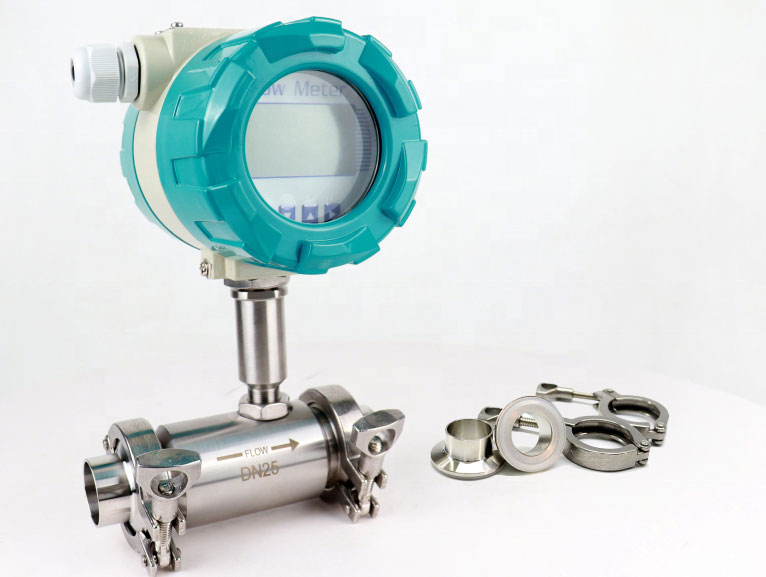
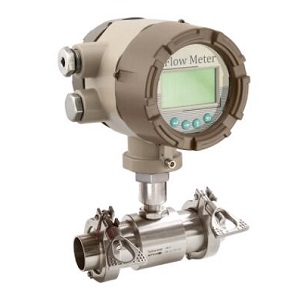
Stainless steel turbine flow meter for edible oil measurement
Turbine meters use a spinning rotor to measure velocity, and in a stainless steel 304 or 316 polished bore with tri-clamp ends, this becomes our go-to meter for milk, palm oil, edible oil, vegetable oil , and fish oil lines in dairy, beverage, and pharmaceutical plants. Accuracy runs around 0.5 percent, and the smooth interior finish avoids the crevices where bacteria or product residue could build up between cleaning cycles.
Stainless steel Turbine meters need reasonably clean, low viscosity fluid to spin the rotor correctly. If the product carries pulp, fiber, or high viscosity like some fruit concentrates, we would look at Coriolis instead, since a fouled rotor drifts out of calibration faster than most food plants want to deal with.
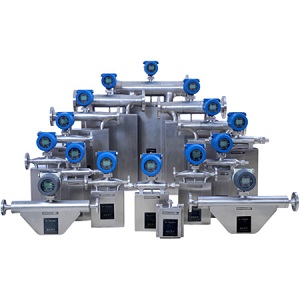
When a customer needs true mass flow rather than a volumetric reading, or the product density shifts with temperature in a way that would throw off any other technology, we specify Coriolis. The SH-CMF series coriolis mass flow meters measuring tubes are 316L, and the meter reads directly in kg/h or t/h, with accuracy between 0.1 and 0.2 percent depending on model. This is the mass flow meter we recommend for custody transfer, chemical dosing, and any batching process where the actual mass added is what gets billed or controlled.
Coriolis handles cryogenic and two-phase fluids better than most alternatives, which is why it shows up on liquid CO2, honey, syrup, chocolate, molasses. It does carry a pressure drop, so on low pressure systems we check the available differential before confirming tube size. Undersizing against the wrong pressure budget is the most common Coriolis sizing mistake we see from customers who specify it themselves before contacting us.
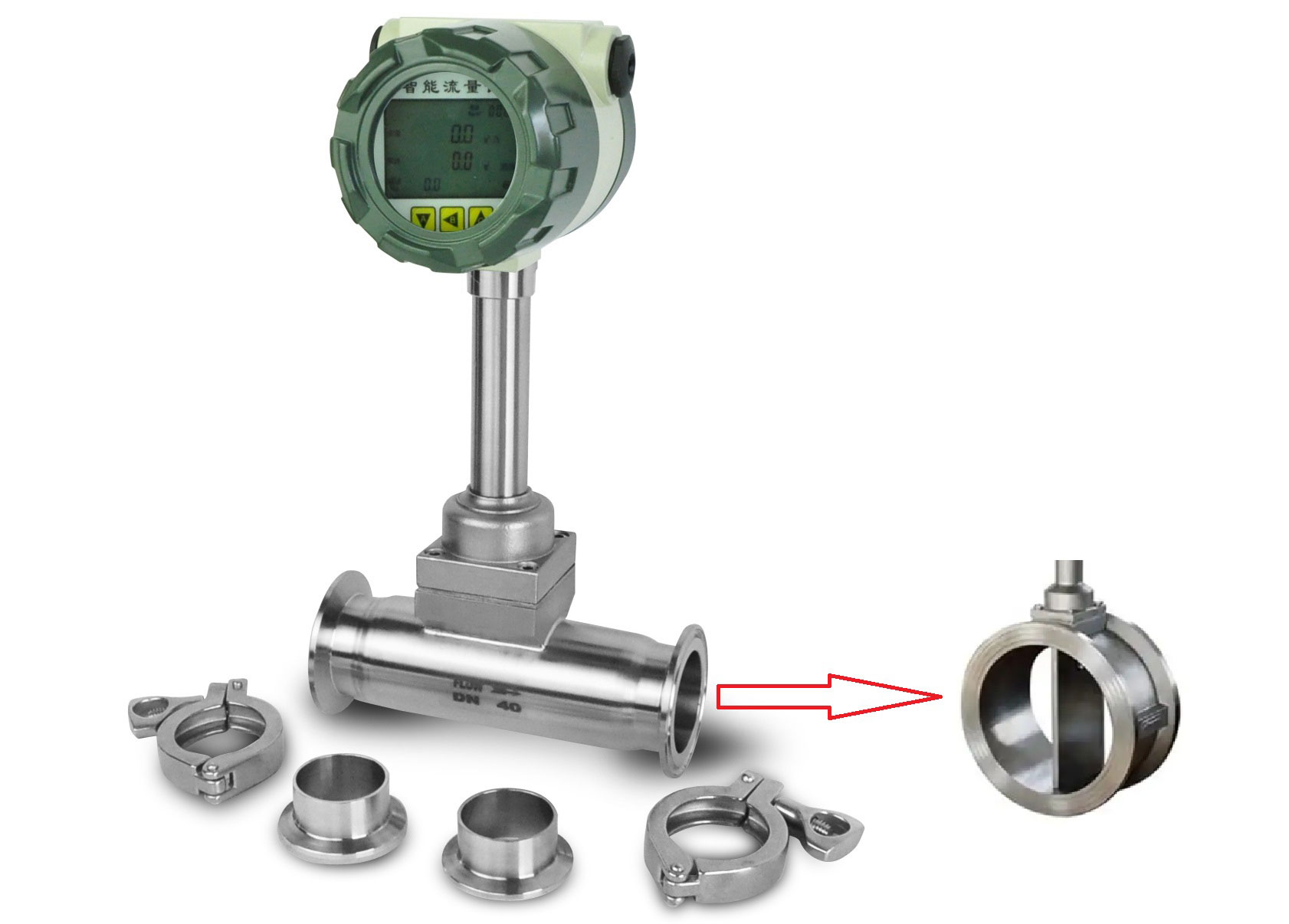
Stainless steel vortex flow meter
Vortex meters have no moving parts, which makes the 316 stainless steel body and shedder bar well suited to steam, clean gas, and compressed air service where reliability matters more than the last decimal point of accuracy. The STLU-VFN variant adds temperature compensation for saturated and superheated steam, so the mass flow output stays correct as pressure shifts across a production shift.
Vortex technology needs 15 to 20 diameters of straight upstream pipe to read correctly, and it loses accuracy at low Reynolds numbers. On a small line running near minimum flow, this may not be the right fit. We size against the actual flow range before confirming a model, not just the nominal pipe diameter.
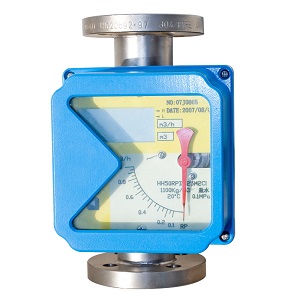
The HH50 is our variable area flow meter , built with a 316 stainless steel metering tube and float for applications where a simple, robust, low cost indicator is enough. It works as a mechanical local indicator with a direct reading scale, or as a digital version with pulse or 4 to 20 mA output for remote monitoring. Nitrogen, oxygen, compressed air, and general utility gas or liquid lines are the typical fit.
Accuracy on a metal tube rotameter runs around 1.5 to 2.5 percent, noticeably wider than Coriolis or oval gear, so we do not recommend it where custody transfer or tight dosing accuracy is the goal. For a simple flow indicator on a utility line, though, it is often the most cost effective option in stainless steel.
304 stainless steel works for dry gas lines and indoor utility service where budget matters more than long term corrosion resistance. We still see it specified on compressed air branches with no chloride or acid exposure.
316 and 316L are wetted materials across these flowmeter families above, and for most industrial and hygienic projects this is the right default. The molybdenum content in these grades resists chloride pitting far better than 304, which is why they hold up on seawater, produced water, brine, and CIP cleaning chemicals over years of service rather than months.
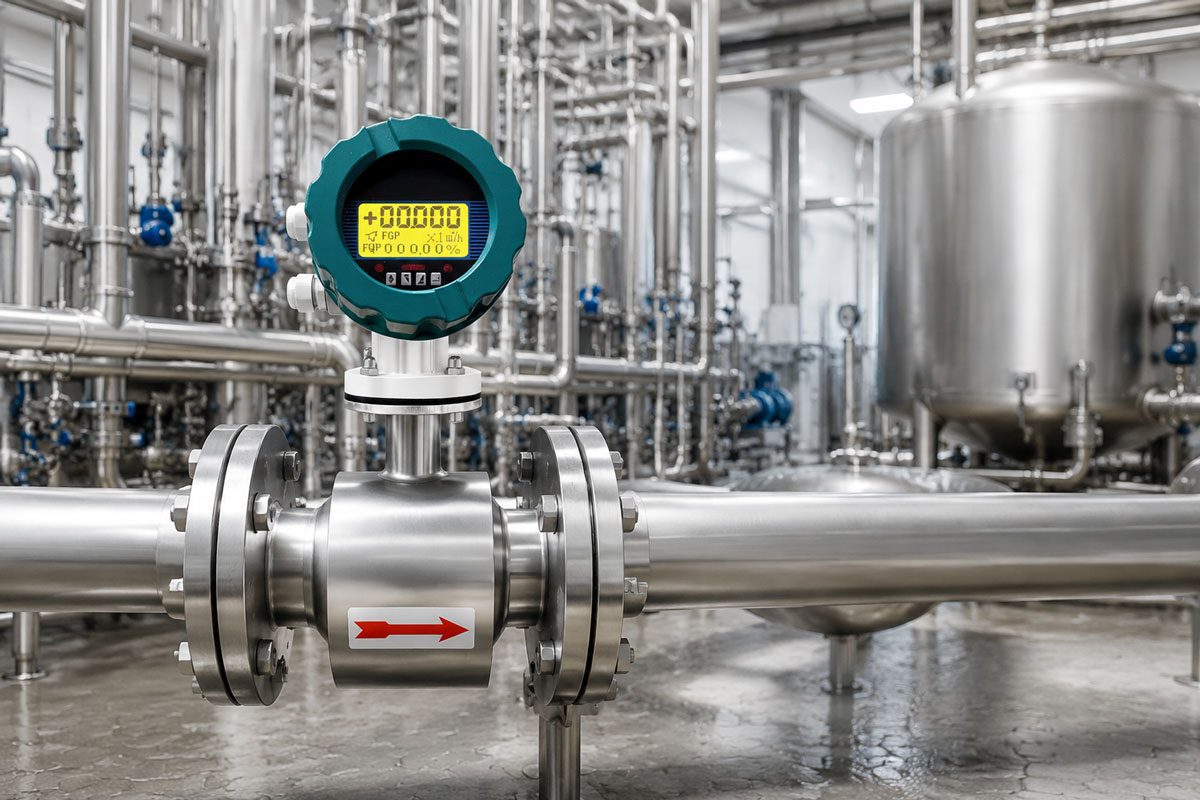
Industrial oil, diesel, and viscous chemical lines are the heaviest demand for the oval gear meter, particularly from palm oil refineries in Southeast Asia and lubricant blending plants across the Middle East. Water and wastewater utilities in Australia and New Zealand lean on the electromagnetic and Coriolis lines for both clean water billing and sludge dosing, since one technology rarely covers both fluid types well.
Food and pharmaceutical plants across Southeast Asia and South Africa are the main customers for the sanitary turbine and SHD-SE13 magmeter, running milk, juice, edible oil, and vinegar lines that need a tri-clamp connection and a polished bore for CIP compliance. Steam and compressed air users, from textile mills to hospitals, are the steadiest market for the STLU-VFN vortex meter and the HH50 rotameter, where reliability and low maintenance matter more than sub-percent accuracy.
Natural gas, nitrogen, and oxygen distribution lines round out the picture, typically specifying either the metal tube rotameter for simple local indication or a Coriolis meter where the gas is sold or dosed by mass rather than volume.
Middle East customers add one more consideration into the mix that other regions rarely deal with at the same intensity, and that is ambient temperature. A stainless steel meter body sitting in direct sun on an outdoor skid in the Gulf can see surface temperatures well above the fluid temperature inside it, so we check the transmitter's rated ambient range separately from the process temperature rating before confirming a model for those projects.
The material grade only does half the job. Installation gets the rest done, and we see the same mistakes come up across every one of these six product types. Vortex and turbine meters both need straight upstream pipe, typically 15 to 20 diameters, and skipping that run because the skid was already welded together is the single most common cause of a customer calling back to say the reading looks wrong.
More information about install of stainless steel flow meter:
Oval gear and rotameters need to be installed the right way up, since gravity and float position are part of how they work, and a rotameter mounted horizontally will simply not read correctly no matter how good the stainless steel construction is. Coriolis tubes are more forgiving on orientation but sensitive to vibration from nearby pumps, so we ask about mounting location before finalizing a spec on high vibration skids.
A dairy processing plant in Vietnam contacted us last year after a plastic body flow meter on their milk receiving line started drifting out of calibration within months, most likely from repeated CIP cycles at elevated temperature. We replaced it with a sanitary hygienic turbine meter in 316L, DN50, tri-clamp connection, rated for the plant's 95 degree Celsius CIP cycle without deformation.
The customer paired it with an SHD-SE13 sanitary magmeter on their process water line feeding the same CIP skid, since that line runs conductive tap water rather than milk. Running two different technologies on two different fluids in the same skid is common in food plants, and it is usually the right call rather than trying to force one meter type to cover both.
Send us the following and we will match your line to the right stainless steel flow meter type and grade, usually within one business day.
Email these details to sales@silverinstruments.com and we will confirm the model, material grade, and lead time against your actual application rather than a generic quote.
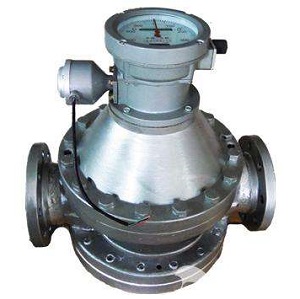 Stainless steel oval gear flow meter
Oval gear flow meter is a kind of PD flow meter which measures the liquid constantly. Oval meter can be made into mechanical oil flow meter also made into digital type with various outputs
VIEW
Stainless steel oval gear flow meter
Oval gear flow meter is a kind of PD flow meter which measures the liquid constantly. Oval meter can be made into mechanical oil flow meter also made into digital type with various outputs
VIEW
 Sanitary Magnetic flow meter
SHD-SE13 Magmeter sensor is a type sanitary type flow measuring device.It can measure tap water, tomato paste, liquid egg, molasses, juice, vinegar and so on which are widely used in food-processing,...
VIEW
Sanitary Magnetic flow meter
SHD-SE13 Magmeter sensor is a type sanitary type flow measuring device.It can measure tap water, tomato paste, liquid egg, molasses, juice, vinegar and so on which are widely used in food-processing,...
VIEW
 Sanitary Hygienic Liquid Turbine Flow meter
Hygienic Turbine Flow meter is for clean water, milk, palm oil, edible oil, vegetable oil, fish oil flow measurement ,it is used in the dairy, beverage, food processing and pharmaceutical industries.
VIEW
Sanitary Hygienic Liquid Turbine Flow meter
Hygienic Turbine Flow meter is for clean water, milk, palm oil, edible oil, vegetable oil, fish oil flow measurement ,it is used in the dairy, beverage, food processing and pharmaceutical industries.
VIEW
 Coriolis Mass Flow Meter
Direct mass flow measurement. High accuracy: 0.1 %~0.2%. Also measure density, temperature, pressure. For all fluids measurement.
VIEW
Coriolis Mass Flow Meter
Direct mass flow measurement. High accuracy: 0.1 %~0.2%. Also measure density, temperature, pressure. For all fluids measurement.
VIEW
 Vortex Flow Meter
Vortex Flow meter is for clean liquid, gas and steam flow measurement. Contact us to choose proper type flow sensor and get the competitive quotation.
VIEW
Vortex Flow Meter
Vortex Flow meter is for clean liquid, gas and steam flow measurement. Contact us to choose proper type flow sensor and get the competitive quotation.
VIEW
 Metal Tube Rotameter
HH5 Variable Area flow meter is Metal Tube Rotameter, get price now for digital rotameter,flow indicator rotameter.
VIEW
Metal Tube Rotameter
HH5 Variable Area flow meter is Metal Tube Rotameter, get price now for digital rotameter,flow indicator rotameter.
VIEW