English
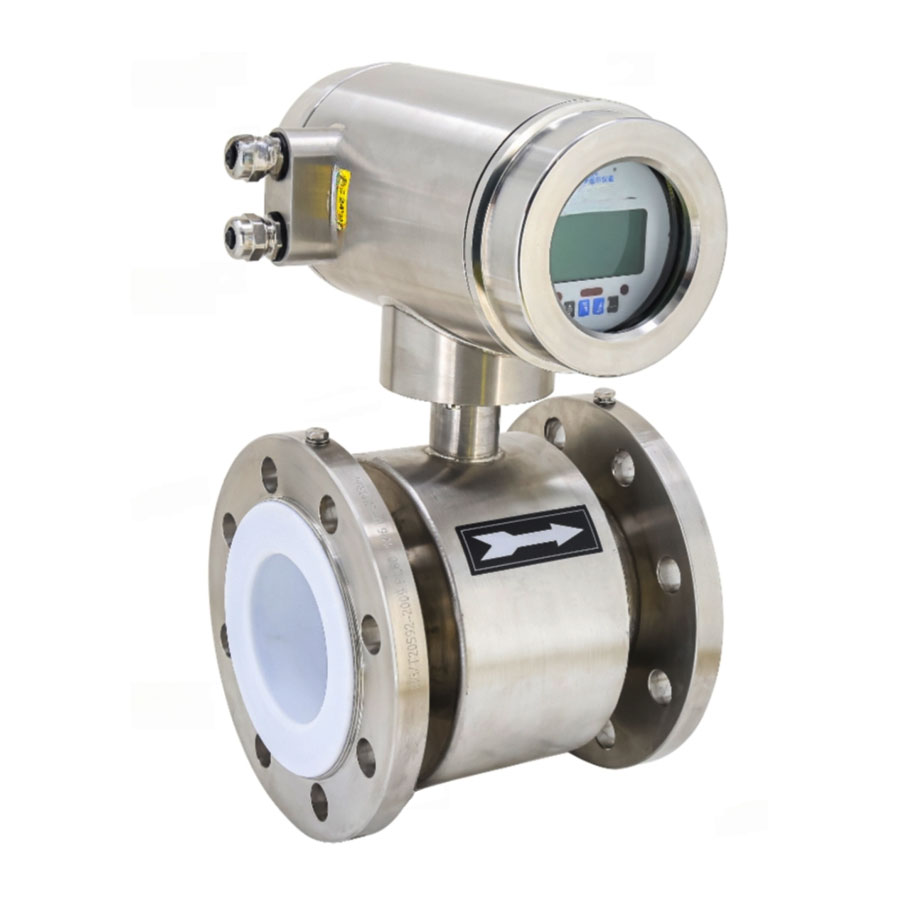
A drinking water flow meter measures potable water flow in GPM or m³/h. For most water lines DN15 to DN300 (1/2" to 12"), an electromagnetic flow meter with 316L stainless steel body and food-grade rubber or PTFE liner is the standard choice. Common flow ranges run from 0.5 GPM on a 1/2" line up to 2,000+ GPM on a 10" main, with accuracy of ±0.2% to ±0.5% of reading.
Not every water flow meter is safe for drinking water. The wetted parts (body, liner, electrodes) must be food-grade and lead-free. For potable water lines, that usually means a 316L stainless steel body with a food-grade rubber, PTFE, or PFA liner, and stainless steel or Hastelloy electrodes. Painted carbon steel and brass with lead content are not suitable.
Typical applications we see at Silver Automation Instruments: municipal water distribution, building inlet metering, hotel and hospital water supply, bottled water plants, reverse osmosis (RO) systems, and remote village water supply projects across Africa and the Pacific.
Here's the thing most buyers get wrong. They tell us the pipe is 2", so they want a 2" drinking water flow meter. But pipe size and flow rate are two different questions. A meter sized to the pipe will read poorly if the actual flow sits at the low end of the range.
Aim to run the meter between 30% and 70% of its maximum flow. Below 10% accuracy drops fast. Above 90% you lose headroom and risk cavitation.
Rough sizing guide for electromagnetic meters on clean water:
| Pipe Size | Typical Flow Range | Common Use |
| DN15 (1/2") | 0.5 - 8 GPM (0.1 - 1.8 m³/h) | RO skid, lab water |
| DN25 (1") | 2 - 30 GPM (0.5 - 7 m³/h) | Building inlet, small hotel |
| DN50 (2") | 10 - 130 GPM (2 - 30 m³/h) | Apartment block, factory utility |
| DN100 (4") | 40 - 530 GPM (9 - 120 m³/h) | Hospital main, small water plant |
| DN200 (8") | 180 - 2,100 GPM (40 - 480 m³/h) | Municipal distribution branch |
| DN300 (12") | 400 - 4,700 GPM (90 - 1,070 m³/h) | City trunk line, water treatment outlet |
If you do not know your flow rate, the simplest field check is a bucket test. Fill a 5-gallon bucket and time it. 15 seconds means 20 GPM. 30 seconds means 10 GPM. Do this at peak demand, not at 3 AM.
For drinking water you have three realistic options:
Most drinking water meters need a 4-20 mA output for the SCADA or PLC, plus a pulse output for the totalizer or billing system. HART is common in larger plants. For remote village systems with no power, battery-powered meters with GPRS/NB-IoT output are now standard. Send us your control system brand (Siemens, Schneider, Allen-Bradley, local SCADA) and we will match the protocol.
Send us your pipe size (DN or inch), peak flow (GPM or m³/h), water temperature (°C), line pressure (bar), output signal needed (4-20 mA, pulse, HART, Modbus), and installation type (above-ground, buried pit, or remote). We ship from China to over 60 countries and most orders leave the factory in 7 to 15 days. See our electromagnetic flow meter for potable water for full specs.
Other water flow meters:
we will contact you within 24 hours..