
English
CFM (cubic feet per minute) is the actual volumetric flow of a gas at whatever temperature and pressure exist at the measurement point. SCFM (standard cubic feet per minute) normalizes that same flow to a fixed reference condition, typically 68 F (20 C) and 14.696 psia (1 atm). The two values describe the same physical gas quantity, but SCFM lets engineers compare flow rates across different operating pressures and temperatures without ambiguity. For flow meter selection, the distinction directly affects which meter range you need and how you configure the output signal.
A customer in a chemical plant in Malaysia contacted Silver Instruments last year. They had a thermal mass flow meter installed on a nitrogen purge line. The meter was ordered for 200 SCFM but the actual line velocity was hitting the top of the range at low ambient temperatures. The pipe was DN50, the operating pressure was 6 bar (g), and the line temperature varied between 25 C and 45 C. The meter specification was wrong because the engineer had treated SCFM and CFM as interchangeable.
They are not interchangeable. Here is the practical difference.
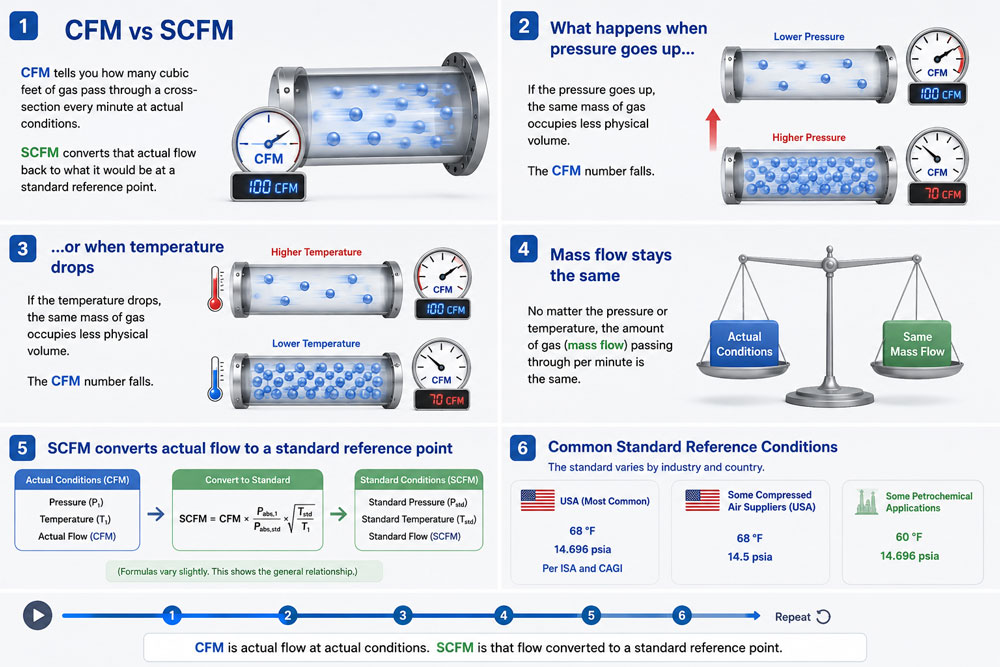
CFM tells you how many cubic feet of gas pass through a cross-section every minute at actual conditions. If the pressure goes up or the temperature drops, the same mass of gas occupies less physical volume. The CFM number falls. The mass flow stays the same.
SCFM converts that actual flow back to what it would be at a standard reference point. The standard varies by industry and country. In the USA the most common reference is 68 F and 14.696 psia, per ISA and CAGI. Some compressed air suppliers use 14.5 psia. Some petrochemical applications reference 60 F and 14.696 psia. The difference matters when you are buying a meter, specifying a compressor, or comparing two datasheets from different manufacturers.
The relationship between SCFM and CFM comes directly from the ideal gas law. For most industrial gases at moderate pressures, this is accurate to within 1-2%.
SCFM = CFM x (Pactual / Pstandard) x (Tstandard / Tactual)
Where pressures are in absolute units (psia) and temperatures are in Rankine (F + 459.67) or Kelvin (C + 273.15).
A worked example: a compressed air system runs at 100 psig (114.7 psia) and 95 F (555.7 R). The actual flow through the pipe is 50 CFM. Using reference conditions of 68 F (527.7 R) and 14.696 psia:
SCFM = 50 x (114.7 / 14.696) x (527.7 / 555.7) = 50 x 7.805 x 0.9496 = 370 SCFM
The same mass of air that is 50 CFM at line conditions equals 370 SCFM at standard conditions. This is not a trivial ratio. Ordering a meter sized for 50 CFM when the application needs to measure 370 SCFM means ordering a meter that is completely wrong.
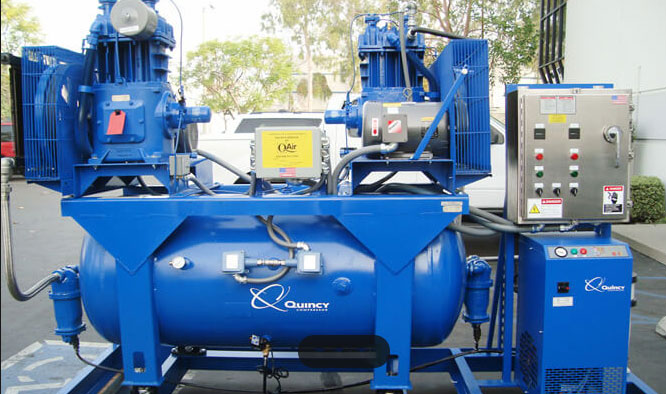
Industrial air compressor
Look at the nameplate of any industrial air compressor and the rated output is in SCFM or Nm3/min. Not CFM. Not actual m3/min. Always standard conditions. There is a good reason for this, and understanding it makes the SCFM concept stick.
A compressor pulls in ambient air and squeezes it. The mass of air it can deliver per minute depends on the ambient conditions at the inlet: temperature, pressure, and humidity. A compressor installed at sea level in Finland in January delivers more mass per minute than the same machine running at 2,000 meters elevation in Thailand in August. The machine is identical. The ambient conditions are not.
If the manufacturer rated the compressor in actual CFM at the discharge point, that number would change with every installation site and season. Customers in different countries could not compare competing models. Service contracts and air consumption guarantees would be meaningless. So the industry settled on a single reference point. The SCFM rating on the nameplate tells you how much air the compressor delivers, normalized to standard inlet conditions, regardless of where you install it.
In practice this means every piece of pneumatic equipment downstream, from air dryers and filters to actuators and tools, is also rated in SCFM. The whole compressed air ecosystem speaks in standard flow. A 500 SCFM compressor feeding a header rated for 500 SCFM is a consistent match at any location.
So when an engineer asks Silver Instruments for a flow meter to monitor their compressed air header, the first question is: what is the compressor rated output in SCFM? That number is the ceiling of what the meter needs to handle. But here is where the mistake happens. The actual gas flowing through the pipe at 7 bar (g) and 35 C is far denser than the standard reference air. The actual volumetric flow (CFM) is a fraction of the SCFM figure. A header that carries 500 SCFM of compressed air at 7 bar (g) and 35 C has an actual pipe flow of roughly 57 CFM.
A vortex or turbine meter sized for 500 CFM of pipe flow on that application would be grossly oversized. A thermal mass flow meter with a range of 0 to 600 SCFM, installed in the correct pipe size and operating pressure, is the right specification. The compressor nameplate gave you the SCFM number. Use it as the basis for meter selection, not as a pipe velocity figure.
| Parameter | CFM | SCFM |
| Definition | Actual volumetric flow at line conditions | Volumetric flow corrected to standard reference conditions |
| Pressure reference | Actual operating pressure | 14.696 psia (1 atm) typical |
| Temperature reference | Actual line temperature | 68 F / 20 C typical (varies by standard) |
| Use case | Duct sizing, fan curves, HVAC | Compressor sizing, gas purchasing, mass balance |
| Varies with process conditions? | Yes | No (that is the point) |
| Linked to mass flow? | Only at fixed conditions | Yes, directly proportional to mass flow rate |
Most flow meters measure actual volumetric or actual velocity. To get SCFM, the meter needs either a built-in pressure and temperature compensation circuit or an external flow computer.
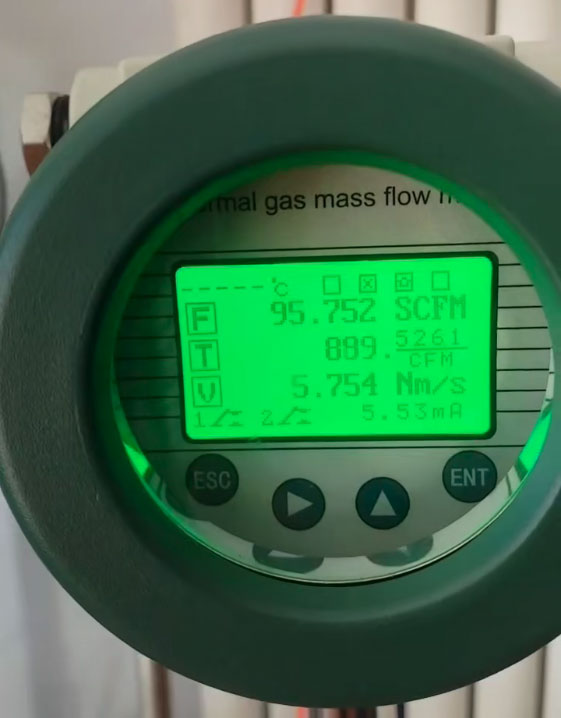
SCFM thermal mass flow meter
Thermal mass flow meters are the exception. They measure mass flow directly by sensing the heat transfer from a heated element to the gas stream. Because mass is not affected by pressure or temperature, these meters can display in SCFM without any external compensation if the gas composition is known and stable. Silver Instruments thermal mass flow meters for compressed air and nitrogen, for example, output in Nm3/h (the SI equivalent of SCFM) as the primary unit, with SCFM as an optional display unit.
For vortex flow meters and turbine flow meters, the raw output is actual volumetric flow. You need to feed the meter pressure and temperature inputs to calculate SCFM. On a Modbus or HART-enabled vortex meter this is straightforward. Without compensation, the meter reads CFM by default.
Coriolis mass flow meters measure mass directly in kg/h or lb/min. Converting to SCFM requires knowing the gas density at standard conditions, which the transmitter can calculate if you input the gas type.
Outside North America, SCFM is rarely used. The equivalent is Nm3/h, normal cubic meters per hour, referenced to 0 C and 101.325 kPa (or sometimes 20 C depending on the DIN or ISO standard cited). This creates the same issue. An engineer in Germany ordering a flow meter in Nm3/h and a distributor in the USA specifying in SCFM need to agree on the reference condition before comparing numbers.
For export projects in Southeast Asia, the Middle East, or Australia, Silver Instruments recommends stating both the Nm3/h figure at the reference standard used and the actual m3/h at operating conditions. This eliminates ambiguity at the instrument sizing stage and prevents the kind of re-ordering cost described earlier.
Most sizing errors happen because the engineer provides one number without specifying whether it is actual or standard. Before submitting an inquiry, confirm the following:
Answering these five questions before contacting a flow meter supplier cuts the back-and-forth by at least half. In practice, most sizing errors we see trace back to ambiguity on the first two points.
Silver Instruments engineers will select and size the right gas flow meter for your application. To get an accurate recommendation, send us the following:
Email sales@silverinstruments.com or visit silverinstruments.com contact with these details. We respond within one business day.
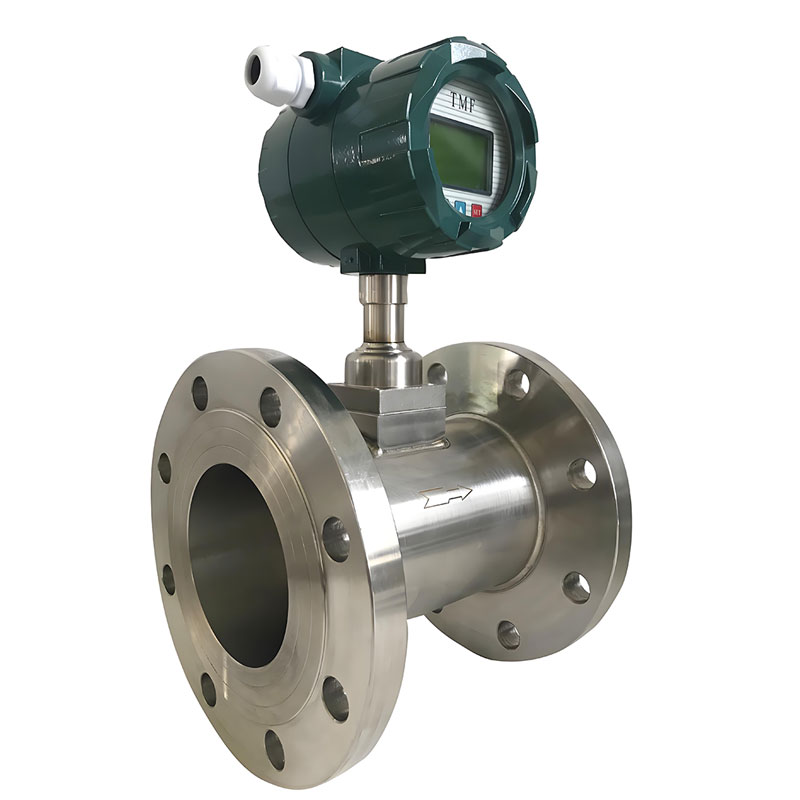 8" Compressed air flow meter
An 8-inch compressed air flow meter with a internal diameter of DN200 (approximately 200 millimeters or 8 inches), specifically designed to measure the cumulative flow of compressed air.
VIEW
8" Compressed air flow meter
An 8-inch compressed air flow meter with a internal diameter of DN200 (approximately 200 millimeters or 8 inches), specifically designed to measure the cumulative flow of compressed air.
VIEW
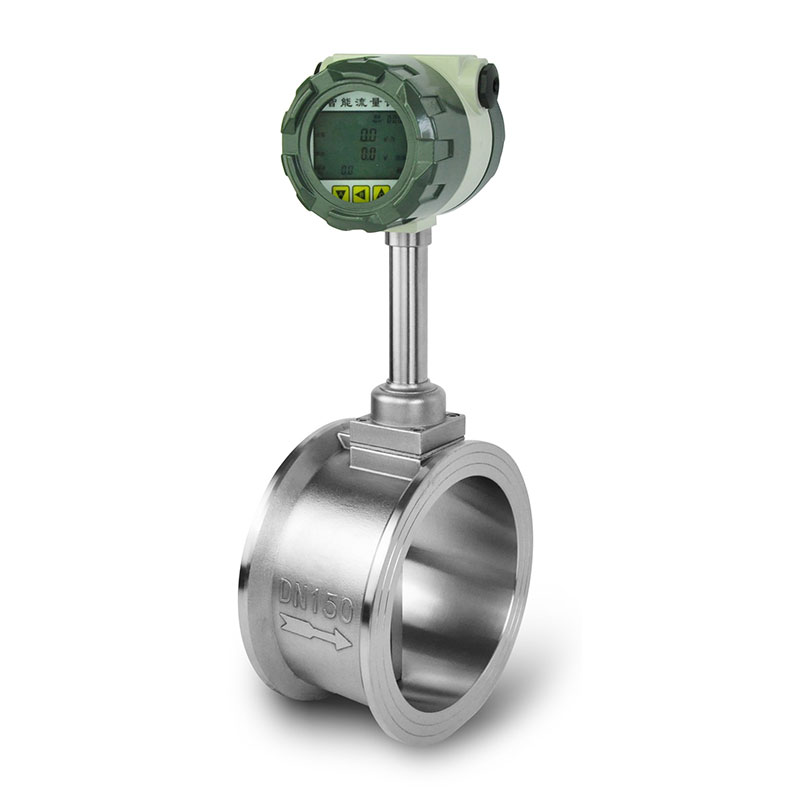 Digital flow meter for compressed air
What is digital flow meter for compressed air ?A digital flow meter for compressed air is a device used to measure the flow rate of compressed air in industrial settings. Compressed air is commonly us...
VIEW
Digital flow meter for compressed air
What is digital flow meter for compressed air ?A digital flow meter for compressed air is a device used to measure the flow rate of compressed air in industrial settings. Compressed air is commonly us...
VIEW
 Industrial Mass Air Flow Sensor
Air mass flow measurement. Low pressure drop. Max temp.350 degree C. For Air,compressed air,combustion hot air .
VIEW
Industrial Mass Air Flow Sensor
Air mass flow measurement. Low pressure drop. Max temp.350 degree C. For Air,compressed air,combustion hot air .
VIEW
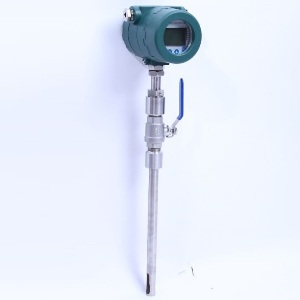 Compressed air insertion flow meter
Optimizing Compressed Air Measurement with Insertion Thermal Flow MetersCompressed air is a vital energy source in various industrial applications, powering machinery and tools essential for operation...
VIEW
Compressed air insertion flow meter
Optimizing Compressed Air Measurement with Insertion Thermal Flow MetersCompressed air is a vital energy source in various industrial applications, powering machinery and tools essential for operation...
VIEW
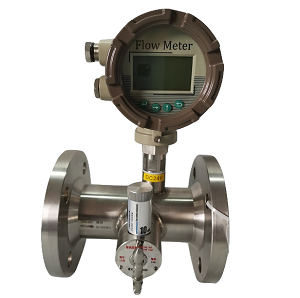 Digital nitrogen gas flow meter
Why need flow meter for nitrogen gas?Nitrogen, with the chemical formula N₂, is a colorless and odorless gas. Nitrogen is usually called an inert gas, and its chemical properties are very inactive. N....
VIEW
Digital nitrogen gas flow meter
Why need flow meter for nitrogen gas?Nitrogen, with the chemical formula N₂, is a colorless and odorless gas. Nitrogen is usually called an inert gas, and its chemical properties are very inactive. N....
VIEW
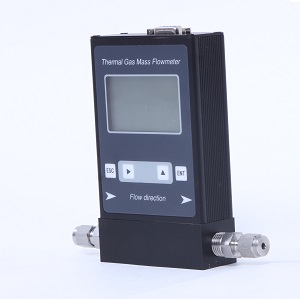 Micro air flow meter
Micro-flowrate thermal dispersion flow meter is designed on the basis of thermal dispersion, and adopts method of constant differential temperature to measuring air at very low flow. It has advantages...
VIEW
Micro air flow meter
Micro-flowrate thermal dispersion flow meter is designed on the basis of thermal dispersion, and adopts method of constant differential temperature to measuring air at very low flow. It has advantages...
VIEW
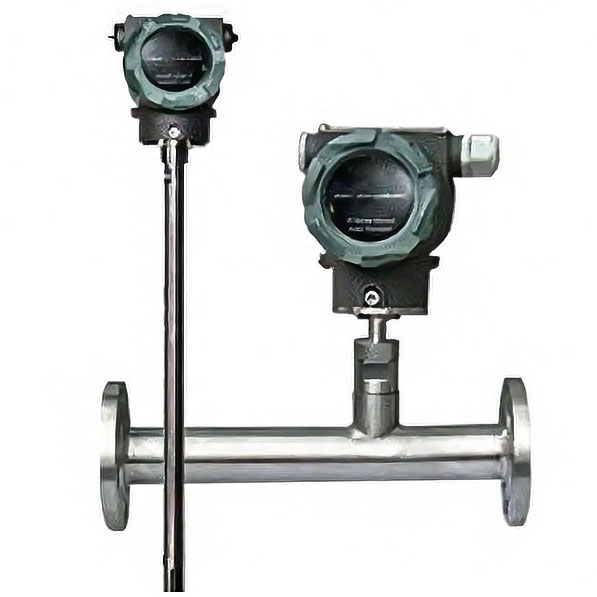 High temp air flow meter
For max 350°C (662°F) high temperature. For combustion air or exhaust air. Low pressure air flow measurement. For square duct or pipelines.
VIEW
High temp air flow meter
For max 350°C (662°F) high temperature. For combustion air or exhaust air. Low pressure air flow measurement. For square duct or pipelines.
VIEW
 Biogas Flow Meter
Sensor material SUS316 or PTFE lined. Inline flange /screw or insertion type . Low flow and low pressure biogas. 4-20mA, MODBUS RTU.
VIEW
Biogas Flow Meter
Sensor material SUS316 or PTFE lined. Inline flange /screw or insertion type . Low flow and low pressure biogas. 4-20mA, MODBUS RTU.
VIEW
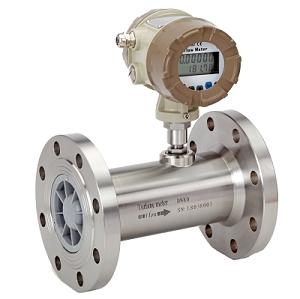 Gas Turbine Flow Meter
Robust Gas flow meter for natural gas,LPG,biogas flow measurement.Inquiry Gas TUF Flowmeter price with EVC directly from China manufacture.
VIEW
Gas Turbine Flow Meter
Robust Gas flow meter for natural gas,LPG,biogas flow measurement.Inquiry Gas TUF Flowmeter price with EVC directly from China manufacture.
VIEW