
English
Vortex Flow Meter for Compressed Air in a 6" Pipe: Sizing, CFM vs SCFM, and a North America Case
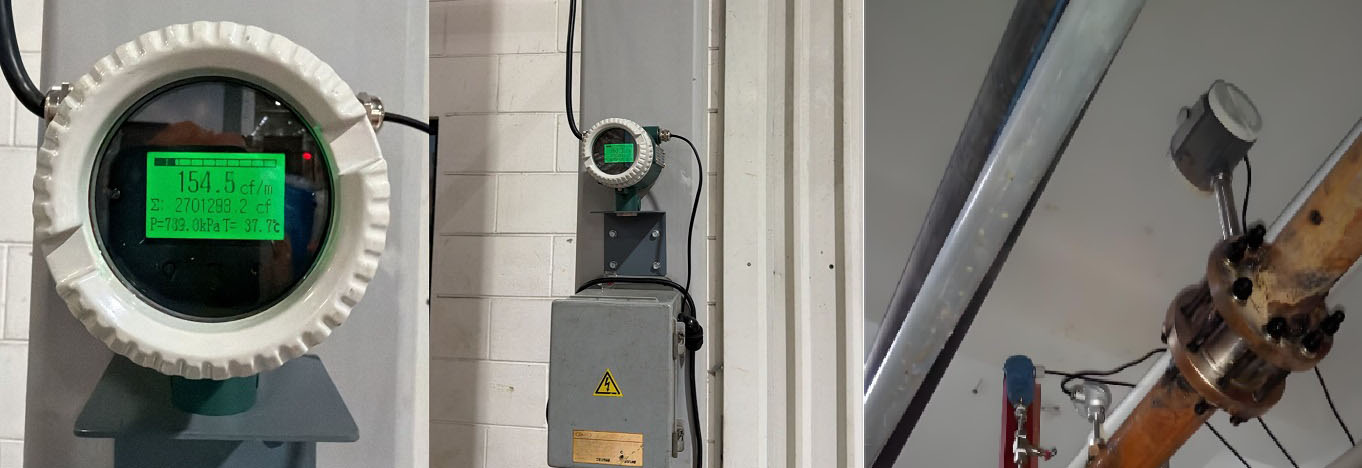
For compressed air in a 6" (DN150) steel pipe running 300 to 900 CFM at 8 bar and 15 to 30 °C, a DN150 vortex flow meter with built-in pressure and temperature compensation is the right pick. Always confirm whether your flow target is CFM (actual operating conditions) or SCFM (standard conditions) before sizing. Silver Instruments STLU series vortex flow meters cover this range and can read out directly in CFM with RS-485 Modbus or 4-20 mA HART output.
Earlier this year a North American compressed air system integrator came to us with a clear brief. They needed a vortex flow meter for a 6" steel pipe carrying compressed air. The flow range was 300 to 900 CFM. Operating pressure stayed below 120 psi (8.2 bar). Ambient and process temperature sat between 15 and 30 °C. The reading on the display had to be in CFM, not m³/h. The compressed air meter also had to talk to their PLC over RS-485 Modbus, and the indicator needed to sit 15 m away from the pipe because the install spot was hard to read at eye level.
None of these requirements are unusual. But each one changes the model code. So before we quoted a single SKU, we went back on email to lock down two things: the unit (CFM or SCFM) and the actual maximum flow.
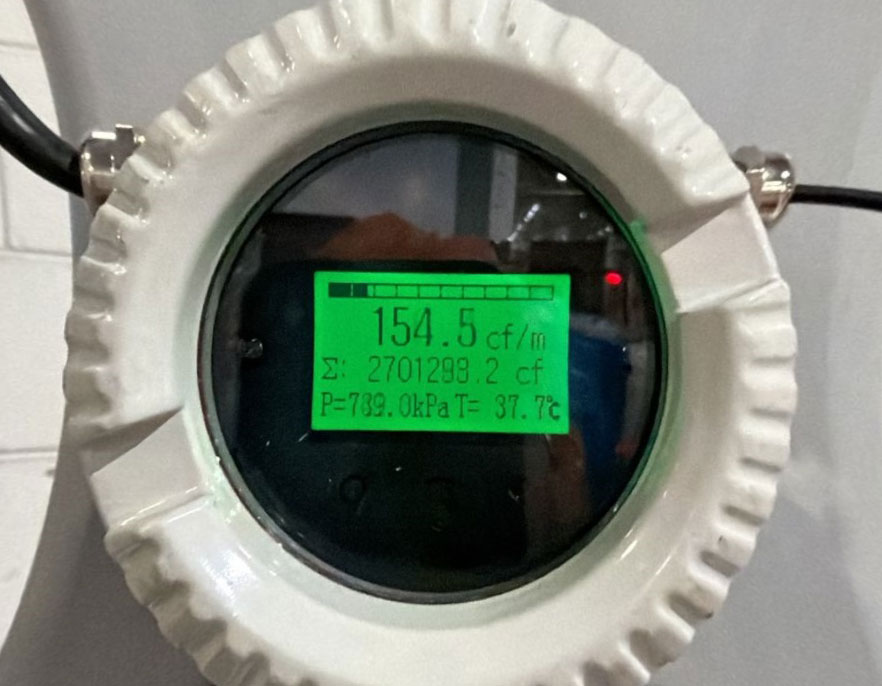
Most plant engineers know the difference. Some procurement teams do not. The numbers look similar on paper but they describe two very different things.
CFM (Cubic Feet per Minute) is volumetric flow at operating conditions. So at 8 bar and 25 °C, 1 CFM of compressed air is one cubic foot of the actual compressed gas, not its expanded equivalent.
SCFM (Standard Cubic Feet per Minute) is the same gas referenced back to standard conditions, usually 1 atm and 20 °C (some standards use 0 °C or 15 °C, which adds confusion). At 8 bar gauge, 900 SCFM is roughly 100 CFM of actual flow, because the gas has been compressed about 9 times.
If you size a meter for "900 CFM" but the customer really meant "900 SCFM," the meter will be 8 to 9 times oversized and the low-flow readings will fall below the lower velocity limit of the vortex sensor. That meter will read zero half the time. We have seen this happen on customer sites many times, so we always ask first.
In this case the customer confirmed CFM at operating conditions. That settles the sizing math.
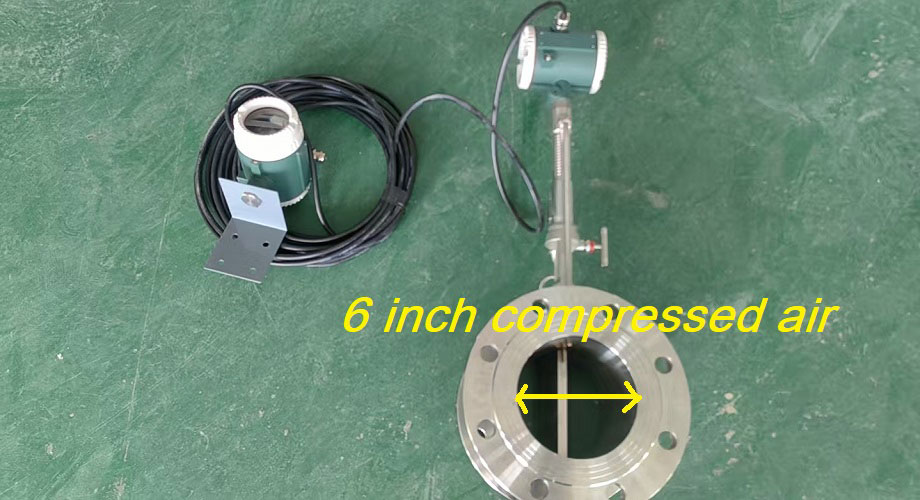
The pipe was already 6". The customer asked if they could drop down to DN100 (4") with a reducer to get a higher velocity and better turndown. We advised against it for compressed air at this duty.
Here is the thinking. Vortex meters work by shedding Karman vortices off a bluff body. The vortex frequency is linear with flow velocity, but only above a minimum velocity. For gas, that lower limit is usually around 4 to 5 m/s. Below that, no stable vortex, no signal. Above the upper limit (typically 60 to 70 m/s for gas) you get cavitation-like noise and accuracy drops.
At 8 bar and DN150, 300 CFM of compressed air sits comfortably inside the linear range of a DN150 vortex sensor. Going to DN100 would push the high end too close to the upper velocity limit and risk meter damage during compressor surge. Keeping the meter at line size also avoided welding a reducer into a pressure-rated steel line, which on a US site means extra ASME paperwork.
After two rounds of email to confirm the flow range and reading units, the customer ordered one unit with this model code:
STLU-G-1-3-15-D-1-5-1-D1-N-1-0-BPT-M0
Breaking it down:
· STLU: Silver Automation Instruments vortex flow meter
· G: Isolated (gas-isolated) Karman vortex type
· 1: Flanged process connection
· 3: Fluid is gas (compressed air)
· 15: DN150 / 6", flow range 190 to 3800 m³/h (covers the customer's 300 to 900 CFM with margin)
· D: With digital indicator
· 1: 24V DC power
· 5: RS-485 Modbus output
· 1: Standard temperature -40 to 250 °C
· D1: DIN PN16 flange (matches their site standard)
· N: Non explosion-proof (compressed air line, no Zone 1 around it)
· 1: Remote display, 15 m cable
· 0: IP65 housing
· BPT: Built-in pressure and temperature compensation (critical for compressed air, because compressed air density changes with line pressure and temperature)
· M0: Stainless steel 304 wet parts
The BPT option matters. Compressed air is not a fixed density. If line pressure swings from 6 bar to 9 bar during the day, mass flow swings too. Built-in P and T compensation calculates mass flow on the fly and reports it back as standard volume, so the operator on the floor sees one consistent CFM number on the indicator.
The site technician mounted the sensor on a horizontal run with the recommended 15D upstream and 5D downstream straight pipe, and put the remote display at eye level on a nearby panel. First power-up gave a stable CFM reading at idle, and the Modbus output mapped into their PLC without trouble.
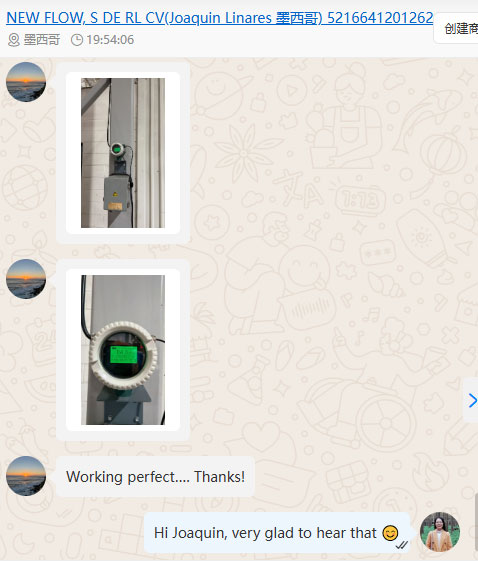
Two weeks after commissioning the customer sent us a short message: "Working perfect.... Thanks!" Along with two photos of the install. That is the kind of feedback we like.
Yes, as long as the actual velocity stays above the sensor's lower limit (around 4 to 5 m/s for gas). Below that the vortex signal is unstable. Size the meter so your minimum flow sits at least 20% above the lower velocity threshold. For a DN150 meter on compressed air at 8 bar, that puts the practical minimum near 250 to 300 CFM.
For any application that cares about mass flow or standard volume, yes. Compressed air density depends on both pressure and temperature. Without compensation, a 1 bar drop in line pressure can throw your reading off by 12 to 15%. Built-in compensation (the BPT option on our STLU series) handles this inside the transmitter.
4-20 mA (two-wire or three-wire), pulse, RS-485 Modbus RTU, and HART. The choice depends on your control system. For modern PLCs we usually recommend RS-485 Modbus or HART, because they carry temperature, pressure, and flow on one cable.
For a standard configuration like the one above, production is 7 to 10 working days after payment. Air freight DDP to North America takes another 7 to 10 working days. So plan for about three weeks door to door. EXW Shanghai is faster if you handle your own freight.
Yes. Specify the unit at the order stage and we configure the transmitter before shipment. Switching between CFM, SCFM, m³/h, kg/h, and Nm³/h after delivery is also possible through the menu on the local display or over Modbus.
If you have a compressed air line and need a vortex meter quote, send us:
· Pipe size (inch or DN)
· Maximum and minimum flow, with the unit clearly stated (CFM, SCFM, m³/h, or Nm³/h)
· Operating pressure (bar or psi)
· Operating temperature (°C or °F)
· Required output signal (4-20 mA, Modbus, HART)
· Power supply (24 V DC or 220 V AC)
· Hazardous area classification, if any (ATEX Zone, IECEx, or none)
We will come back with a model code, a price, and DDP shipping cost to your country, usually within one working day. See our STLU vortex flow meter range for the full configuration options.
we will contact you within 24 hours..
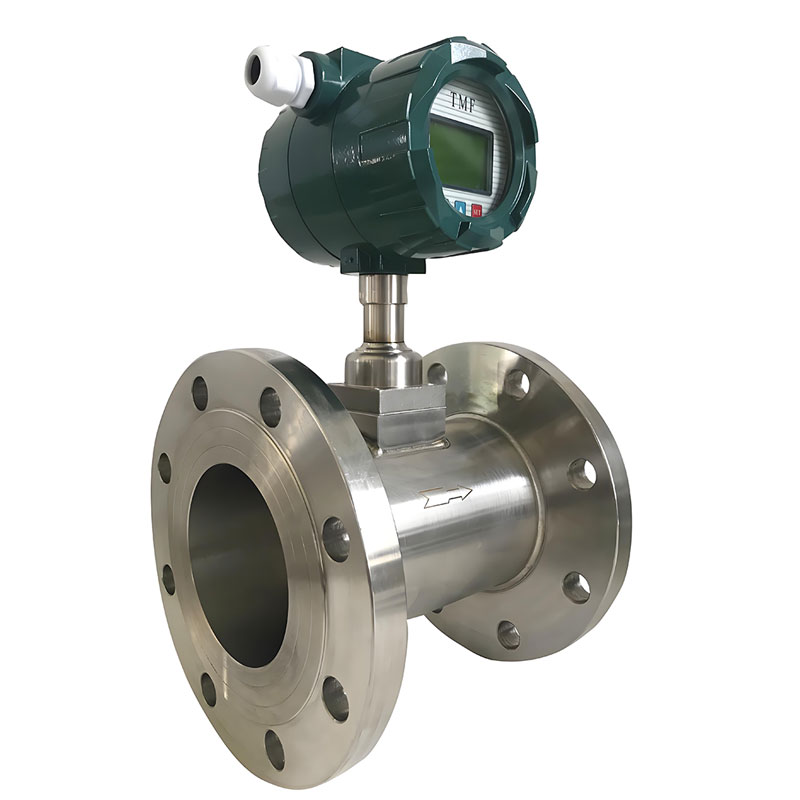 8" Compressed air flow meter
An 8-inch compressed air flow meter with a internal diameter of DN200 (approximately 200 millimeters or 8 inches), specifically designed to measure the cumulative flow of compressed air.
VIEW
8" Compressed air flow meter
An 8-inch compressed air flow meter with a internal diameter of DN200 (approximately 200 millimeters or 8 inches), specifically designed to measure the cumulative flow of compressed air.
VIEW
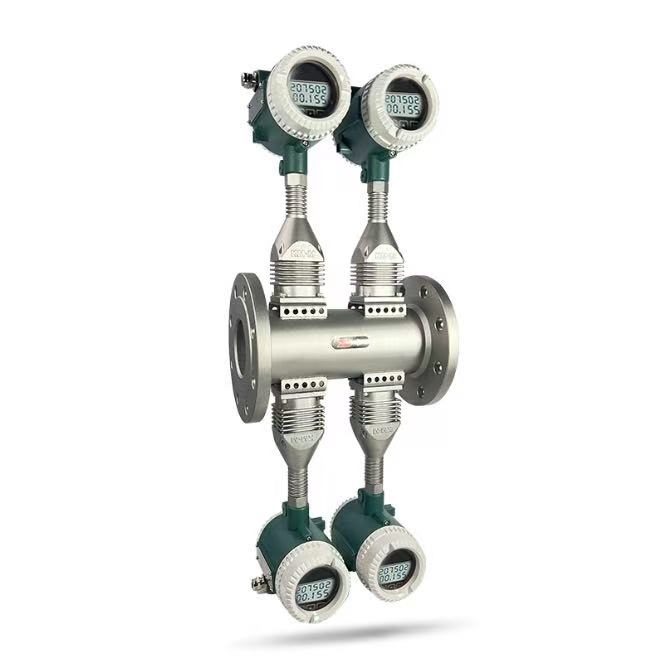 STLU-G Series Vortex Flow Meters
Silver Automation Instruments has launched the STLU-G Series Vortex Flow Meters, which represent a significant technological advancement compared to traditional flow meters. This series of Vortex flow...
VIEW
STLU-G Series Vortex Flow Meters
Silver Automation Instruments has launched the STLU-G Series Vortex Flow Meters, which represent a significant technological advancement compared to traditional flow meters. This series of Vortex flow...
VIEW
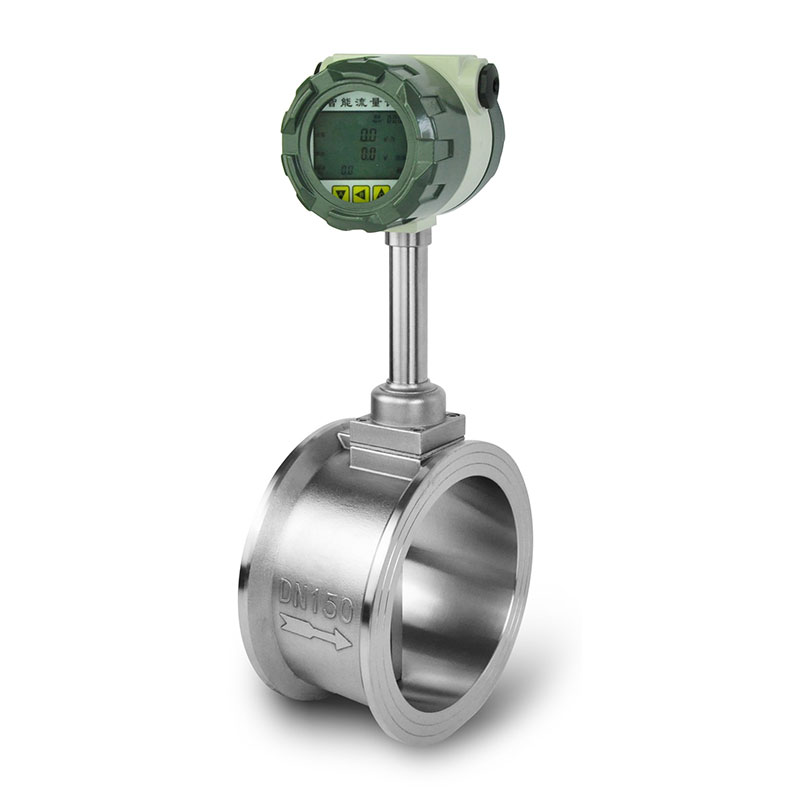 Digital flow meter for compressed air
What is digital flow meter for compressed air ?A digital flow meter for compressed air is a device used to measure the flow rate of compressed air in industrial settings. Compressed air is commonly us...
VIEW
Digital flow meter for compressed air
What is digital flow meter for compressed air ?A digital flow meter for compressed air is a device used to measure the flow rate of compressed air in industrial settings. Compressed air is commonly us...
VIEW
 Compressed air insertion flow meter
Optimizing Compressed Air Measurement with Insertion Thermal Flow MetersCompressed air is a vital energy source in various industrial applications, powering machinery and tools essential for operation...
VIEW
Compressed air insertion flow meter
Optimizing Compressed Air Measurement with Insertion Thermal Flow MetersCompressed air is a vital energy source in various industrial applications, powering machinery and tools essential for operation...
VIEW
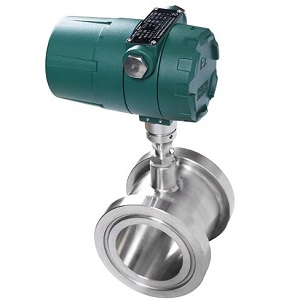 Industrial compressed air flow sensor
Why you need an industrial air flow meter?As a power source, compressed air has the characteristics of safety and continuity, and it has been widely used in chemical, electric power and other industri...
VIEW
Industrial compressed air flow sensor
Why you need an industrial air flow meter?As a power source, compressed air has the characteristics of safety and continuity, and it has been widely used in chemical, electric power and other industri...
VIEW
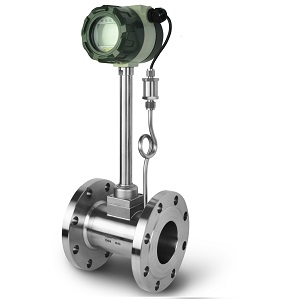 Vortex steam flow meter
Vortex flow meters are not affected by either temperature or pressure and can provide four process measurements (mass flow, volumetric flow, pressure, temperature ) which are useful in the monitoring...
VIEW
Vortex steam flow meter
Vortex flow meters are not affected by either temperature or pressure and can provide four process measurements (mass flow, volumetric flow, pressure, temperature ) which are useful in the monitoring...
VIEW