
English
Compressed air flow meter suppliers don’t always provide spec sheets with flow rates in the same units. Depending on the region or industry standard, they will list the flow rate in SCFM (Standard Cubic Feet per Minute) or Nm³/h (Normal Cubic Meters per Hour). So which is right? And are they measuring the same thing?
The short answer is yes and no. Both SCFM and Nm³/h are widely used standards for compressed air flow rates, but they come from different measurement traditions and use different reference conditions. Mix them up, and you could end up with the wrong equipment, or a system that simply does not deliver what you need.
By the end of this guide, you will know exactly what each unit means, how to convert between them accurately, and what to look for when selecting a compressed air flow meter that supports both units.
SCFM stands for Standard Cubic Feet per Minute. It measures volumetric flow rate, specifically, how many cubic feet of air passing a given point per minute, under a defined set of standard conditions.
The “standard” here means baseline. Because gas volume changes with temperature and pressure, airflow must be referenced to a baseline to be comparable. In North America, SCFM is typically defined by Compressed Air and Gas Institute:
Reference Temperature: 68°F (20°C)
Reference Pressure: 14.696 psia (1 atm)
Relative Humidity: 0%
SCFM is the default unit across the United States and Canada, deeply embedded in the specifications of compressors, pneumatic tools, air dryers, filters, and flow meters sold in those markets. If you're sourcing equipment from a North American manufacturer, you will almost certainly encounter SCFM.
Nm³/h stands for Normal Cubic Meters per Hour. It also measures volumetric flow rate, but it uses a different set of reference conditions from SCFM.
The "N" stands for "Normal," referring to the ISO standard reference conditions used internationally:
Reference Temperature: 0°C (32°F)
Reference Pressure: 1.01325 bar (101.325 kPa)
Relative Humidity: 0%
Nm³/h is the dominant unit across Europe, Asia, and most international engineering projects. It is the standard referenced in ISO and DIN specifications, and is routinely used in Germany, China, Japan, South Korea, and across Southeast Asia. Any globally sourced equipment or multinational engineering project will likely reference Nm³/h.
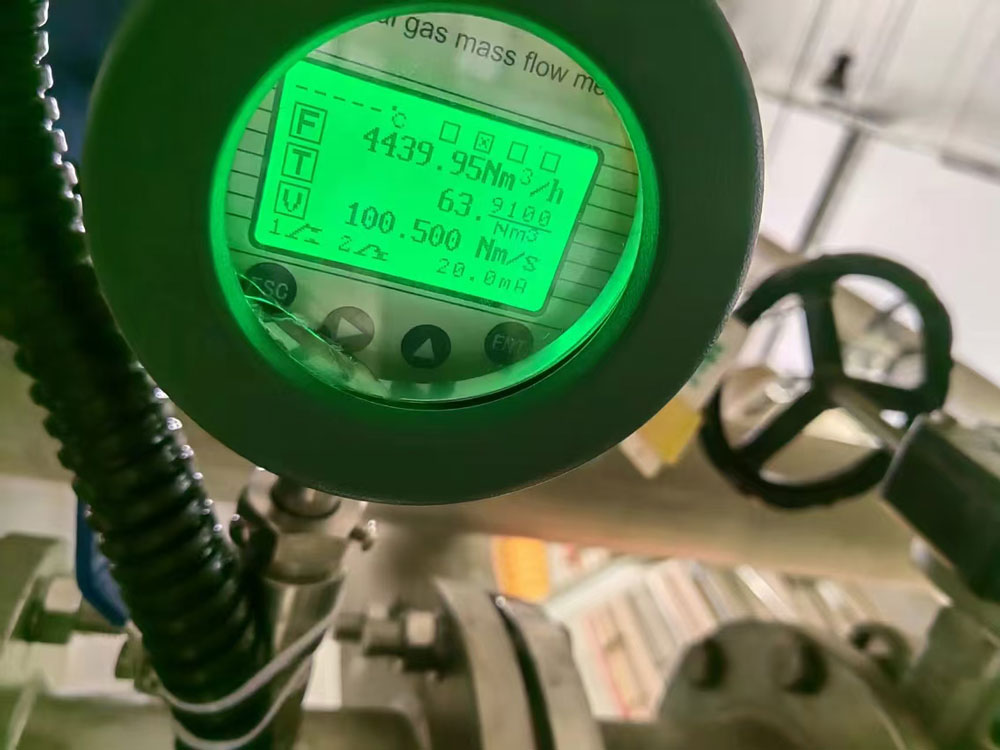
Both units measure the flow rate of a gas. The difference lies in their reference conditions, and that difference is bigger than most people expect.
The most important difference is temperature. SCFM uses 68°F (20°C) as its reference, while Nm³/h uses 0°C (32°F). The same volume holds more air molecules at 0°C than at 20°C. So when you convert between the two units, you cannot just multiply by a simple volume ratio. The temperature correction must be included too.
Here is a summary of the key differences:
Full name: Standard Cubic Feet per Minute (SCFM) vs Normal Cubic Meters per Hour (Nm³/h)
Reference temperature: 68°F / 20°C (SCFM) vs 0°C / 32°F (Nm³/h)
Reference pressure: 14.696 psia (SCFM) vs 1.01325 bar (Nm³/h)
Humidity basis: 0% RH for both
Standard body: CAGI / ISA (SCFM) vs ISO / DIN (Nm³/h)
Primary region: North America (SCFM) vs Europe, Asia, International (Nm³/h)
Unit system: Imperial (SCFM) vs Metric / SI (Nm³/h)
To convert between SCFM and Nm³/h, you need to account for two things: the volume unit difference (cubic feet to cubic meters) and the reference temperature difference (20°C vs 0°C).
The full conversion formula is:
Nm³/h = SCFM × 0.02832 × (273.15 / 293.15) × 60
This simplifies to the practical conversion factor:
1 SCFM ≈ 1.580 Nm³/h
For the reverse conversion:
1 Nm³/h ≈ 0.633 SCFM
Note: conversion factors vary depending on the reference conditions used. The factor of 1.580 above assumes SCFM at 68°F (20°C) and Nm³/h at 0°C — the most common pairing in compressed air applications. If your equipment uses a different reference temperature, use the full formula rather than a simplified factor:
Nm³/h = SCFM × 0.02832 × (T_normal / T_standard) × 60
Where T_normal is the Nm³/h reference temperature in Kelvin, and T_standard is the SCFM reference temperature in Kelvin. Always confirm which reference conditions apply before converting.
Worked Example 1 — Compressor Selection
A European supplier offers a compressor rated at 250 Nm³/h. Your system was designed in SCFM. What is the equivalent capacity?
250 × 0.633 = 158.3 SCFM
The compressor delivers approximately 158 SCFM under CAGI standard conditions.
Worked Example 2 — Flow Meter Sizing
Your pneumatic system requires 80 SCFM. A supplier's flow meter is rated in Nm³/h. What measurement range do you need to specify?
80 × 1.580 = 126.4 Nm³/h
Specify a flow meter with a range covering at least 127 Nm³/h.
The reference condition is not a minor technical detail. It directly affects how a flow meter reads and how you interpret the output.
According to the Ideal Gas Law, the same mass of air occupies a larger volume at higher temperatures. Since SCFM uses a reference temperature of 20°C and Nm³/h uses 0°C, a flow meter calibrated in Nm³/h will report a lower numerical value than one calibrated in SCFM—even when the actual mass flow is identical.
For flow meter selection, this is especially important. A meter that displays only one unit forces operators to perform manual conversions, increasing the risk of error. To avoid this entirely, it’s best to choose flow meters that support both SCFM and Nm³/h, with user-selectable reference conditions.
When specifying a flow meter for compressed air, the unit question is the starting point. Here is a practical checklist:
Confirm the unit your system is designed in. Check your engineering drawings, PLC setpoints, and control system documentation. Are they in SCFM or Nm³/h?
Ask your supplier for the reference conditions in writing. Request the exact temperature, pressure, and humidity baseline used for their flow ratings. Do not assume.
For international projects, standardize early. Agree on a single unit at project kick-off and document it formally in the project specification.
Choose a flow meter that supports both SCFM and Nm³/h with user-configurable reference conditions. This gives your team the flexibility to work across regions without manual conversion.
Verify the measurement range covers your actual conditions. Account for peak demand, not just average flow, when sizing the meter.
Check operating pressure and temperature ratings. Your actual process conditions must fall within the meter's rated operating range, separate from the reference conditions used for flow calculation.
No. CFM (Cubic Feet per Minute) measures actual volumetric flow at operating conditions, and it changes with temperature and pressure. SCFM corrects that flow rate to standard reference conditions, making it comparable across different systems. Always use SCFM for equipment specifications and cross-vendor comparisons.
You can, but it is not ideal, especially on global projects or when sourcing equipment from multiple regions. A meter that only displays SCFM requires manual conversion whenever your specs are in Nm³/h, and vice versa. For teams working across different standards, flow meters with selectable units are the safer choice.
For projects involving European or Asian partners, or any ISO-compliant specification, Nm³/h is typically preferred. It aligns with ISO 1217 and DIN standards widely used in international engineering contracts. For North American clients or ASME-based projects, SCFM is standard. When in doubt, specify both units with their reference conditions explicitly stated in the project documentation.
Confusing SCFM with Nm³/h without conversion introduces an error of approximately 37%. A system designed for 100 Nm³/h might receive equipment rated for only 63 SCFM. Always convert carefully and verify reference conditions before finalizing any equipment specification.
The conversion factor depends on which reference temperature applies. If your specification uses 0°C as the "normal" condition, the factor is 1 SCFM ≈ 1.580 Nm³/h. For quick mental math, multiplying by 1.6 gives a close estimate. For the reverse, 1 Nm³/h ≈ 0.633 SCFM. Some sources cite 1.274 instead, which corresponds to Sm³/h and uses 20°C as the reference temperature. Always confirm which reference your supplier is using before applying any conversion factor.
Yes. When evaluating flow meters for compressed air, prioritize models that support both SCFM and Nm³/h with user-configurable reference conditions. This eliminates manual conversion errors and makes the instrument suitable for cross-regional projects. Check the product datasheet to confirm which reference temperatures are supported before purchasing.
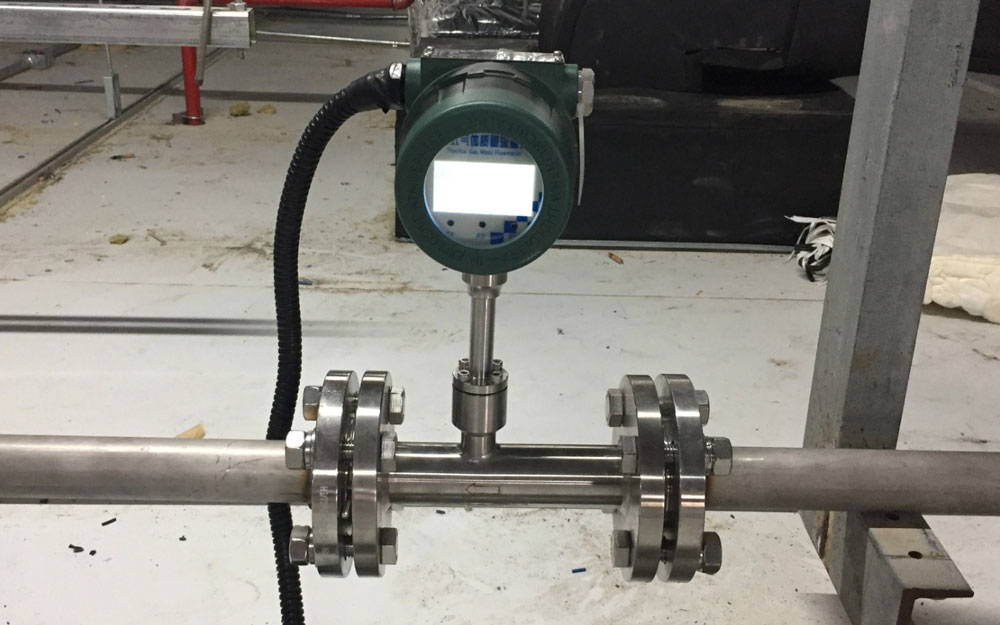
SCFM and Nm³/h both measure compressed air flow rate, but they are not interchangeable numbers. The difference in reference temperature (20°C vs 0°C) means that 100 SCFM and 100 Nm³/h represent meaningfully different quantities. Getting this right matters at every stage, from equipment selection and flow meter specification to procurement and ongoing operations.
Always confirm reference conditions, never compare numbers across units without converting, and choose instrumentation that supports both units so your operators do not have to convert manually.
Not sure which flow meter fits your compressed air application? Engineering team from Silver Automation Instruments works with clients across North America, Europe, and Asia-Pacific to specify the right instrument for every project. You can contact us for a free consultation or view our full range of compressed air flow meters.
we will contact you within 24 hours..