
English
MGO (Marine gasoil) is a common medium used in marine fuel supply, oil transportation, and industrial equipment matching. Compared with heavy oil, MGO has lower viscosity, higher cleanliness, and its flow characteristics change significantly when the temperature changes. If the flowmeter selection is improper, it is easy to cause measurement deviation, leading to trade disputes or inaccurate process control. This article combines years of on-site experience from silverinstruments.com and analyzes the technical characteristics, applicable scenarios, and commonly used size specifications of four mainstream flow meters based on the characteristics of MGO.
MGO has a viscosity close to that of light diesel oil at room temperature, but its viscosity further decreases during heating and transportation. Low viscosity oil can cause "slip" phenomenon in some flow meters, which can easily lead to undetected leakage flow and affect accuracy. In addition, in marine or storage and transportation scenarios, MGO may contain trace amounts of bubbles or solid impurities, requiring flow meters to have good anti-interference ability and durability. Therefore, when selecting, it is necessary to comprehensively consider accuracy, pressure loss, maintenance costs, and on-site working conditions.
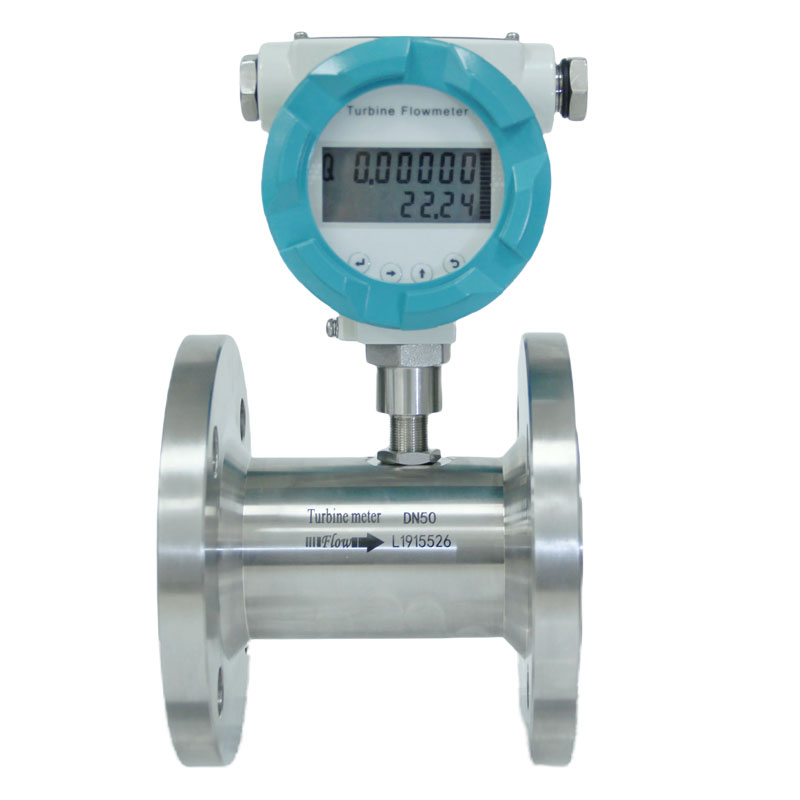
For applications with pipe diameters between DN6 (1/4 inch) and DN200 (8 inches), relatively stable flow rates, and limited budgets, liquid turbine flow meters are an economical and practical choice. Turbine flow meters are sensitive to low viscosity and clean liquids, with an accuracy of ± 0.5% or even ± 0.2%. Its pulse output signal or 4-20mA current output is clear, making it easy for remote transmission and cumulative measurement.
Common sizes: The oil flow sensor range is DN6 to DN200, and the corresponding flow rate is usually 0.6 to 400 m ³/h (water calibration). The typical flow rate of DN25 (1 inch MGO flow meter) is 1-10 m ³/h, 2 inches is 4-40 m ³/h, and D4 inches turbine flow meter for MGO is 20-200 m ³/h. Due to its slightly higher viscosity than water, the actual measurable lower limit of MGO may slightly increase, but overall it covers most of the pipeline transportation needs.
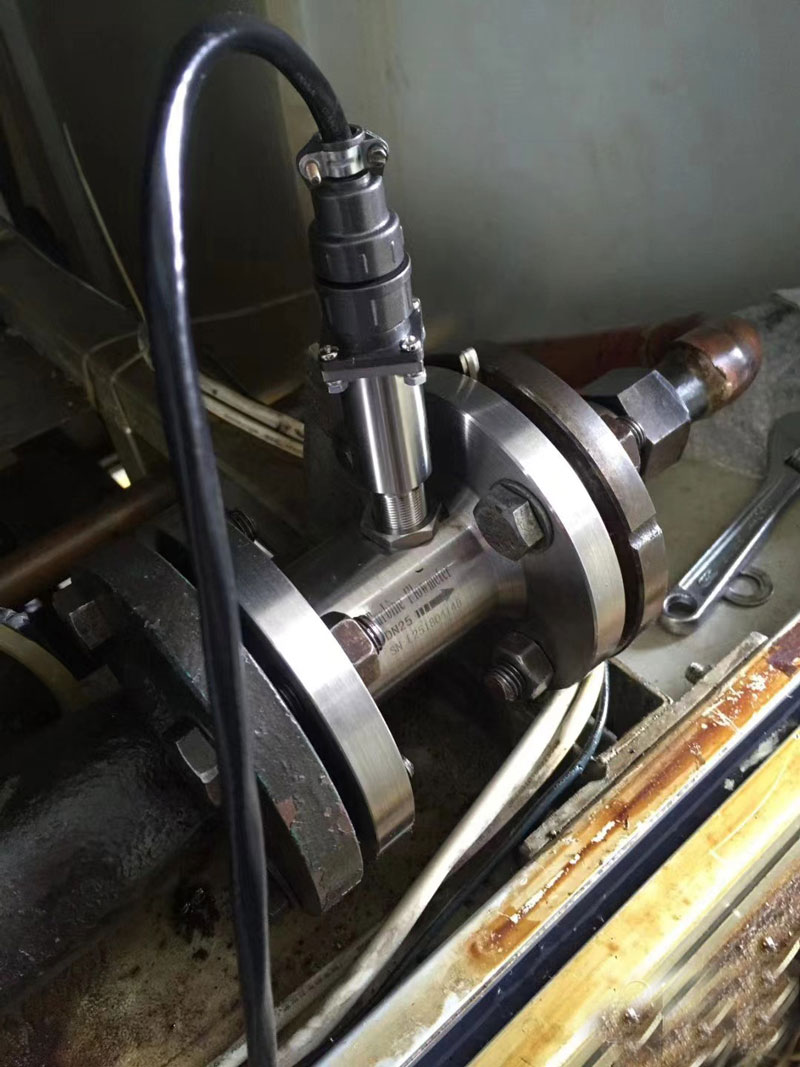
It should be noted that the turbine flowmeter has certain requirements for the cleanliness Of MGO, and a filter should be installed upstream to prevent particles such as welding slag and rust from sticking to the impeller. As long as properly maintained, the turbine flowmeter can provide a reliable and very economical metering solution for the batch transportation of MGO.
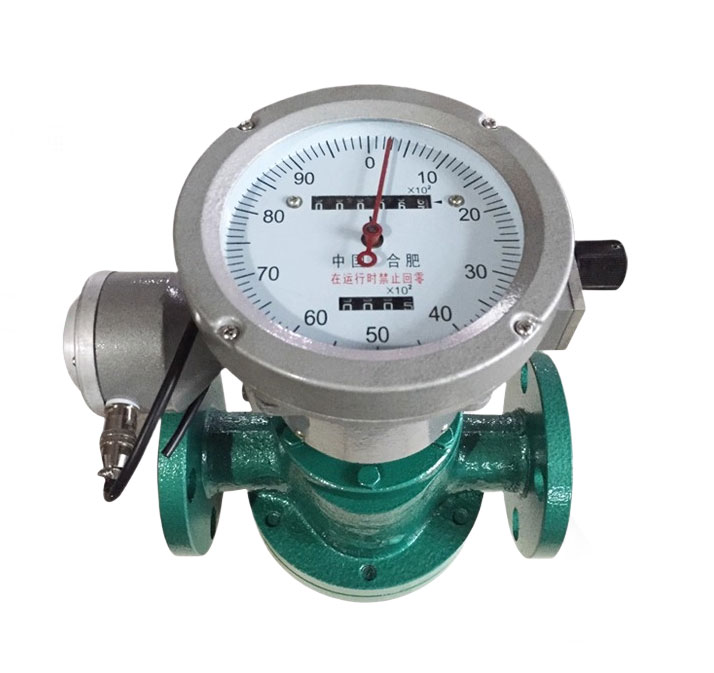
The oval gear flowmeter belongs to the PD flowmeter, which relies on the meshing rotation of two elliptical gears to measure the volume of liquid flowing through. Its working principle determines that it is almost unaffected by changes in the viscosity of the medium - even if the viscosity of MGO is very low, the gear can still form a reliable sealing chamber and force displacement, so the measurement accuracy can usually reach ± 0.5%, and some high-precision models can reach ± 0.2%.
Common sizes: The diameter of standard elliptical gear flow meters usually ranges from DN10 (3/8”) to DN200 (8”). For MGO, the commonly used diameter ranges from DN15 to DN100, corresponding to a flow rate range of approximately 0.5 to 80 m ³/h. For example, DN15 can measure 0.2-1.5 m ³/h, DN25 is 0.6-6 m ³/h, and DN50 is 2.5-25 m ³/h. Compared to turbine flow meters, Oval gear flow meters have stronger measurement capabilities at low flow rates, especially suitable for intermittent fuel supply or situations with large flow fluctuations.
The pressure loss of this type of PD flowmeter is slightly higher than that of turbine flowmeter, but due to the good fluidity of MGO, this effect can usually be ignored in practical applications. Elliptical gear flowmeter is also one of the widely used types in MGO measurement at present.
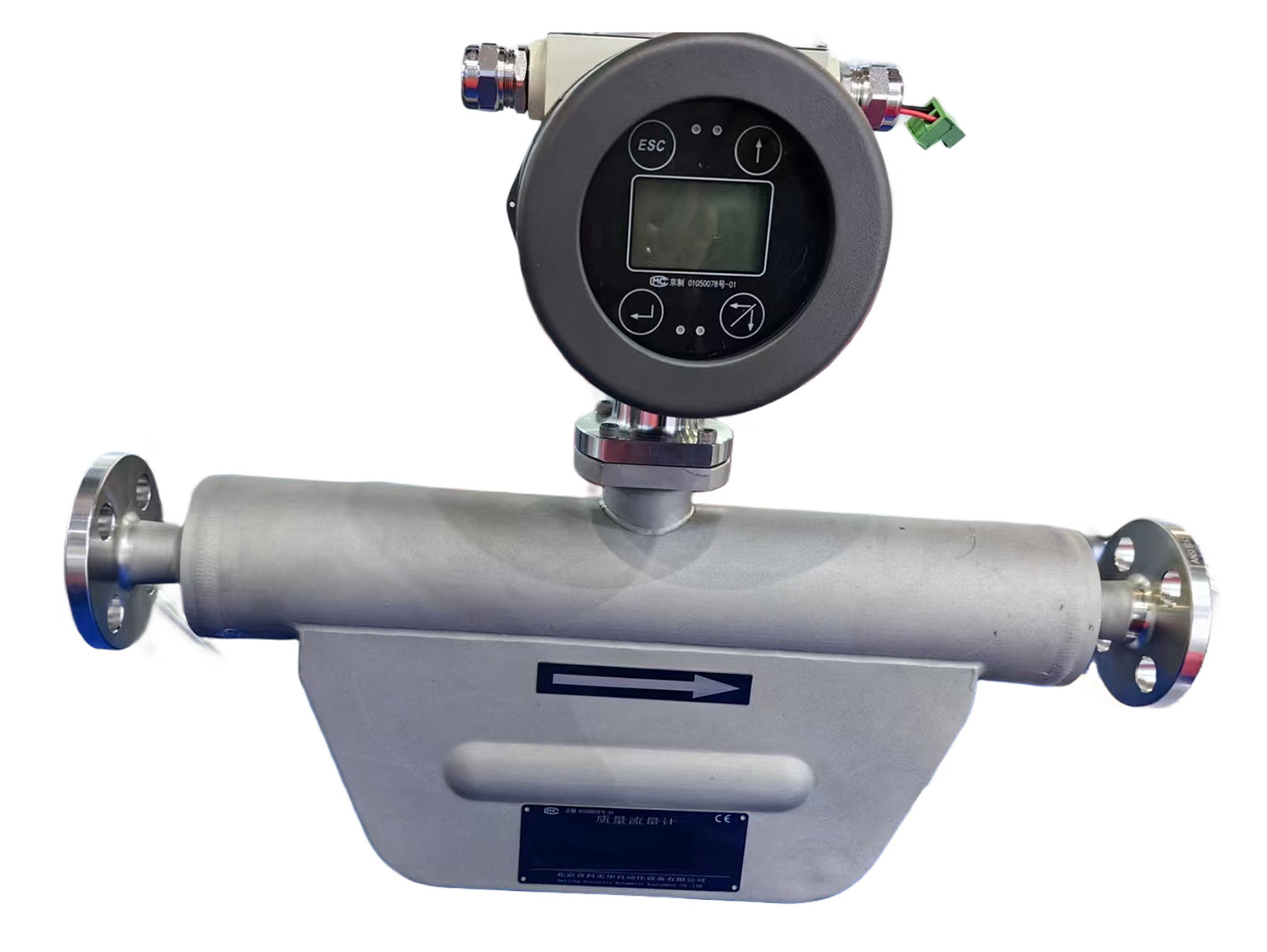
In situations involving trade handover, customs supervision, or high requirements for measurement accuracy (such as ship to ship or ship to shore fuel supply), Coriolis mass flow meters is an ideal choice. It directly measures mass flow rate, unaffected by changes in MGO temperature, pressure, and viscosity, with a typical accuracy of ± 0.1% or higher.
Common sizes: The caliber range of mass flow meters is very wide, with mature products ranging from DN1 to DN250 and above. For MGO applications, common calibers are DN15 (1/2 inch) , DN25 (1 inch), DN40 (1.5 inch), DN50 (2 inch) , and DN80 (3 inch). Taking 1 inch Coriolis mass flow meter as an example, the typical mass flow rate range is approximately 0-10 t/h .Due to the direct output of mass flow data by Coriolis flow meters and their lack of adaptability to low viscosity media, they are increasingly being valued in marine fuel metering.
The disadvantage of Coriolis mass flow meters is that they have high procurement costs and certain requirements for installation conditions, such as avoiding vibration and ensuring full pipe measurement. But for MGO traders with an annual throughput of thousands or even tens of thousands of tons, for every 0.1% increase in accuracy, the reduced measurement error value is often enough to cover the flow meter investment. Whether to choose a mass flowmeter is recommended to conduct an economic evaluation based on the business scale and accuracy requirements.
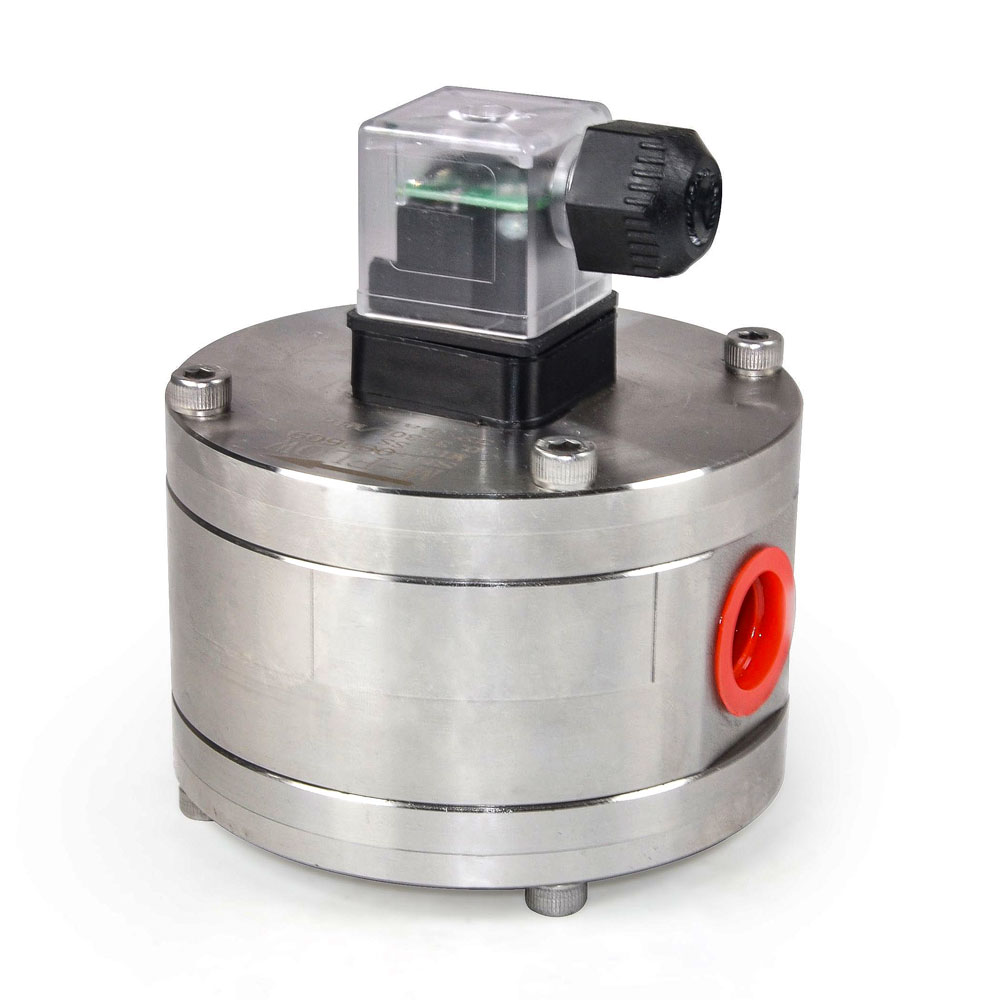
In scenarios such as MGO injection, sampling, additive injection, or small diameter branch flow monitoring, pipeline sizes may only be DN6 to DN10, with flow rates as low as several liters per minute or even smaller like 50 ml/min. Conventional turbine or oval gear flow meters are difficult to operate normally under this condition.
Common sizes: The diameter of micro ova gear flow meters is usually DN4, DN6, DN8, DN10, with a maximum not exceeding DN15. The corresponding flow range is generally 0.5 ml/min-100 L/min. For example, the DN2 model can measure 0.5-150 mL/min, and the DN6 model can measure 0.5-100 L/min. The shell material can be aluminum alloy or stainless steel, and the gear is made of high hardness material, which can adapt to the slight abrasion of MGO.
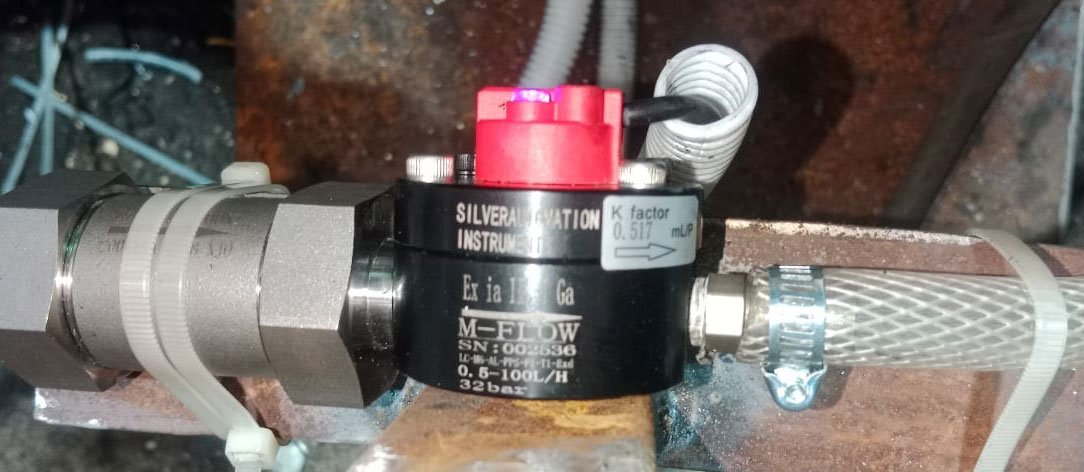
Small oval gear flow meter for low flow MGO measurement
This type of flowmeter has been maturely applied in supporting equipment such as ship exhaust treatment systems and small testing devices, with good long-term stability. For small flow, high-precision MGO measurement, micro elliptical gear flowmeter is almost the best choice.
Based on the above analysis, the selection of flow meters for MGO media can refer to the following principles:
For general pipeline transportation and budget priority conditions (diameter DN15~DN200, flow rate>1 m ³/h), liquid turbine flowmeter is recommended, which combines economy and reliability.
For situations where high-precision handover measurement is required and the budget is sufficient, it is recommended to use a mass flow meter ( oil mass flow sensor size DN6-DN200) to achieve the highest level of precision protection. Or oval gear flow meter is a good solution.
For small flow rates (<1 m ³/h), intermittent work, or insufficient on-site straight pipe sections, small oval gear flow meters are the best choice.
If you are struggling with the selection of flow measurement for MGO, or if existing MGO flow meters have long-term deviations and poor stability, please feel free to provide your specific operating parameters (pipe diameter, flow range, working temperature, on-site installation conditions, etc.) to silverinstruments.com. We will recommend suitable models based on actual needs and provide various configuration solutions to your MOG flow measurement.
We always adhere to the principle of putting working conditions first - communication before quotation, striving to provide professional and adaptable measurement solutions for every customer. Looking forward to your inquiry.
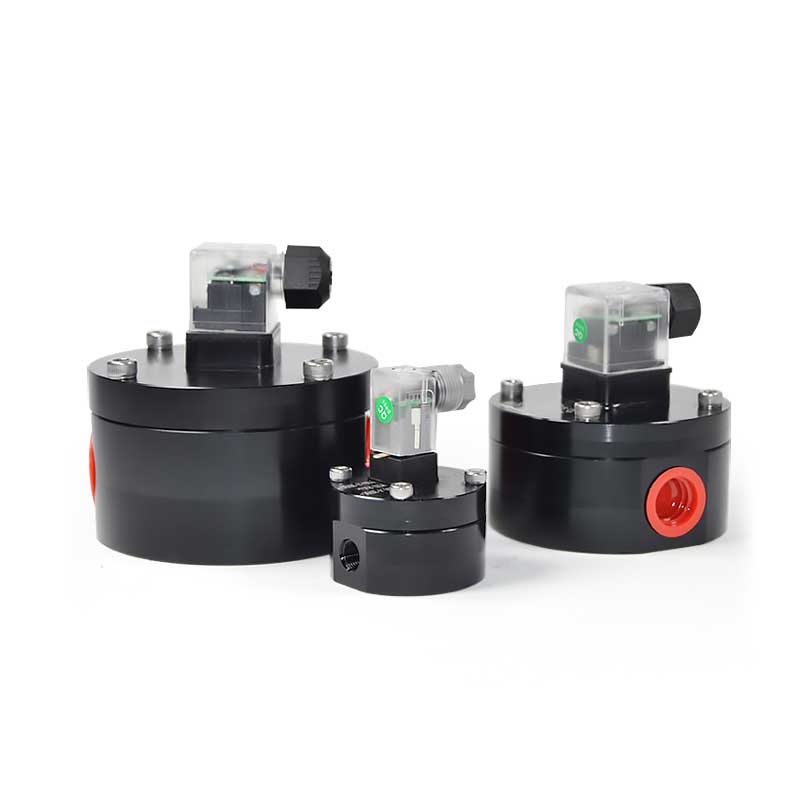 Small Positive displacement flow meter
Ultra Low flow to 0.5 ml/min High accuracy 0.5% reliable volume Compact size,high pressure ready work with thin or thick liquids
VIEW
Small Positive displacement flow meter
Ultra Low flow to 0.5 ml/min High accuracy 0.5% reliable volume Compact size,high pressure ready work with thin or thick liquids
VIEW
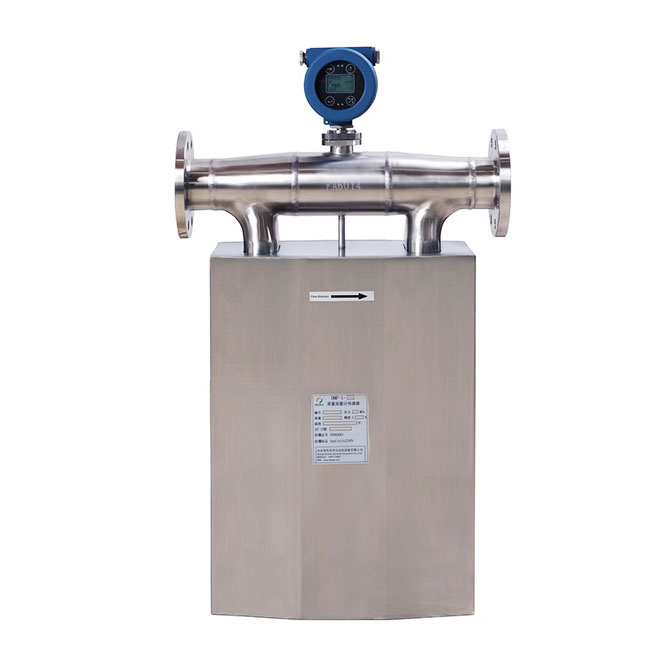 4 inch coriolis flow meter
4 inch size Coriolis Mass Flow Meter is operated with Coriolis Force Principle. 4” Coriolis flow sensor is relative large size, and the flow meter is really bulky. It is widely used for accurate mass....
VIEW
4 inch coriolis flow meter
4 inch size Coriolis Mass Flow Meter is operated with Coriolis Force Principle. 4” Coriolis flow sensor is relative large size, and the flow meter is really bulky. It is widely used for accurate mass....
VIEW
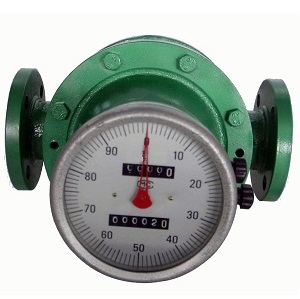 Oval gear flow meter with return to zero counter
LC oval gear flow meter is equipped with mechanical counter which could also add with return-to-zero function. This kind of flow meter counter has 2 digits wheels, one for total flow totalizing; anoth...
VIEW
Oval gear flow meter with return to zero counter
LC oval gear flow meter is equipped with mechanical counter which could also add with return-to-zero function. This kind of flow meter counter has 2 digits wheels, one for total flow totalizing; anoth...
VIEW
 Micro low flow Coriolis flow meter
Min flow 0-10 kg/hr Coriolis principle. ATEX approved. Suitable for low flow gas, liquid or steam.
VIEW
Micro low flow Coriolis flow meter
Min flow 0-10 kg/hr Coriolis principle. ATEX approved. Suitable for low flow gas, liquid or steam.
VIEW
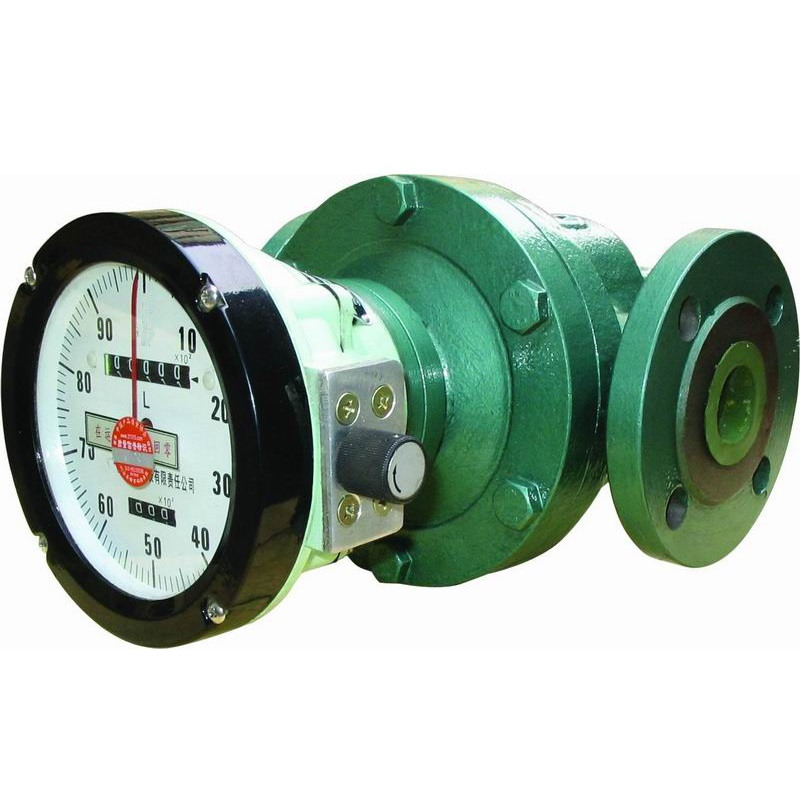 Oval Gear Flowmeter
Oval Gear Flow meter is for diesel, crude oil, resin, fuel, heavy oil flow measurement. PD flow meter is with mechanical register or digital display, Inquiry Price now.
VIEW
Oval Gear Flowmeter
Oval Gear Flow meter is for diesel, crude oil, resin, fuel, heavy oil flow measurement. PD flow meter is with mechanical register or digital display, Inquiry Price now.
VIEW