
English
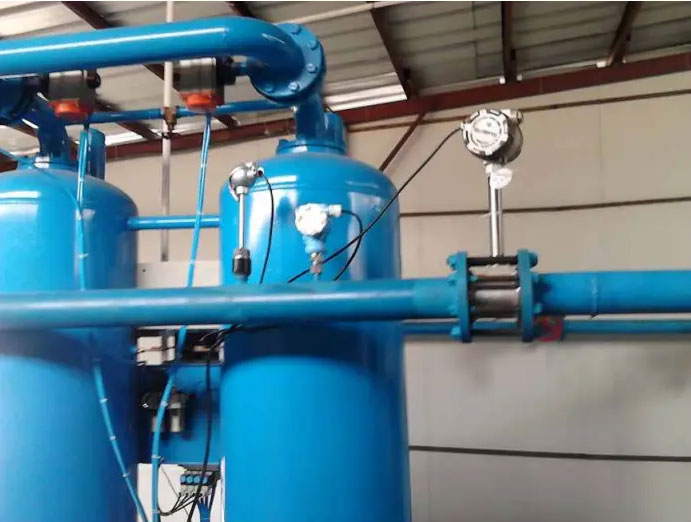
Compressed air flow meter application
The core of selecting the right compressed air flow meter is to fit its own working conditions, balance accuracy and practicality, without blindly pursuing high-end parameters or ignoring key adaptation points. Many users tend to fall into the pitfalls of "parameter mismatch" and "ignoring working condition details" when selecting models. Below, based on actual usage scenarios, we will step by step break down the correct selection ideas, using straight forward and easy to understand language, which can also be smoothly translated into English later on.
Firstly, it is necessary to clarify the core parameters of one's own operating conditions, which is the basis for selection. Missing one may result in selecting an unsuitable model. The four most critical parameters are the working pressure, working temperature, actual flow range of compressed air, and pipeline size, all of which need to be accurately confirmed in order to provide accurate basis for subsequent selection.
How to choose the correct pressure rating for compressed air flow sensor?
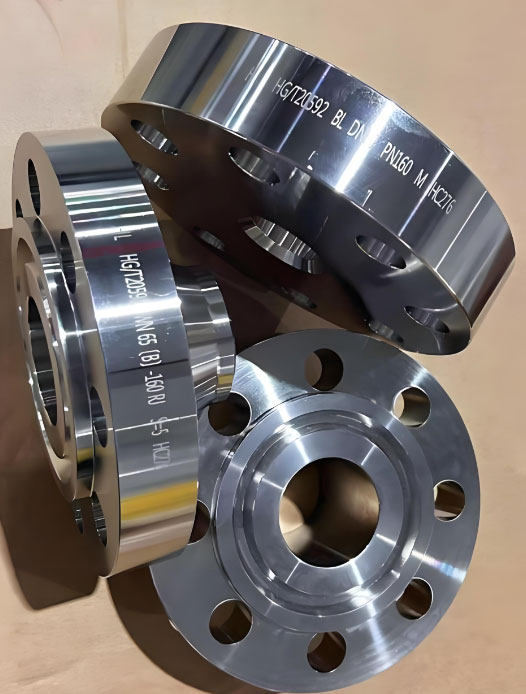
Pay attention to the pressure rating of the compressed air flow meter
In terms of working pressure, the compressed air pressure varies greatly in different scenarios. For example, the pressure used for conventional pneumatic equipment in the workshop is mostly between 4-10 bars, while high-pressure pneumatic systems may reach over 16 bars. When selecting, it is necessary to confirm the actual working pressure of the pipeline and reserve a pressure margin of 5% -10% to avoid inaccurate measurement or equipment damage caused by pressure fluctuations exceeding the rated range of the flowmeter. It should be noted that the rated pressure of the flowmeter must be greater than or equal to the actual working pressure, and cannot be reluctantly adapted; otherwise long-term operation may cause problems such as leakage and data drift.
The working temperature cannot be ignored. During the transportation process, the temperature of compressed air will vary with the environment and compression process. The normal operating temperature is between -20°C and 80°C. If it is high-temperature compressed air (such as near the compressor outlet), the temperature may reach over 100°C, while in low-temperature environments, it may be lower than -20°C. When selecting, it is necessary to match the corresponding temperature specifications. Ordinary flow meters are not resistant to high or low temperatures. Choosing the wrong one can cause internal sensor failure and even shell cracking, affecting their service life.
The range of compressed air flow is of utmost importance and also the easiest place to choose incorrectly. Many users only look at the internal diameter of the pipeline and ignore the actual flow fluctuations, resulting in the selected air flow meter having a range that is too large or too small - the measurement accuracy is extremely low when the range is too large, and the data is distorted when the flow rate is small; If the range is too small, exceeding the range will damage the sensor (vortex type) and also affect the normal gas supply of the pipeline. You’d better first provide silverinstruments.com with the minimum flow rate, maximum flow rate, and common flow rate of your compressed air. When selecting, make sure that the common usage flow rate of the flowmeter is between 30% and 80% of the range. This can ensure measurement accuracy, cope with flow fluctuations, and meet daily usage needs.
Then, based on the usage requirements, choose the appropriate type of flow meter. Different types of flow meters have different adaptation scenarios and cost-effectiveness. At present, there are two commonly used flow meters for compressed air: vortex flow meter and thermal mass flow meter. The vortex flow meter type has strong anti-interference ability, high temperature and high pressure resistance, suitable for conventional gas metering in industrial workshops, simple maintenance, and moderate cost; Thermal mass flow meter does not require temperature and pressure compensation, has a small volume, and is suitable for low flow and low-pressure conditions, such as laboratory and small pneumatic equipment.
Finally, the convenience and economy of compressed air flow meter should also be considered. For example, if real-time display of flow is required, models with LCD screens can be selected; do you need remote data transmission with MODBUS RTU? You can choose an air flow transmitter with 4-20mA signal output or MODBUS RTU for easy integration with the control system.
In terms of maintenance, priority should be given to compressed air flow meters with simple structures and easy disassembly, which can save time and reduce maintenance costs.
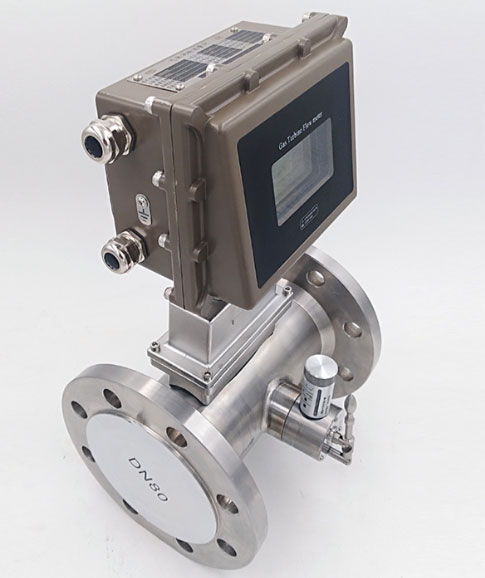
Gas turbine flow meter is not suitable for compressed air
In fact, the gas turbine flowmeter can measure compressed air, not completely unusable. But the problem lies in the stability of long-term usage. Turbine flow meter has moving parts inside the measuring tube, when compressed air flows at high speed in the pipeline, it will take away the lubricating grease on the rotating bearings inside the gas turbine flowmeter. After the grease is lost, the bearings will wear and jam, which will affect the measurement accuracy of the flowmeter and even cause equipment failure soon. It cannot meet the long-term continuous operation needs of industrial scenarios, so it is not recommended to use it.
In summary, selection does not need to be complicated. Just confirm the operating parameters (pressure, temperature, flow rate, pipeline size ) first, match the connection method, installation location, and flow meter type, and finally consider convenience and economy. You can choose the appropriate compressed air flow meter, which not only ensures accurate measurement but also adapts to long-term usage needs.