
English
In reverse osmosis water treatment systems, flow monitoring is directly related to membrane element protection, stable effluent quality, and energy consumption control. Choosing the right flow meter can avoid membrane fouling, system failures, and other problems caused by abnormal flow. Many users are confused when choosing: which reverse osmosis conditions are different flow meters suitable for? What model should be selected for low flow RO water measurement? Below, based on actual needs, we will provide a detailed breakdown of mainstream models and exclusive solutions.
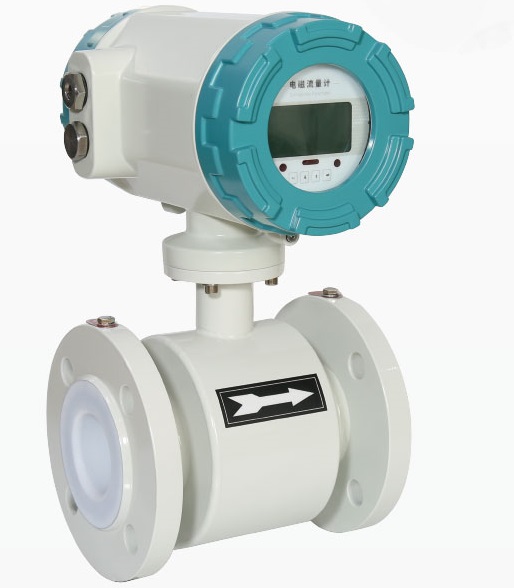
Magnetic flow meter for RO water
Electromagnetic flowmeter is a commonly used model in reverse osmosis systems if the conductivity is enough which much higher than 5 μS/cm, especially suitable for working conditions with small amounts of impurities and flow fluctuations. Its measurement accuracy is as high as ± 0.5% FS, which is not affected by the temperature (5-40 ℃) and viscosity changes of reverse osmosis water, and there are no mechanical wear parts. It has strong long-term stability and can accurately monitor the flow rate of produced or concentrated water.
In terms of installation, it is suitable for water production pipelines with a diameter of ≤300mm (such as 2 inches, 3 inches, 4 inches or 6 inches RO water flow meter ) or concentrated water pipelines with larger diameters, as long as the pipeline is filled with flow.
However, it should be noted that when approaching sources of interference such as frequency converters, models with strong anti-interference capabilities should be selected.
If installed outdoors, choose a rainproof and dustproof type,such IP65,IP67 and its material should have anti-corrosion properties, suitable for the humid environment of the reverse osmosis system.
In addition, magnetic flow transmitter with 4-20mA analog signals ,pulse output or RS485 communication functions can be directly connected to PLC control systems for convenient remote monitoring, making them more suitable for industrial continuous operation scenarios.
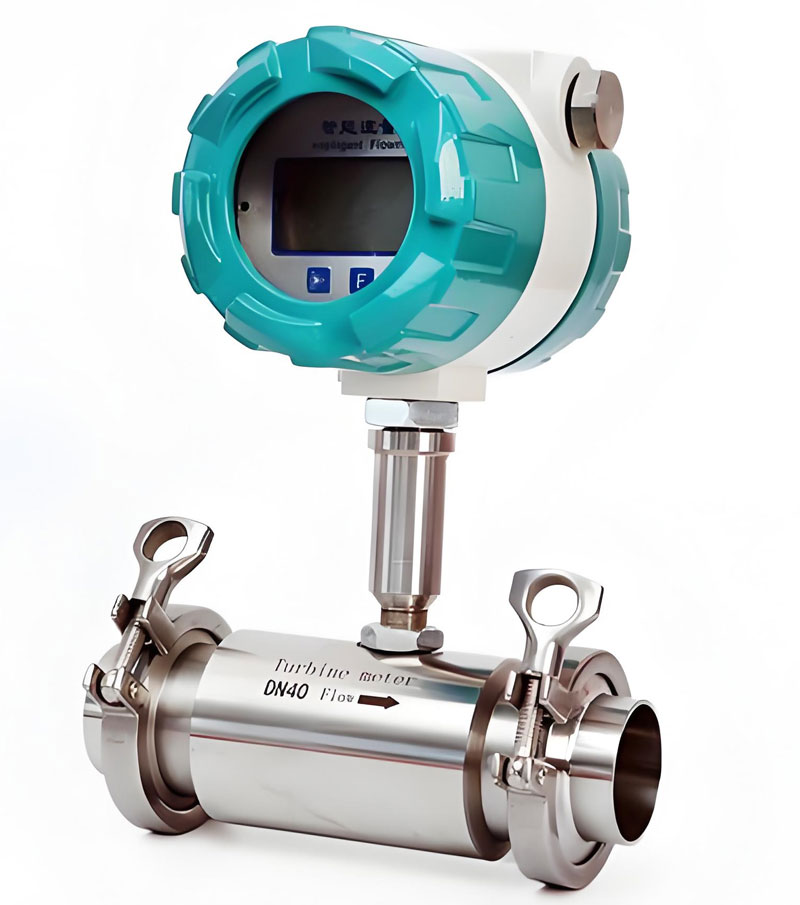
Turbine flow meter for RO water
Turbine flow meters are more suitable for flow monitoring of high-purity reverse osmosis water, when its conductivity value is not enough for magnetic flow meters, with the core advantages of high accuracy, fast response speed, and the ability to capture small flow changes in real time.
Its adaptation scenarios are for pure RO water and stable flow production pipelines, especially suitable for reverse osmosis systems that require high measurement accuracy.
However, it should be noted that the impeller of the turbine flowmeter is easily blocked by impurities in the water, so it is only suitable for high-purity reverse osmosis water with extremely low impurity content;
During installation, it is necessary to ensure sufficient straight pipe sections in the front and back to avoid turbulence in the flow field affecting measurement accuracy.
In terms of maintenance, although the structure is relatively simple, it is necessary to regularly check the wear of the impeller to ensure cleanliness and no blockage, which is suitable for scenarios with strict water quality control and regular maintenance. Similarly, prioritizing models with communication capabilities is more in line with the needs of industrial automation control.
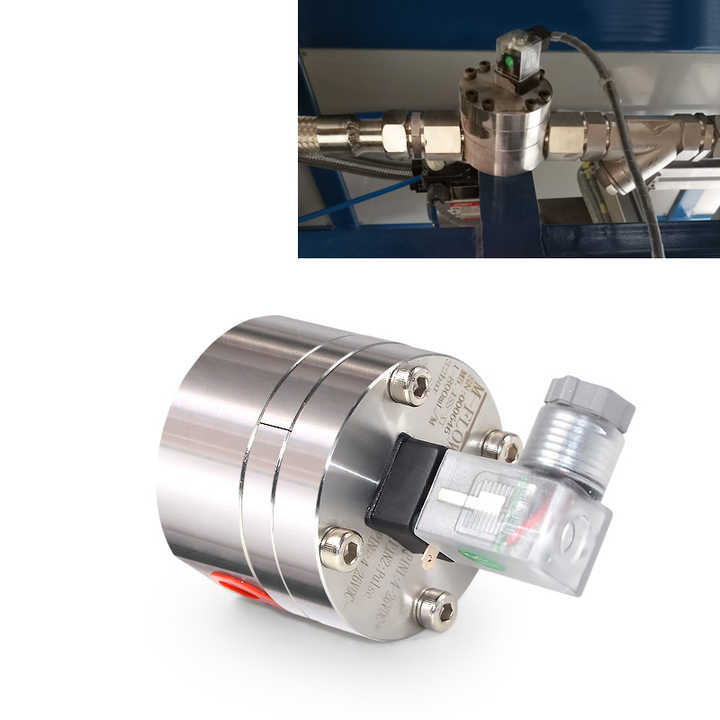
For low flow reverse osmosis water system (usually flow rate 100 sccm or even lower, such as laboratory reverse osmosis equipment and small pure water machines), the small positive displacement flowmeter is an exclusive solution.
It adopts the principle of positive displacement flow measurement, which is not affected by RO water temperature and viscosity, has high measurement accuracy, and can accurately capture small flow rate changes.
This type of flowmeter has a compact structure and is suitable for pipelines with a diameter of less than 1 inch. It does not require complex straight pipe sections during installation and has good sealing performance, which will not cause water leakage problems.
Due to the contact measurement, it is necessary to ensure that the reverse osmosis water is clean and free of impurities to avoid gear jamming; Post maintenance is also simple, regular cleaning of internal gears is sufficient, and maintenance costs are low.
In short, the core of selecting a reverse osmosis (RO) water flow meter is to match the operating conditions: electromagnetic water flow meters are selected for small impurities and enough conductivity, turbine flow meters (TUF flow meter) are selected for high-purity water, and small oval gear flow meters are selected for ultra low RO water flow measurement. By selecting based on user’s budgets, flow range, pipe internal diameter, RO water cleanliness, and digital outputs requirements, it is possible to avoid selection pitfalls and provide strong support for the stable operation of reverse osmosis systems.
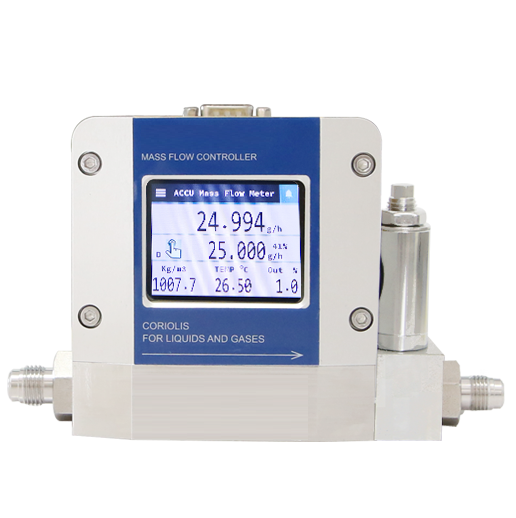 Coriolis flow controller
How does a Coriolis flow controller work ?A Coriolis flow controller is a sophisticated tool used in fluid management. It merges the capabilities of a Coriolis flow meter with those of a control valve...
VIEW
Coriolis flow controller
How does a Coriolis flow controller work ?A Coriolis flow controller is a sophisticated tool used in fluid management. It merges the capabilities of a Coriolis flow meter with those of a control valve...
VIEW
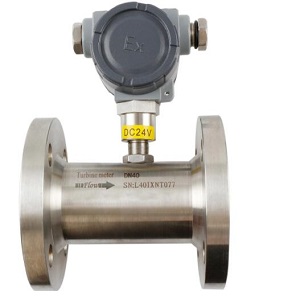 Turbine flow meter stainless steel
Turbine flow meter is an electronic flow measurementinstrument that provides the function of measurement of fluid flow rate. Theprecision and accuracy of this voltage and pulse flow sensing device mak...
VIEW
Turbine flow meter stainless steel
Turbine flow meter is an electronic flow measurementinstrument that provides the function of measurement of fluid flow rate. Theprecision and accuracy of this voltage and pulse flow sensing device mak...
VIEW
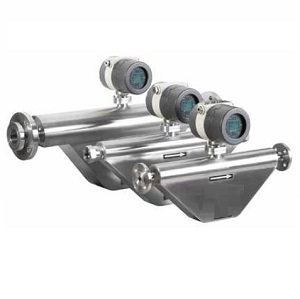 Liquid mass flow meter-Coriolis flow meter
The Coriolis flow meter is widely regardedas the most accurate and highest-tech liquid mass flow meter on the markettoday. Applicable across a wide variety of industrial and municipal venues, theCorio...
VIEW
Liquid mass flow meter-Coriolis flow meter
The Coriolis flow meter is widely regardedas the most accurate and highest-tech liquid mass flow meter on the markettoday. Applicable across a wide variety of industrial and municipal venues, theCorio...
VIEW
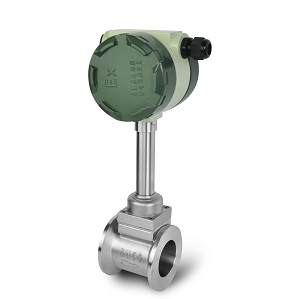 Vortex flow meter for water
Vortex flowmeter can be used to measure pure water, RO water, demineralized water,tap water, portable water, boiler feed water, etc., because vortex flowmeter can measure liquids volumetric flow rate...
VIEW
Vortex flow meter for water
Vortex flowmeter can be used to measure pure water, RO water, demineralized water,tap water, portable water, boiler feed water, etc., because vortex flowmeter can measure liquids volumetric flow rate...
VIEW
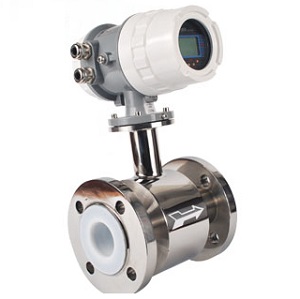 Inline water flow meters gpm
Industrial inline water flow meters with flow unit GPM option. We often use Electromagnetic flow meter (EMF), liquid turbine flow meter , vortex flow meter , rotameter (varaible area flow m...
VIEW
Inline water flow meters gpm
Industrial inline water flow meters with flow unit GPM option. We often use Electromagnetic flow meter (EMF), liquid turbine flow meter , vortex flow meter , rotameter (varaible area flow m...
VIEW
 Deionized water flow meter
We often use liquid turbine flow meter for deionized water (RO/DI skids), soft water, and condensate, boiler feed water; because these fluids are clean and pure, and have low conductivity which magnet...
VIEW
Deionized water flow meter
We often use liquid turbine flow meter for deionized water (RO/DI skids), soft water, and condensate, boiler feed water; because these fluids are clean and pure, and have low conductivity which magnet...
VIEW