
English
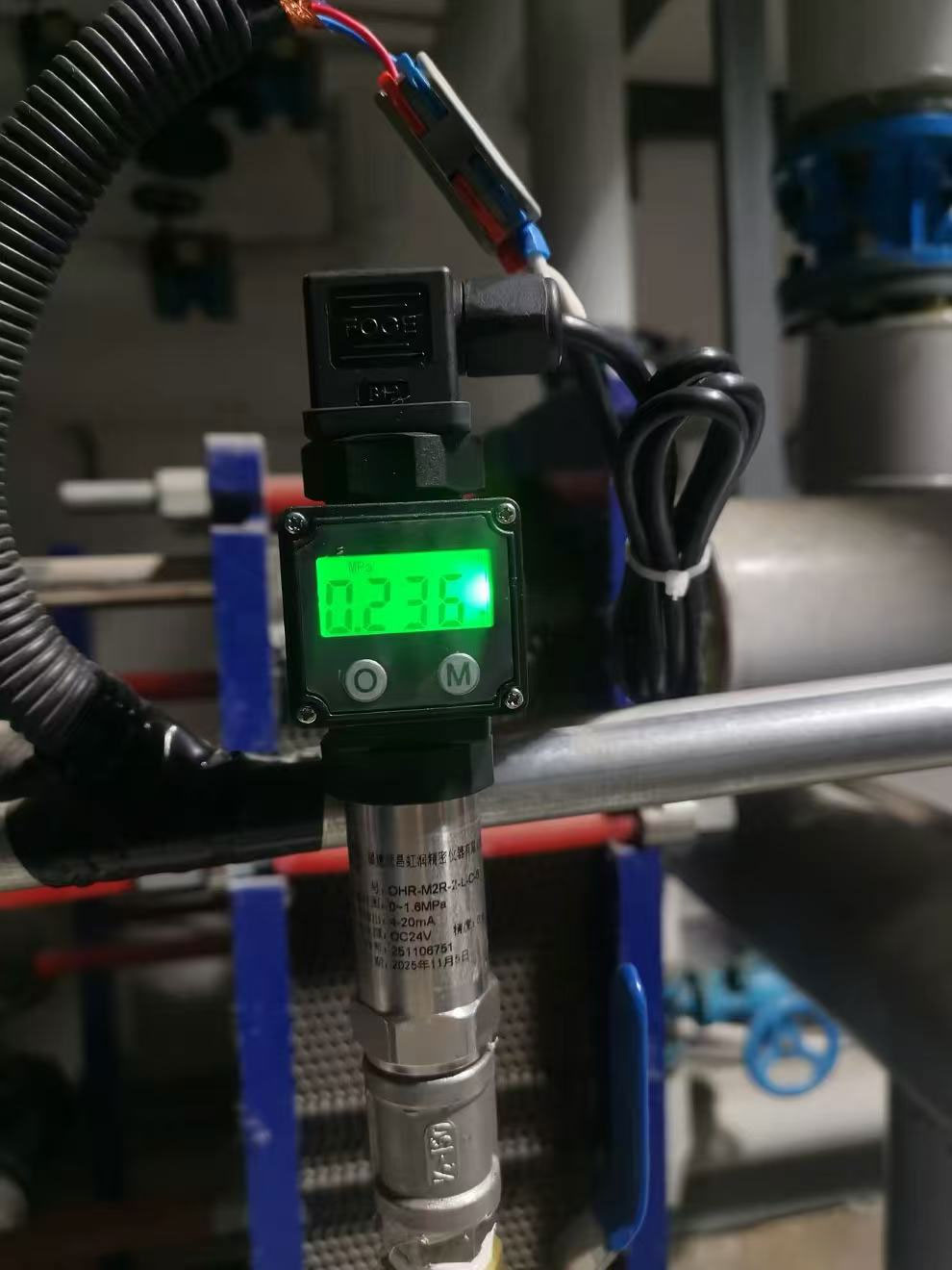
A gas pressure sensor is a device that converts gas pressure signals into measurable electrical signals. It senses changes in gas pressure through sensitive components and converts them into standardized electrical signals such as voltage, current, or frequency for output, which can be read, recorded, and remotely monitored by PLC, DCS, digital display instrument, or SCADA system.
Unlike traditional mechanical pointer pressure gauges that can only read values locally, the core advantage of gas pressure sensors is that signals can be transmitted, recorded, and integrated into automation. A single signal line can provide real-time feedback of on-site pressure data to the control room, making pressure measurement a fundamental part of modern industrial automation and intelligent manufacturing.
Thanks to the maturity of MEMS (Micro Electro Mechanical Systems) technology, modern gas pressure sensors are rapidly developing towards miniaturization, high precision, low power consumption, and mass production.
The core working principle of gas pressure sensors is to convert gas pressure signals into measurable electrical signals. The key is to utilize the physical properties of pressure-sensitive components that change with pressure, and then convert this change into standardized electrical signals through subsequent circuits for output.
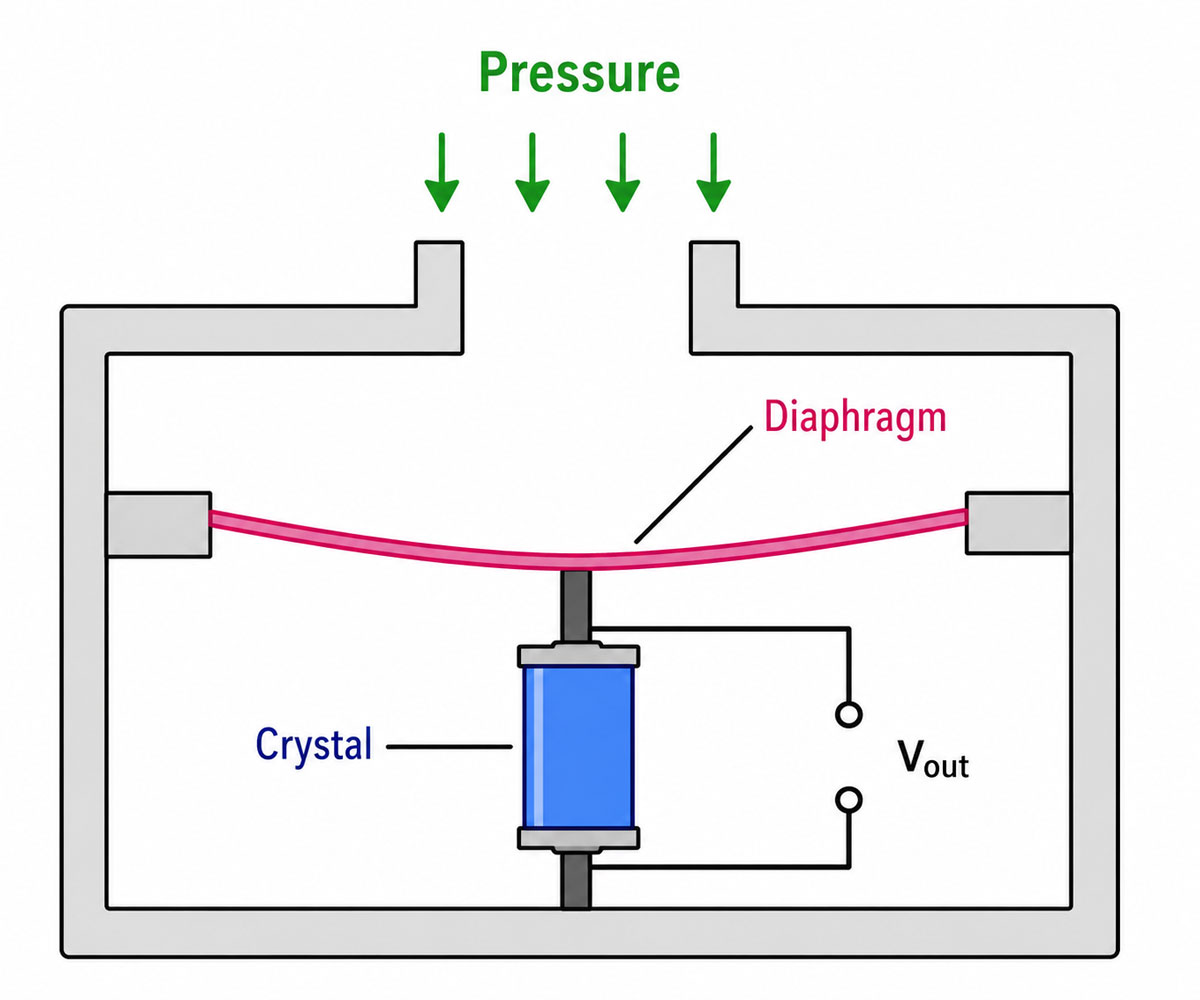
The current mainstream sensing principles include the following:
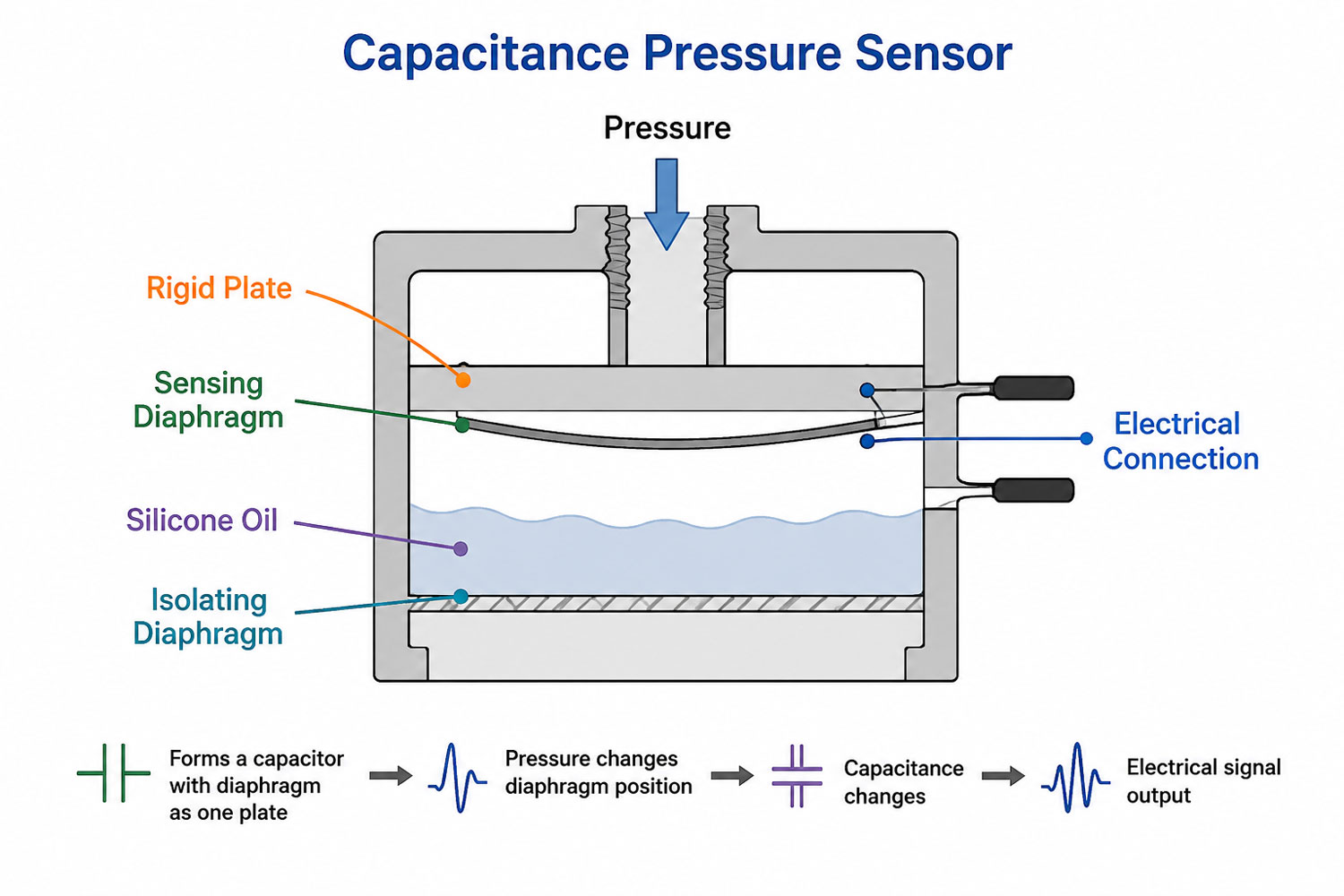
Capacitive: detects changes in capacitance values by causing changes in the spacing between capacitor plates through pressure. Strong anti overvoltage ability and good long-term stability, suitable for measuring low and micro pressures or corrosive media.
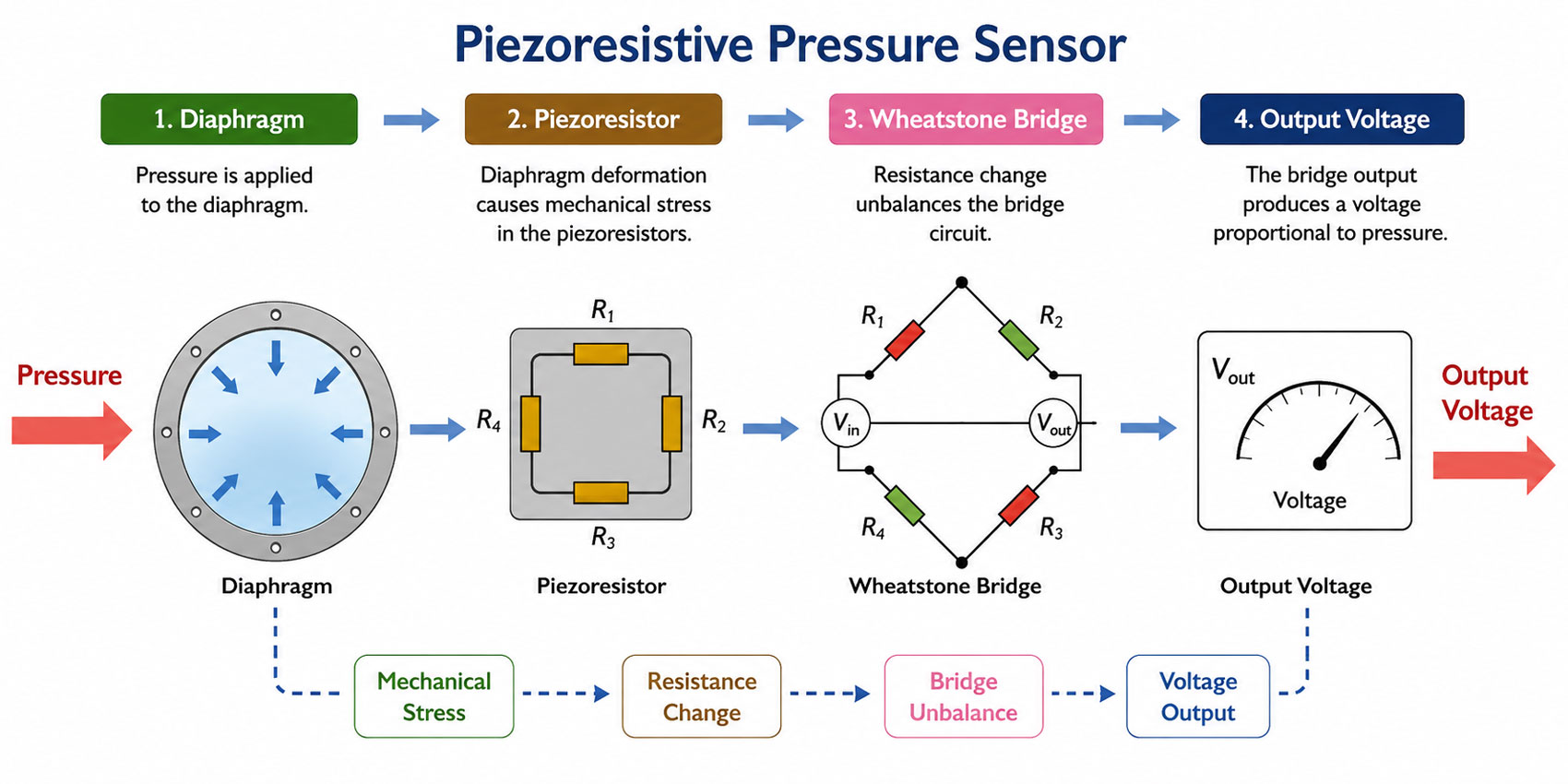
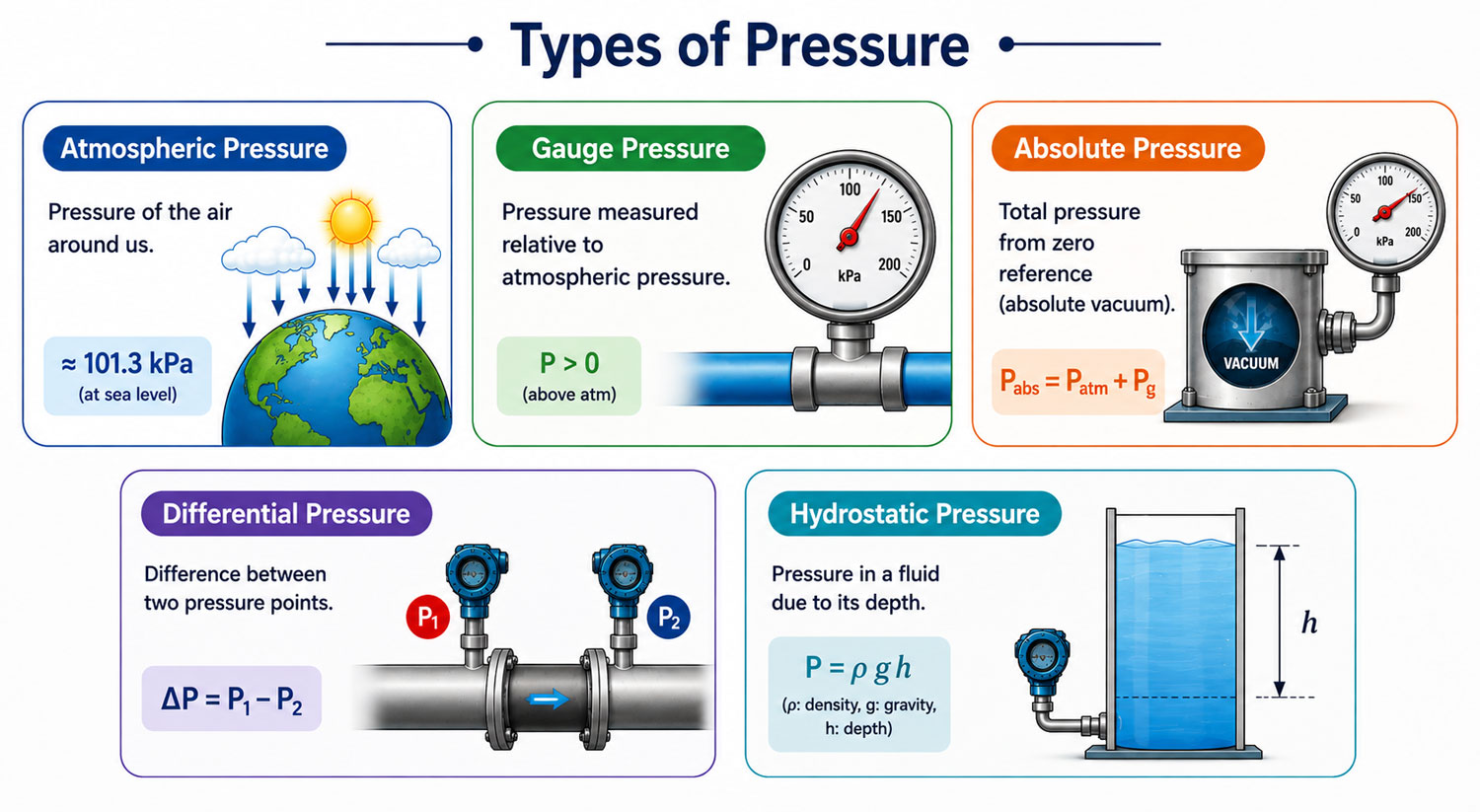
According to different measurement standards, gas pressure sensors are mainly divided into the following categories:
1. Oil and gas industry
The oil and gas industry is one of the most challenging application areas for gas pressure sensors. The working pressure of natural gas long-distance pipelines can reach up to 35-100 bar, and the pressure rating, explosion-proof certification, and material selection requirements for pressure transmitters are extremely strict. The transportation process of natural gas spans five pressure ranges: high-pressure long-distance gas transmission trunk lines (35-100 bar), provincial gas transmission pipelines (16-35 bar), urban high-pressure pipelines (1.6-4 bar), medium pressure distribution pipes (0.1-1.6 bar), and low-pressure end users (below 0.1 bar), each with completely different instrument requirements.
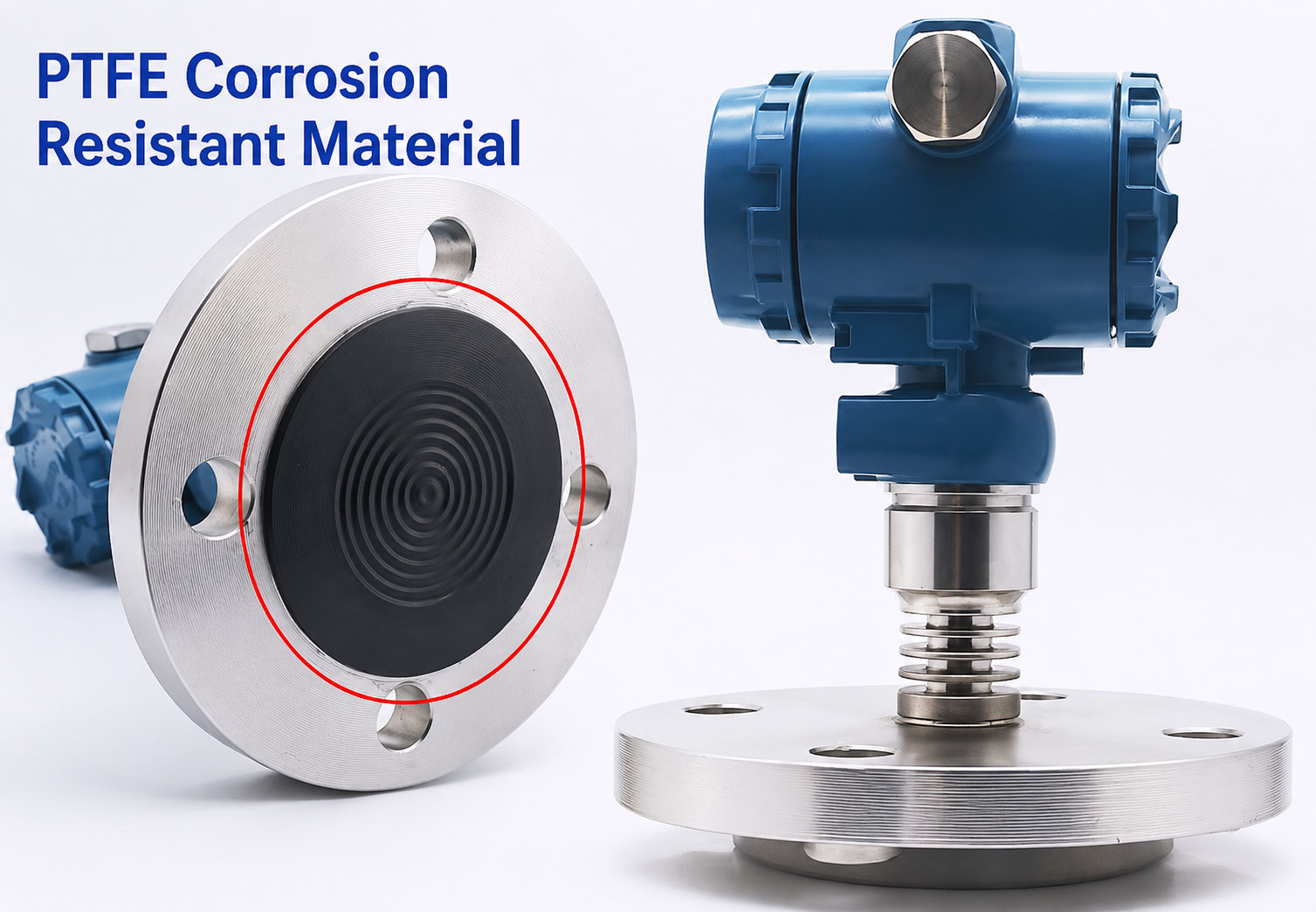
In oil and gas applications, explosion-proof certification is the primary prerequisite for selection. Natural gas belongs to Group IIC gas, and explosion-proof instruments with Ex db IIC T6 level must be selected for hazardous areas (Zone 1/Zone 2). In addition, natural gas often contains trace amounts of hydrogen sulfide (H ₂ S), which is corrosive to ordinary stainless steel membranes. Therefore, it is necessary to use 316L stainless steel material for liquid receiving components.
2. Industrial Automation and Process Control
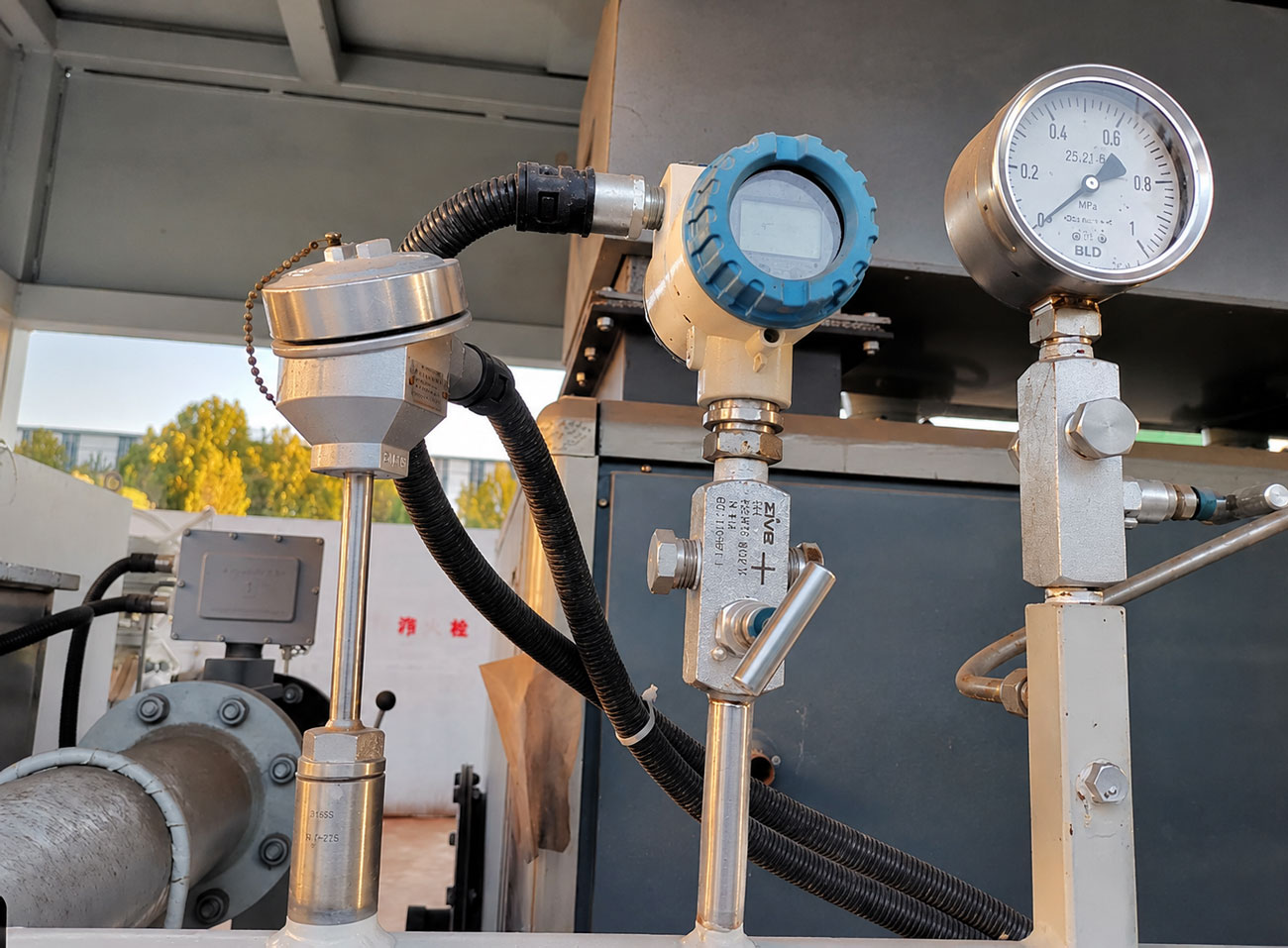
In the field of industrial automation, gas pressure sensors are widely used in pipeline pressure monitoring, pneumatic system control, compressor operation monitoring and other scenarios. Whether it is pressure monitoring of reaction vessels in chemical plants or pipeline pressure control of air compressor systems, high reliability gas pressure sensors are indispensable.
3. Automotive Electronics
Automotive electronics is an important application market for gas pressure sensors, mainly including engine intake manifold pressure monitoring (MAP sensor) and tire pressure monitoring system (TPMS).
4. Medical equipment
In the field of healthcare, equipment such as ventilators, anesthesia machines, and blood pressure monitors rely on high-precision gas pressure sensors to achieve precise gas flow and pressure control.
5. Environmental monitoring and HVAC
The pressure measurement of meteorological stations, pressure detection of air quality monitoring systems, and pressure and differential pressure monitoring of HVAC systems all rely on gas pressure sensors.
The correct selection is the key to ensuring measurement accuracy, stability, and safety. The following are six common elements that need to be considered when selecting:
Range is the most basic specification parameter of gas pressure sensors. When selecting, it is necessary to ensure that the measurement range of the sensor covers the maximum value of the target pressure, while leaving a certain safety margin. The common range varies from kPa to MPa.
Select the appropriate output signal according to the interface requirements of the control system (PLC/DCS):
The chemical properties of the measured gas directly determine the material selection of the sensor. When measuring corrosive gases (such as natural gas containing H ₂ S, chlorine gas, ammonia gas, etc.), it is necessary to use 316L stainless steel or special alloy materials for the contact parts. When measuring special gases such as hydrogen, hydrogen embrittlement issues also need to be considered.
The accuracy of industrial gas pressure sensors is usually expressed as a percentage of full scale (% FS), with common accuracy levels including ± 0.1% FS, ± 0.25% FS, ± 0.5% FS, etc. For high-precision applications such as trade measurement, it is recommended to use products with a grade of 0.1 or 0.25.
Pressure sensors used in flammable and explosive gas environments must pass the corresponding explosion-proof certification:
Gas pressure sensors need to adapt to different environmental temperatures. The typical operating temperature range for industrial grade products is -40 ° C to 85 ° C. In extreme environments with high or low temperatures, wide temperature products should be selected.
The chemical properties of different gases vary greatly, requiring vastly different materials, processes, and designs for sensors. The following is a detailed analysis of common industrial gas pressure measurement selection:
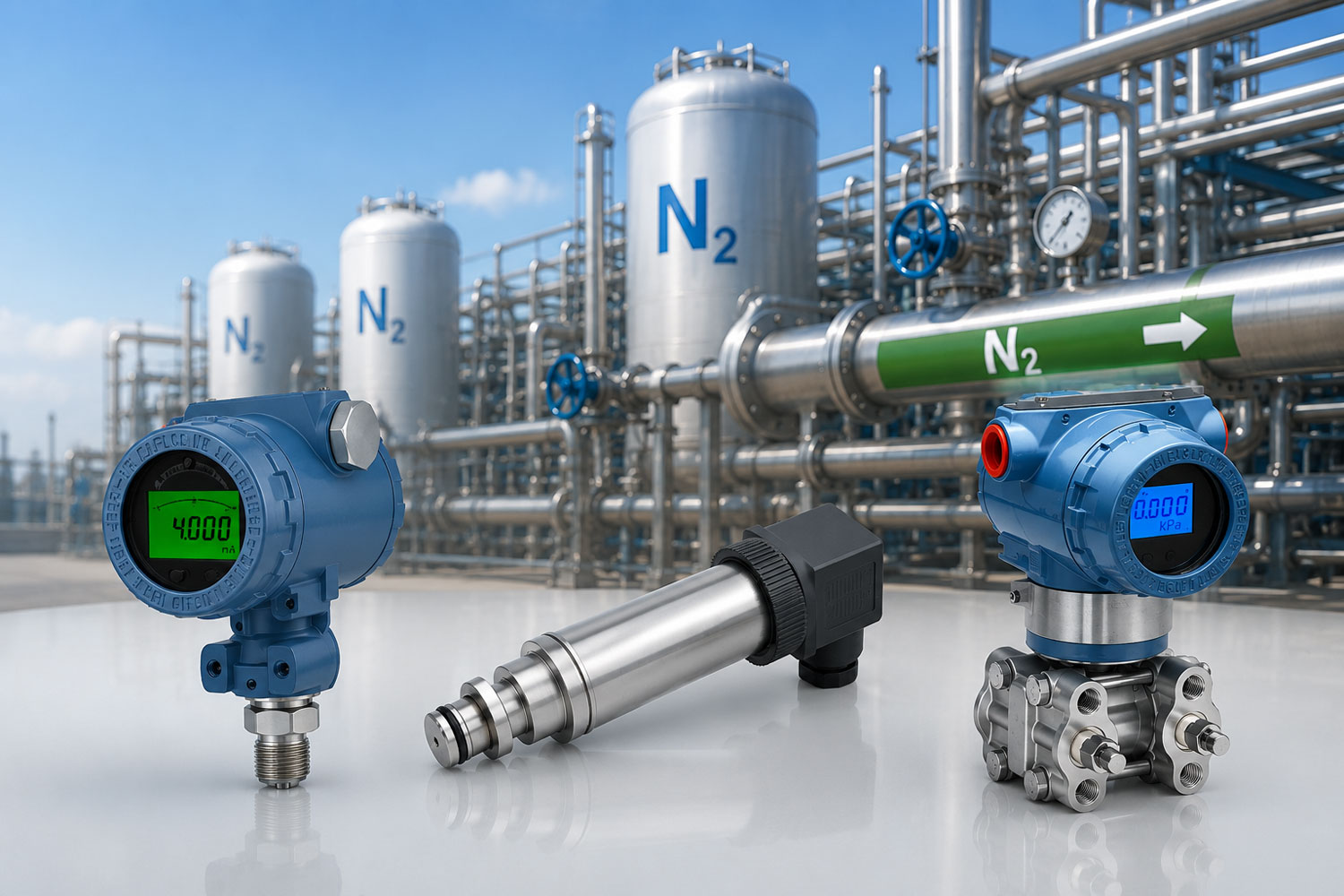
Nitrogen is one of the most widely used inert gases in industry, and its pressure measurement itself is not complicated, but it has special requirements in high-purity and high-pressure scenarios.
Air measurement is the most common, but pure oxygen measurement has the highest and most specific safety requirements among all gases.
The pressure measurement of CO ₂ is mainly divided into two directions: environmental monitoring and industrial refrigeration, with significant differences in technical requirements.
⚠️ It is strictly prohibited to use ordinary oil filled cores: standard oil filled pressure sensors are strictly prohibited from being used in hydrogen or mixed gases with hydrogen concentration exceeding 30%, as their failure is systematic.
For this type of gas, the material selection of the sensor directly determines the safety and reliability of the measurement.
Natural gas measurement mainly focuses on explosion prevention and materials, with a pressure range spanning from long-distance pipelines to residential gas.
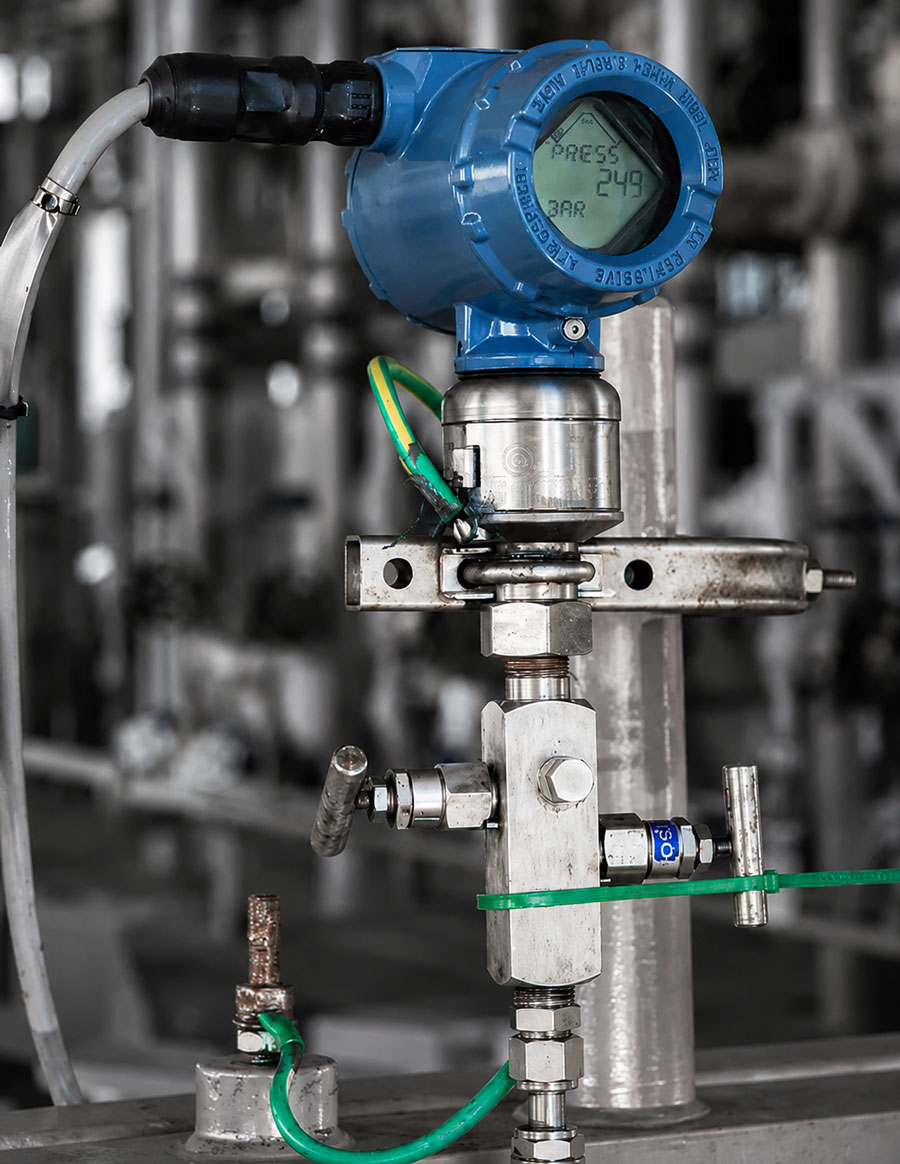
Correct installation is the key to ensuring the long-term stable operation of gas pressure sensors:
As a key component of modern industrial measurement and control systems, gas pressure sensors are driving the development of automation and intelligence in various industries through technological advancements. Whether it is long-distance oil and gas pipelines, chemical process control, or automotive electronics and medical equipment, high-precision and high reliability gas pressure measurement solutions are indispensable.
In specific selection, in addition to common parameters such as range, accuracy, and output signal, the type of gas being measured is often the core factor determining the sensor material, process, and safety design. From conventional compressed air to special oxygen, hydrogen, and chlorine gases, each gas has unique technical requirements for its measuring equipment.
Silverinstruments has been deeply involved in the field of industrial instruments for many years, committed to providing customers with high-quality pressure transmitter products. Our gas pressure sensor products cover multiple ranges, output signals, and explosion-proof levels, meeting the full range application needs from general industry to oil and gas, from room temperature to wide temperature, and from ordinary areas to explosion-proof hazardous areas. At the same time, for special gases such as oxygen, hydrogen, chlorine, etc., we can provide customized "no oil" treatment, gold-plated film and special alloy material solutions.
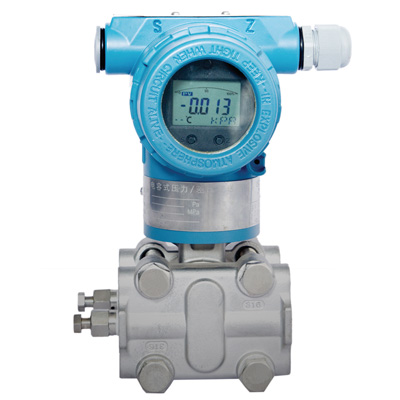 Differential Pressure Transmitters
Monocrystalline silicion sensor; Differential pressure transducers; High accuracy: 0.075%, 0.1%; Range: 0-5800 PSI; Ingress Protection: IP67;
VIEW
Differential Pressure Transmitters
Monocrystalline silicion sensor; Differential pressure transducers; High accuracy: 0.075%, 0.1%; Range: 0-5800 PSI; Ingress Protection: IP67;
VIEW
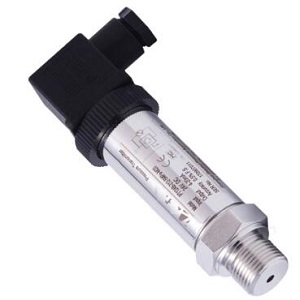 SH316 Pressure Sensor
Low cost Pressure sensor. Piezoresistive sensor. Compact design. Pressure sensor with 4-20mA. For gauge,absolute or negative pressure.
VIEW
SH316 Pressure Sensor
Low cost Pressure sensor. Piezoresistive sensor. Compact design. Pressure sensor with 4-20mA. For gauge,absolute or negative pressure.
VIEW
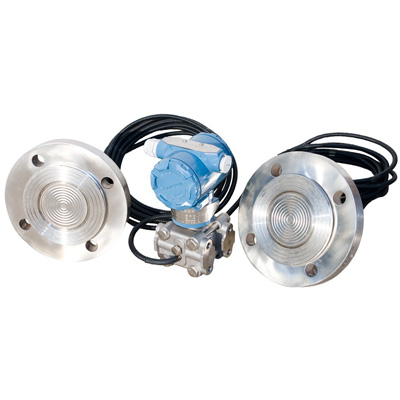 Pressure Transmitter with Remote Diaphragm seals
Remote diaphragm for corrosive or viscous fluids. DP Transmitters or Pressure Transmitters. 316L,HC, Tan, Monel diaphragm.
VIEW
Pressure Transmitter with Remote Diaphragm seals
Remote diaphragm for corrosive or viscous fluids. DP Transmitters or Pressure Transmitters. 316L,HC, Tan, Monel diaphragm.
VIEW
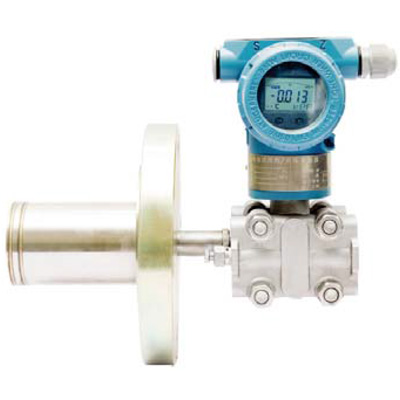 Pressure and DP Transmitter with Flange Diaphragm
Flange diaphragm Transmitter. For pressure , level or DP; Digital transmitters with LCD display; HART, 4-20mA or MOUBUS;
VIEW
Pressure and DP Transmitter with Flange Diaphragm
Flange diaphragm Transmitter. For pressure , level or DP; Digital transmitters with LCD display; HART, 4-20mA or MOUBUS;
VIEW