
English
A 3 inch steam flow meter is designed for steam measurement in a 3-inch (DN80) pipeline. The 3-inch designation refers to the nominal pipe size, not the meter's flow range. Vortex flow meters are a common choice for this application.
For saturated steam, the Silver Automation Instruments STLU-G DN80 has a flow range of approximately 147 to 2,942 kg/h at 0.4 MPa(g) and 256 to 5,126 kg/h at 0.8 MPa(g). If steam consumption frequently falls below the DN80 meter's minimum flow, a DN65 or DN50 meter with reducers may be a better fit, provided its measuring range covers the actual flow.
The following sections cover DN80 flow ranges for saturated and superheated steam, along with the sizing considerations that determine when a smaller meter may be more suitable for a 3-inch line.
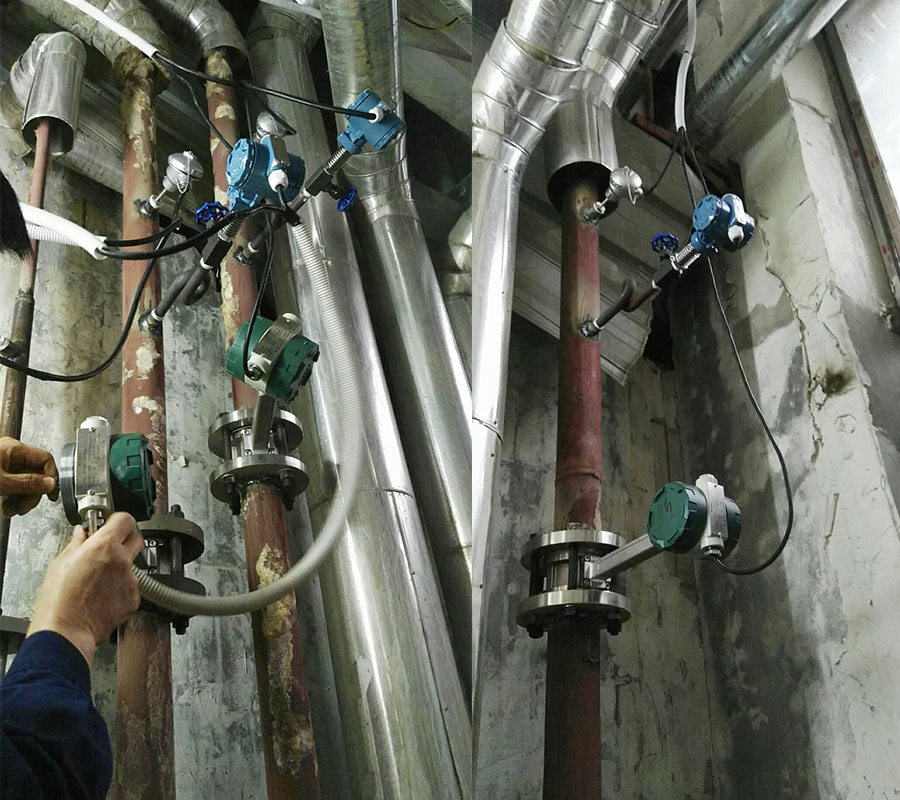
A vortex flow meter is a common option for a 3 inch steam line. It has no moving parts and needs little routine maintenance. With pressure and temperature compensation, it can also calculate steam mass flow in kg/h.
Two other technologies are also used for steam measurement:
For many steam lines, a vortex meter is a good place to start. The final choice depends on operating conditions, the required turndown ratio and the accuracy needed.
The Silver Instruments STLU-G DN80 vortex flow meter has a standard volumetric flow range of 55 to 1,100 m³/h, equivalent to approximately 3 to 61 m/s through an 80 mm bore. The resulting turndown ratio is 20:1.
For steam measurement, the typical accuracy is ±1.5% of reading. A vortex meter measures volumetric flow, while mass flow depends on steam density at the operating pressure and temperature. The following tables show the corresponding mass flow ranges for saturated and superheated steam.
Steam density increases with pressure, so the same volumetric flow rate corresponds to a higher mass flow rate at higher pressures. The table below shows the calculated DN80 range at different saturated steam pressures.
| Pressure MPa(g) | Saturation temp. °C | DN80 range kg/h |
| 0.2 | 134 | 91.2-1,823 |
| 0.4 | 152 | 147-2,942 |
| 0.6 | 165 | 202-4,040 |
| 0.7 | 170 | 229-4,584 |
| 0.8 | 175 | 256-5,126 |
| 1.0 | 184 | 310-6,206 |
| 1.2 | 192 | 364-7,283 |
| 1.6 | 204 | 472-9,435 |
The mass flow values are calculated by multiplying the standard volumetric range by saturated steam density, using IAPWS-IF97 steam properties. All pressures are gauge pressures.
For other pipe sizes from DN15 to DN300, see our steam flow meter sizing guide.
Superheated steam is less dense than saturated steam at the same pressure. As a result, the same volumetric flow rate corresponds to a lower mass flow rate. At 1.6 MPa(g), for example, the DN80 flow range is 370 to 7,393 kg/h at 300 °C, compared with 472 to 9,435 kg/h for saturated steam at the same pressure.
| Pressure MPa(g) | Temperature °C | DN80 flow range (kg/h) |
|---|---|---|
| 1.0 | 250 | 261–5,226 |
| 1.6 | 300 | 370–7,393 |
| 2.5 | 300 | 580–11,605 |
The standard STLU configuration handles temperatures up to 250 °C, while the extended version is rated for up to 300 °C. If your operating conditions fall outside these limits, send us the pressure and temperature for a sizing check. Available flange pressure ratings are 1.6, 2.5 and 4.0 MPa.
Pipe size and meter size are separate decisions. The pipe is usually sized to handle peak demand, but the meter must also measure steam consumption when demand is low.
Consider a line operating at 0.8 MPa(g), with a maximum flow of 1,200 kg/h, a normal flow of 500 kg/h and a night load of just 150 kg/h. The table compares three meter sizes under these conditions.
| Meter size | Range at 0.8 MPa(g) | Velocity at 150 / 500 / 1,200 kg/h | Night load in range? |
| DN80 | 256-5,126 kg/h | 1.8 / 5.9 / 14.2 m/s | No |
| DN65 | 163-3,355 kg/h | 2.7 / 9.0 / 21.6 m/s | No, just below |
| DN50 | 93-1,864 kg/h | 4.6 / 15.2 / 36.4 m/s | Yes |
DN80 handles the normal and peak flows, but its minimum flow of 256 kg/h is too high for the 150 kg/h night load. DN65 comes closer, although its minimum flow of 163 kg/h is still above the required level. With DN80-to-DN50 reducers, a DN50 meter can cover all three operating points.
At the peak flow of 1,200 kg/h, the velocity in the DN50 meter reaches about 36 m/s, within the stated standard range. The smaller bore also increases pressure drop, so check the allowable pressure loss before selecting DN50. Share your operating conditions and pressure drop limit with us, and we can check whether the meter is suitable.
If the steam flow never falls below approximately 260 kg/h, DN80 may be sufficient without reducers. For the full sizing method and more worked examples, see our guide on how to size a steam flow meter.
Straight pipe requirements
A vortex flow meter needs sufficient straight pipe to maintain a stable flow profile. A typical starting point is 20D upstream and 5D downstream, where D is the meter bore diameter. For DN80, this is approximately 1.6 m upstream and 0.4 m downstream. A control valve or two elbows in different planes upstream may require a longer straight run. Check the manufacturer's installation requirements against the actual pipe layout.
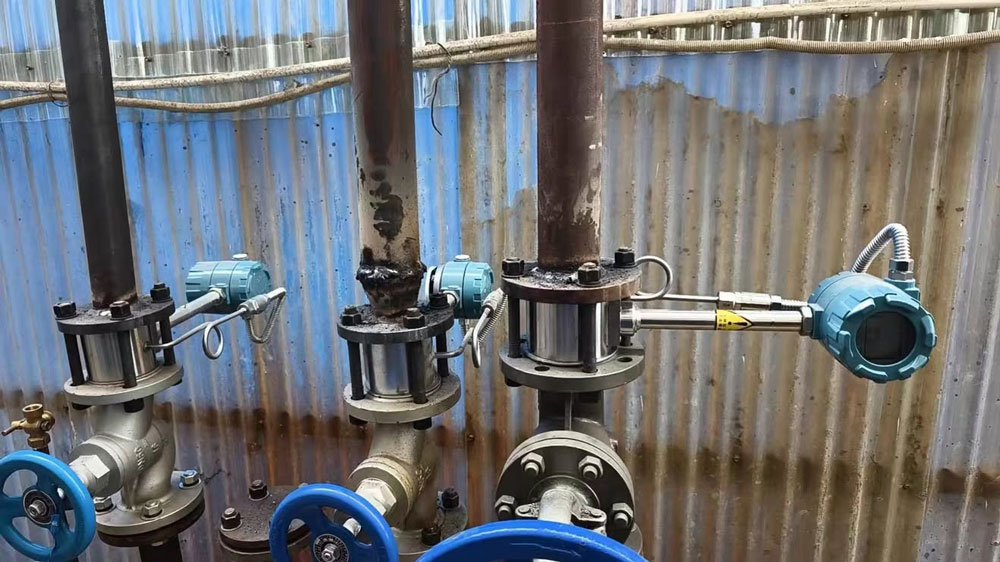
Installing reducers
If a DN65 or DN50 meter is installed in a 3 inch line, place the reducers outside the required straight-pipe sections wherever possible. Measure the straight-run lengths from the meter using the meter's bore diameter, rather than the nominal size of the main pipe.
Managing condensate
Choose an installation point where condensate is unlikely to collect, and provide suitable drainage and steam trapping for the line. Water slugs can disrupt the vortex signal and may damage the sensor. The final arrangement should follow the site's steam piping and drainage requirements.
Pressure and temperature compensation
For saturated steam, either pressure or temperature can be used to determine density, provided the steam remains saturated. Superheated steam needs both measurements. The compensated STLU configuration uses pressure and temperature data to calculate mass flow and output the result in kg/h.
Send us these details and we will confirm the meter size and send a quotation:
Website: https://www.silverinstruments.com/
Email: sales@silverinstruments.com
WhatsApp: +86 18936759191
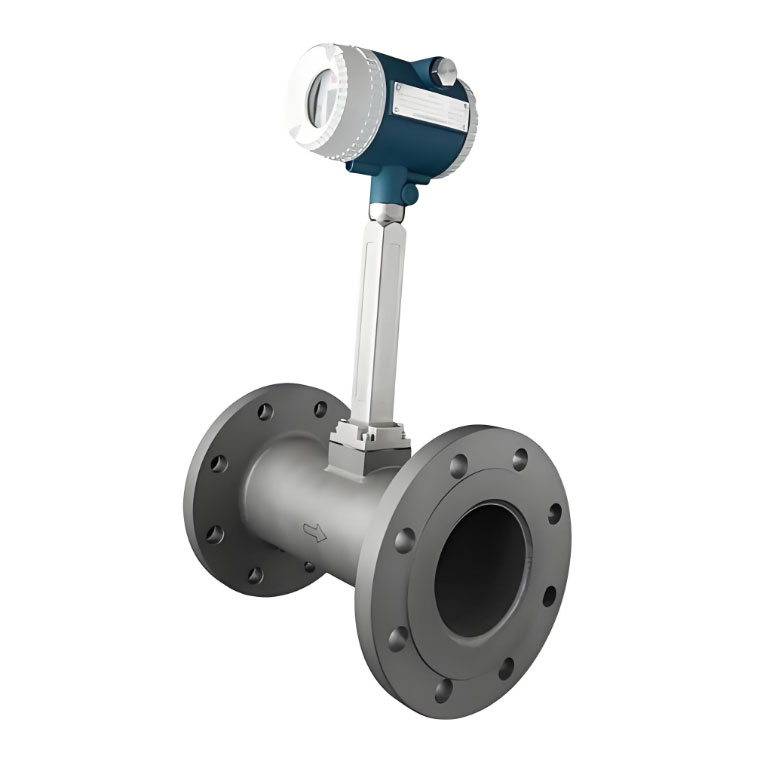 8 Inch Steam Flow Meter (DN200)
Quick AnswerFor an 8 inch (DN200) steam line, a vortex flow meter is the standard choice. It has no moving parts, handles saturated and superheated steam, and outputs mass flow directly when paired wi...
VIEW
 Steam Mass Flow Meter
Vortex flow meters to measure steam mass flow rate and have digital display to show steam total mass flow . Built-in temperature and pressure compensation .
VIEW
 Vortex type gas flow meter
Overview of Vortex type gas flow meter Vortex flowmeter is a fluid oscillating flow measuring instrument developed according to the principle of "Kaman vortex street". The so-called "Kamen vortex stre...
VIEW
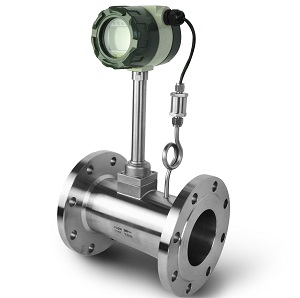 4 inch steam flow meter
What is 4 inch steam flow meter ?4 inch steam flow meters means the 4 inch dia flow meter to measure steam flow rate, normally it is steam mass flow rate , the flow unit normally be kg/h or Ton/Hr. 4...
VIEW
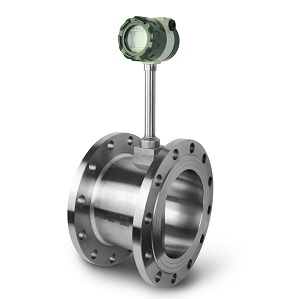 Vortex flow meter for natural gas
What Is Natural Gas?Natural gas is a combination of gases thatexist rich in hydrocarbons. Natural gases such as methane, nitrogen, and carbondioxide also found in the air. Natural gas reserves are dee...
VIEW
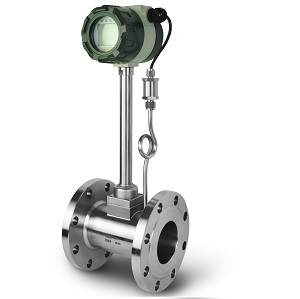 Vortex steam flow meter
Vortex flow meters are not affected by either temperature or pressure and can provide four process measurements (mass flow, volumetric flow, pressure, temperature ) which are useful in the monitoring...
VIEW