
English
For high-viscosity oil, an oval gear meter is usually the first option. Thicker oil reduces slip between the gears and the chamber, so accuracy holds or improves as viscosity rises. The limit is flow capacity. Maximum flow must be derated at high viscosity to keep pressure drop and gear load within range. A Coriolis meter is the better fit when the process needs mass flow or density, when the oil carries solids that would clog a gear meter strainer, or when process temperature exceeds the gear meter rating. Coriolis pressure drop also rises with viscosity, so size either meter on the viscosity at operating temperature, not at the reference condition.
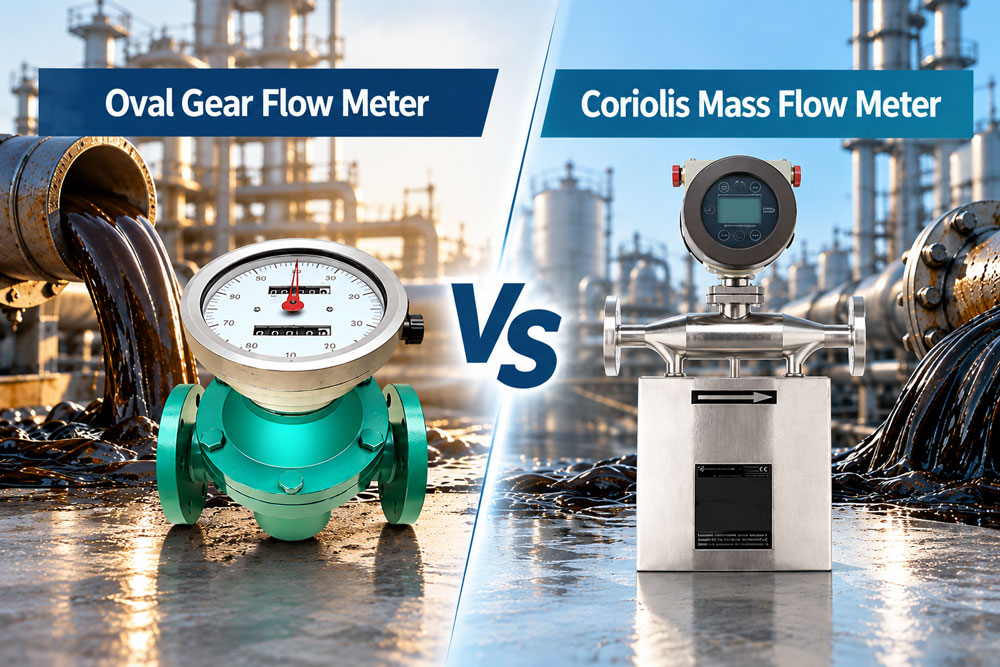
The table below compares the two meter types on heavy oil duty.
| Oval gear flow meter | Coriolis mass flow meter | |
| Measures | Volume | Mass, density and temperature |
| Effect of higher viscosity | Less internal slip, so accuracy holds; maximum flow is derated | Measuring principle unchanged; pressure drop rises |
| Viscosity limit | Set by model; LC series up to 2,000 mPa·s | No fixed limit; set by allowable pressure drop |
| Temperature limit | Set by configuration; LC series up to 200 °C with radiator | SH-CMF: 150 °C standard; versions to 250 °C and 350 °C |
| Accuracy | 0.5%; 0.2% class available up to 1,000 mPa·s (LC series) | ±0.1% to ±0.5% (SH-CMF) |
| Moving parts | Yes, gears and bearings | None in the flow path |
| Oil cleanliness | Needs clean oil and an upstream strainer | Tolerates solids better, but abrasives erode tubes |
| Oils of different viscosity | Meter factor and flow range change with viscosity | One meter can cover them; size on the heaviest oil |
| Power | Mechanical register works without power | Needs power supply (24 VDC or 220 VAC) |
| Cost | Generally lower for comparable volume-flow duty | Higher |
| Sizing on thick oil | Derate maximum flow by viscosity band | Size on allowable pressure drop; may exceed line size on very thick oil |
Five conditions usually shape the selection: viscosity at operating temperature, required flow range, process temperature, oil cleanliness and the required measurement result.
Oil viscosity changes significantly with temperature, so sizing should use the viscosity at the actual operating temperature.
One crude oil flow meter inquiry gave two values for the same oil: 9,500 cSt at 100 °F and 162 cSt at 210 °F, a difference of almost 60 times. The line ran at 30 °C (86 °F), colder than both reference points. Extrapolating the two values with the ASTM D341 viscosity and temperature method gives roughly 21,000 cSt at 30 °C. A meter selected on the 162 cSt figure would have met about 130 times the viscosity it was sized for.
Oil data often gives kinematic viscosity in cSt, while meter specifications use dynamic viscosity in mPa·s. Multiply cSt by density in g/cm³ to convert, using values at the same temperature. For example, 380 cSt at 50 °C with a density of 0.96 g/cm³ is about 365 mPa·s. The conversion is especially important near a meter's viscosity limit.
An oval gear meter measures volume by trapping a fixed amount of liquid between the gears and chamber. As viscosity rises, leakage through the gear clearances decreases. At the same time, pressure drop increases, reducing the flow capacity available at a given process pressure.
The LC data below shows how the rated flow changes with viscosity. The flow ranges are for the 0.5% class; the 0.2% class has a higher minimum flow.
| Viscosity band | LC-20 (DN20) flow range | LC-100 (DN100) flow range | Accuracy |
| 2 to 200 mPa·s | 0.3 to 3 m³/h | 10 to 100 m³/h | 0.5%, 0.2% class available |
| 200 to 1,000 mPa·s | 0.2 to 2.1 m³/h | 6 to 70 m³/h | 0.5% |
| 1,000 to 2,000 mPa·s | 0.15 to 1.5 m³/h | 5 to 50 m³/h | 0.5% |
The LC series covers DN10 to DN200 and viscosity up to 2,000 mPa·s. Typical services for an oval gear meter include marine fuel oil, heavy lubricating oil, gear oil and rubber process oil.
From 200 mPa·s, the LC is built in its high-viscosity configuration, so the operating viscosity should be stated at the inquiry stage.
On thick oil, a larger meter lowers the pressure drop, but it also raises the minimum flow. The selected size has to cover both the lowest and the highest flow at the operating viscosity.
Meter error shifts with fluid viscosity. LC meters above DN50 have an accuracy adjustor, so the error can be trimmed for the actual oil.
Solid particles can jam or wear the gears, so an upstream strainer is common on fuel and crude oil lines.
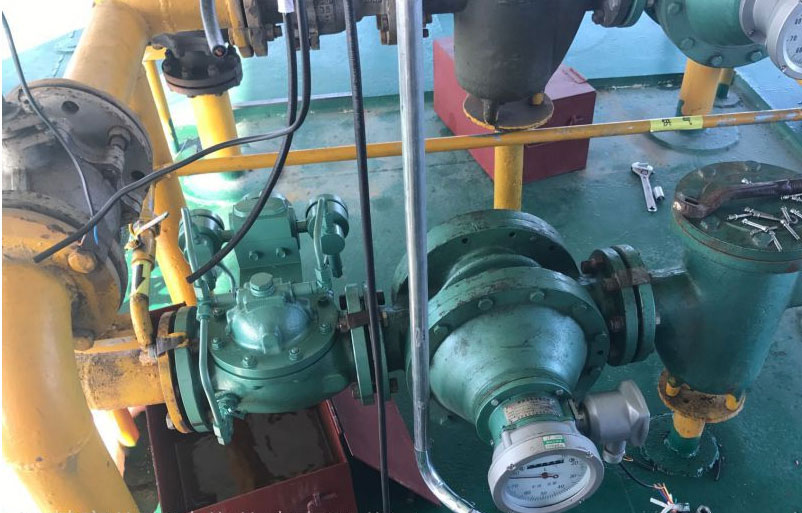
Lubricant dosing, additive injection and grease feeds often combine high viscosity with flow rates of only a few millilitres per minute. Conventional oval gear sizes do not cover this range. In the 1,000 to 2,000 mPa·s viscosity range, the smallest LC size, LC-10, starts at 0.03 m³/h, or about 500 ml/min.
The LC-M series is a micro PD flow meter designed for low-flow, high-viscosity applications. It covers viscosities up to 2,000 mPa·s, and the smallest model, LC-M2, measures 0.5 to 150 ml/min. Larger models extend to 100 L/min, providing overlap with the conventional LC range.
The accuracy is ±0.5% of full scale. For the LC-M2, with a 150 ml/min full scale, this corresponds to ±0.75 ml/min. At a dosing rate of 5 ml/min, that is equivalent to ±15% of the reading. The selected model should therefore place the normal dosing flow toward the upper part of its measuring range.
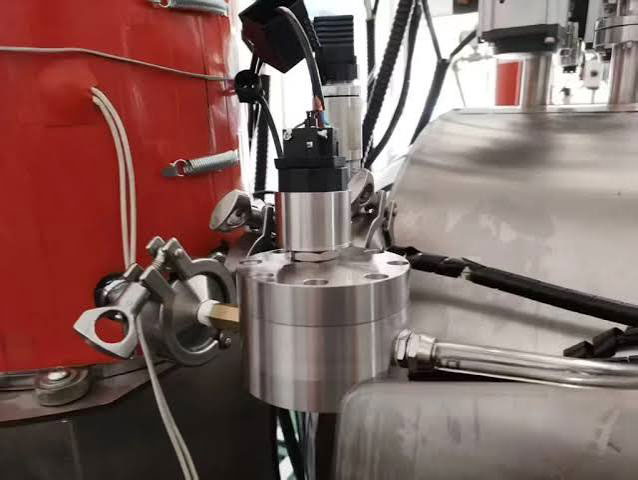
A Coriolis flow meter measures mass flow directly and can also provide density measurement. With no moving parts in the flow path, it can be considered when high-viscosity oil requires mass flow measurement or when pressure drop limits another meter type.
With thick oil, pressure drop through the measuring tubes can limit the usable flow range. The meter size should be based on the actual oil viscosity, required flow rate and allowable pressure drop.
The heavy crude inquiry above shows how this works in practice:
Selected meter: SH-CMF DN50 Coriolis, 316L, 0.2% accuracy, ATEX, -50 to 150 °C
At about 20,000 mPa·s, the oil is ten times above the LC oval gear limit, so Coriolis was the only fit of the two. The customer reviewed the DN50 selection with its engineering and production teams before moving to purchase.
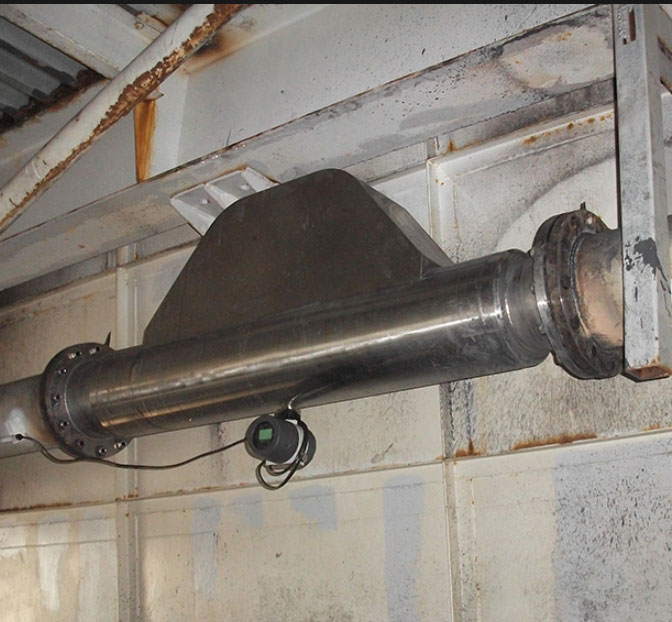
Diesel runs at around 5 mPa·s. Heavy fuel oil is often above 200 mPa·s at its operating temperature, and the gap widens as the oil cools. The LC is supplied in its standard version for diesel and with the high-viscosity option (code N) for heavy fuel oil, and the meter error also shifts with viscosity. For this reason, one oval gear meter is not normally used for both fuels. Bunker-fuel systems usually specify separate meters, or use a Coriolis meter when both fuels must share one line.
Heavy fuel oil also changes on the same line as the temperature moves. Consider a DN20 line carrying fuel rated at 380 cSt at 50 °C, with a required maximum flow of 2.2 m³/h:
At 50 °C: about 365 mPa·s, in the 200 to 1,000 mPa·s band. LC-20 maximum: 2.1 m³/h.
At 30 °C: an estimated 1,300 to 1,900 mPa·s, in the 1,000 to 2,000 mPa·s band. LC-20 maximum: 1.5 m³/h; LC-25 maximum: 3 m³/h.
The LC-20 falls short at both temperatures. The LC-25 covers 2.2 m³/h across the full temperature range. Size the meter at the lowest fuel temperature, where viscosity is highest and the flow limit is lowest.
Heating lowers oil viscosity and improves pumpability, but the meter must also withstand the resulting process temperature.
| Meter | Maximum medium temperature |
|---|---|
| LC oval gear | Up to 60 °C standard; 60 to 120 °C with a short radiator; 120 to 200 °C with a long radiator |
| SH-CMF Coriolis | Up to 150 °C standard; high-temperature versions to 250 °C and 350 °C |
Heavy fuel oil shows how this affects selection. Typical inquiries include 4-inch lines at 100 to 160 t/h, with the oil at 150 °C on some lines and 240 °C on others.
At 150 °C, heavy fuel oil is usually below 200 mPa·s, so the LC works in its standard viscosity band. At a density of about 0.90 g/cm³, 100 t/h is about 111 m³/h and 160 t/h about 178 m³/h. This exceeds the 100 m³/h limit of the DN100 LC, but the DN150 LC with a long radiator covers both the flow and the temperature.
At 240 °C, the LC is outside its temperature range, and a Coriolis meter in its 250 °C or 350 °C version is needed. The DN100 SH-CMF is rated to 160 t/h, so the upper flow sits at full scale; the DN125 is rated to 230 t/h. Final sizing depends on the oil viscosity and allowable pressure drop.
Where both line temperatures need the same meter type, Coriolis covers them with one design.
For asphalt and bitumen, temperature control matters for a different reason: the product can solidify as the line cools. The LC is available with a heating jacket (code U) to keep the product fluid through shutdown and restart.
Silver Instruments can review the meter type, size and viscosity band against the operating data. The sizing review needs:
Send the data or a P&ID to sales@silverinstruments.com, or via WhatsApp at +86 18936759191.