English
The Coriolis flow meter is one of the most accurate flow meters available today, with measurement accuracy of ±0.1% to ±0.5%. It measures mass flow directly, not just volume, meaning its readings are not affected by changes in fluid temperature, pressure, or viscosity. As a result, it works reliably across a wide range of applications, from high viscosity fluids and chemicals to gases and oil and gas.
The initial cost is higher than other flow meters, but the long-term savings are significant. With no moving parts, minimal maintenance, and calibration intervals of 5-10 years, the total cost of ownership over 10 years is typically 15-25% lower than alternative technologies. For industries where measurement accuracy directly affects revenue, such as custody transfer in oil and gas, the accuracy of ±0.1% to ±0.5% makes Coriolis the standard choice.

Also known as the Mass Flow Meter or Inertial Flow Meter, a Coriolis meter works on the principle of inertia. When fluid flows through a vibrating tube, it generates a force that causes the tube to twist. The degree of this twist is directly proportional to the mass flowrate, and sensors in the device convert this into a linear flow signal.
Early Coriolis designs used a single curved tube, but thin tube walls caused vibration issues. Modern meters use two tubes with thicker walls, which improves durability, reduces power consumption, and eliminates vibration problems.
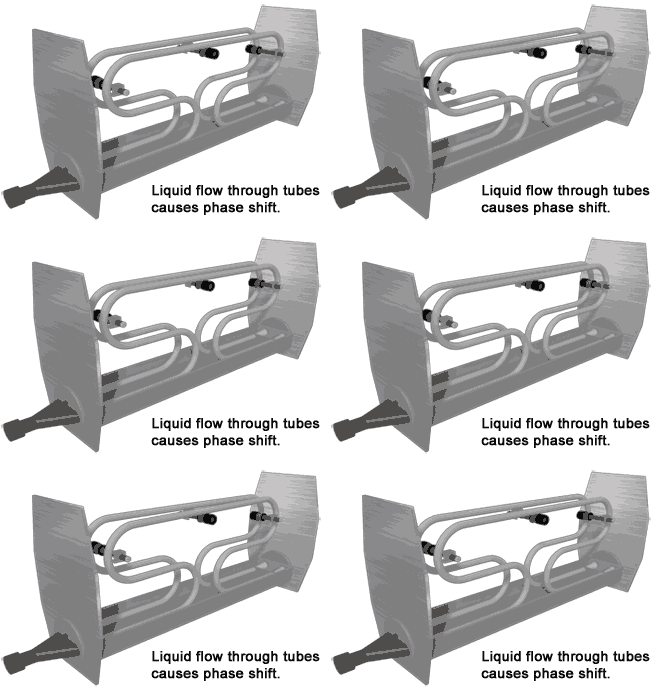
In operation, the two tubes vibrate in opposite directions using magnetic coils at the inlet and outlet. When no fluid is flowing, the sine waves from both sensors are in phase. When fluid flows, the tubes twist and a phase shift occurs. This phase shift, measured in microseconds, is proportional to the mass of the fluid and gives the mass flowrate reading.
✅ Highest accuracy. Coriolis meters deliver measurement accuracy of ±0.1% to ±0.5%. Unlike volumetric flow meters, this accuracy remains stable even when fluid temperature, pressure, or flow velocity changes. This is why they are widely used in critical measurement applications such as custody transfer and process control.
✅ No moving parts. With no moving parts to wear down, maintenance requirements are minimal and calibration intervals typically reach 5-10 years.
✅ Direct mass flow measurement. Coriolis meters measure mass flow directly, not just volume. This makes them ideal for materials sold by weight, and for oil and gas applications where product value is calculated in energy units such as BTU.
✅ Multi-parameter measurement. A single Coriolis meter can simultaneously measure mass flow, density, temperature, and fluid concentration. This eliminates the need for multiple instruments and reduces installation costs.
✅ Suitable for gases. Because readings are unaffected by temperature and pressure changes, Coriolis meters are especially reliable for gas flow measurement, where these variables fluctuate most.
Want to know how Coriolis compares to other technologies? See Coriolis vs Magnetic flow meter and Thermal mass meter vs Coriolis meter.
Coriolis flow meters are used across a wide range of industries where accurate flow measurement is critical: oil and gas, petrochemicals, food and beverage, pharmaceuticals, and water treatment. They are a practical choice for high viscosity fluids, corrosive substances, and any application that requires simultaneous measurement of mass flow, density, temperature, and concentration from a single instrument.


Coriolis flow meters offer accuracy of ±0.1% to ±0.5% of reading, making them the most accurate flow meters available. This accuracy is maintained regardless of changes in temperature, pressure, or fluid viscosity.
One of the key advantages is that they rarely require recalibration. The typical interval is 5 to 10 years, compared to other flow meter types that may need annual calibration. This significantly reduces long-term operating costs.
Yes, this is one of the applications where Coriolis meters excel. Their obstruction-free tube design with no moving parts allows accurate measurement of fluids such as molasses, asphalt, latex, resins, and heavy oils.
The initial cost is 20-40% higher than other flow meter types such as turbine or differential pressure meters. However, the total cost of ownership over 10 years can be 15-25% lower due to minimal maintenance and long service life. Silver Automation Instruments supplies Coriolis flow meters from 3,000 USD directly from our factory in China.
It can measure virtually any fluid: liquids (water, oil, chemicals, food products), gases (natural gas, nitrogen, CO₂), steam, cryogenic liquids, and mixed-phase flows. It is especially valued in oil and gas, food and beverage, pharmaceutical, and chemical industries.
Send us your specifications and we will reply with a quote within 24 hours. Direct manufacturer in China with 20+ years of experience.
Get a Quote or email us: sales@silverinstruments.com
 Coriolis Mass Flow Meter for the Fluorochemical and Specialty Gas Industry in Southeast Asia
What are the flow meters for the fluorochemical and specialty gas industry? Learn how Coriolis mass flow meters deliver accurate, corrosion-resistant, and cryogenic-capable measurement for liquefied g...
VIEW
Coriolis Mass Flow Meter for the Fluorochemical and Specialty Gas Industry in Southeast Asia
What are the flow meters for the fluorochemical and specialty gas industry? Learn how Coriolis mass flow meters deliver accurate, corrosion-resistant, and cryogenic-capable measurement for liquefied g...
VIEW
 Coriolis flow meter
High-precision Coriolis mass flow meters for liquids and gases. Measures mass, density, temperature—ideal for industrial use.
VIEW
Coriolis flow meter
High-precision Coriolis mass flow meters for liquids and gases. Measures mass, density, temperature—ideal for industrial use.
VIEW
 Coriolis Flow Meter for Latex Flow Measurement
Silver Automation Instruments recently encountered multiple customer inquiries regarding latex flow measurement in different applications, including rubber glove manufacturing , Latex Compound for Mat...
VIEW
Coriolis Flow Meter for Latex Flow Measurement
Silver Automation Instruments recently encountered multiple customer inquiries regarding latex flow measurement in different applications, including rubber glove manufacturing , Latex Compound for Mat...
VIEW
 Coriolis flow meter for chlor-alkali industry
The chlor-alkali industry relies heavily on accurate and stable measurements for chlorine gas and caustic soda (sodium hydroxide). Coriolis Mass flow meters are essential tools in this industry due to...
VIEW
Coriolis flow meter for chlor-alkali industry
The chlor-alkali industry relies heavily on accurate and stable measurements for chlorine gas and caustic soda (sodium hydroxide). Coriolis Mass flow meters are essential tools in this industry due to...
VIEW
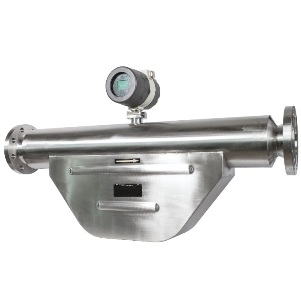 4" Coriolis flow meter
A 4-inch Coriolis flow meter refers to a type of Coriolis flow meter with a 4-inch nominal pipe size (NPS) or we also say DN100 Corolis flow meter.
VIEW
4" Coriolis flow meter
A 4-inch Coriolis flow meter refers to a type of Coriolis flow meter with a 4-inch nominal pipe size (NPS) or we also say DN100 Corolis flow meter.
VIEW
 Micro low flow Coriolis flow meter
Min flow 0-10 kg/hr Coriolis principle. ATEX approved. Suitable for low flow gas, liquid or steam.
VIEW
Micro low flow Coriolis flow meter
Min flow 0-10 kg/hr Coriolis principle. ATEX approved. Suitable for low flow gas, liquid or steam.
VIEW