
English
A battery-powered electromagnetic flow meter works for oily wastewater only when oil content stays under 5%. Above that, the insulating layer on the electrodes causes signal loss and reading drift. For DN32 and DN40 lines carrying water that has washed down oily areas, an insertion or full-bore electromagnetic meter with a 3 to 4 year lithium battery pack and PTFE liner is the standard choice in Australia and similar markets.
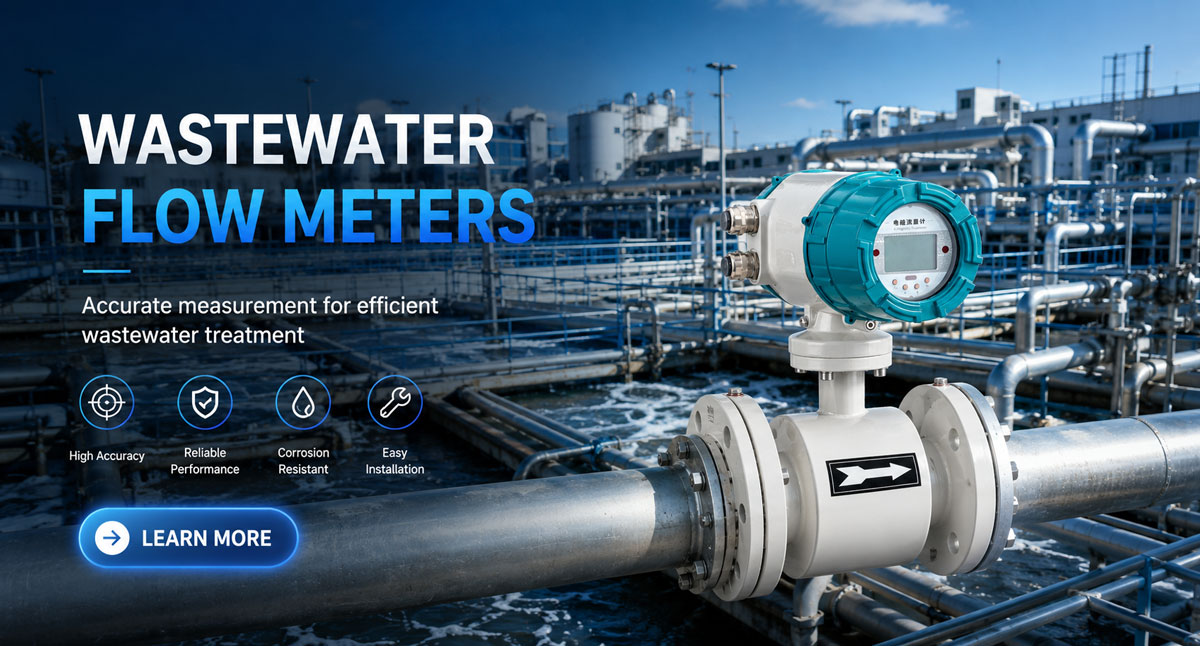
Electromagnetic meters measure flow using Faraday's law. The fluid needs to stay electrically conductive across the full cross section of the pipe. Oil is non-conductive. Once oil droplets coat the electrodes or build up a film along the liner, the signal weakens and the reading becomes unstable or simply drops to zero.
We tell customers the same thing every time this question comes up: keep oil content below 5% by volume, and keep it dispersed rather than free-floating. Domestic wastewater that has rinsed through a bunded oily area, workshop floor drainage, or vehicle wash-down water usually falls inside that range. Free oil layers, tank bottoms, or oil-water separator outputs above 5% do not.
If your application sits right at that boundary, run a quick sample test before ordering. A jar test showing a thin sheen rather than a separated oil layer is usually a good sign.
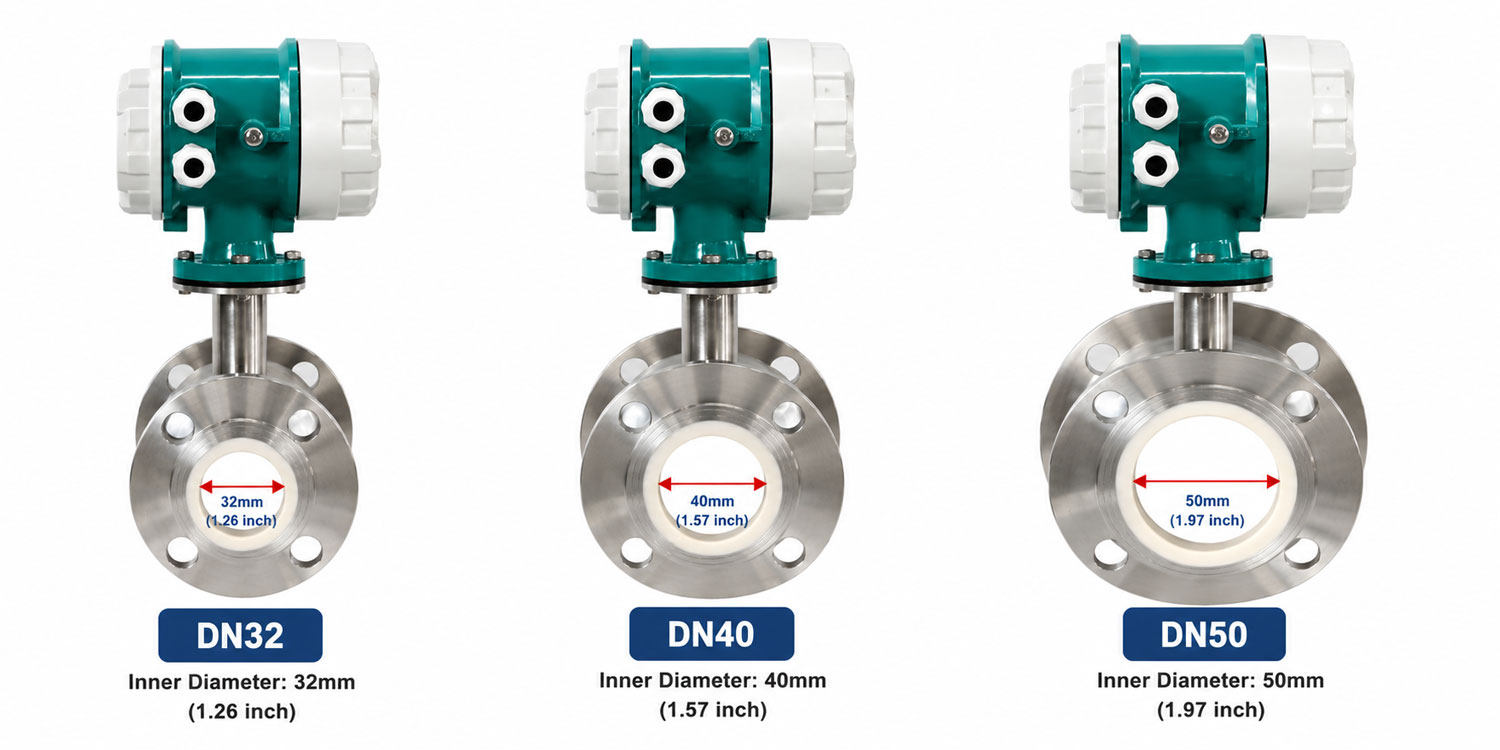
Both DN32 and DN40 fall comfortably within the standard flow range of a compact electromagnetic meter. The table below shows typical flow velocity ranges for each size, using 0.5 to 8 m/s as the practical operating window for accurate, low-noise readings.
| Pipe Size | Flow Range (Low Velocity) | Flow Range (Typical Operating) | Recommended Output |
| DN32 (1-1/4") | 1.2 m³/h (5.2 GPM) | 1.2 to 24 m³/h (5.2 to 105 GPM) | Pulse + 4-20 mA or Modbus RTU |
| DN40 (1-1/2") | 1.8 m³/h (7.9 GPM) | 1.8 to 36 m³/h (10 to 158 GPM) | Pulse + 4-20 mA or Modbus RTU |
| DN50 (alternative) | 3 m³/h (513 GPM) | 3 to 60 m³/h (13 to 220 GPM) | Pulse + 4-20 mA or Modbus RTU |
If there is any chance the actual flow will run higher than the current pipe diameter suggests, DN50 is worth considering. It widens the low-flow accuracy window and avoids running the meter near its maximum velocity, which matters for a battery unit because higher flow rates draw more power from the excitation coil.
Because there is no mains power at most wash-down and drainage points, the battery pack does the real engineering work here. A lithium battery pack rated for 3 to 4 years is standard, with the actual life depending on sampling interval and whether the meter logs data continuously or wakes on flow.
On flange arrangements, Silver Instruments electromagnetic meters can ship with ANSI, DIN, or wafer-style connections to match what is already on site. For an Australian wastewater retrofit, DIN flanges are common, but we have also shipped wafer-type units where space in the pit was tight.
Liner material matters more than people expect. PTFE is the standard choice for general industrial and domestic wastewater with light oil content. It resists fouling better than rubber liners when any hydrocarbon is present, and it holds up across a wider temperature range.
Last month a water utility contractor in Queensland asked us about a similar setup. Their pipe was DN40, carrying runoff from a bunded fuel storage area that occasionally picked up trace oil during rain events. We confirmed oil content stayed under 2% based on their site testing, recommended a DN40 battery-powered electromagnetic meter with PTFE liner and DIN flanges, and specified Modbus RTU output so the data could feed into their existing SCADA without rewiring the site.
Cases like this come up often enough in Southeast Asia, Australia, and the Middle East that we built a standard battery-powered configuration specifically for low-oil-content wastewater. It is not a special order. It is what we ship by default for this application.
Send us your pipe size (DN32, DN40, or larger), flow range (m³/h or GPM), oil content estimate (%), preferred flange type, and whether you need pulse, 4-20 mA, or Modbus RTU output.
Email sales@silverinstruments.com and we will confirm sizing and battery configuration within one business day.