
English
In today’s fast-paced world, fuel efficiency has become a critical concern for various industries. One key component that aids in achieving optimal fuel consumption is the turbine fuel flow meter. In this article, we will explore what a turbine flow meter is, why it is used for measuring fuel flow, and highlight the features of these remarkable devices. Additionally, we will introduce Silver Automation Instruments as a reliable source for affordable turbine fuel flow meters.
A turbine flow meter is a device designed to measure the rate of fluid flow, including fuel, by utilizing a turbine rotor. This rotor, with blades or vanes attached, rotates as the fuel passes through it. The rotation speed is directly proportional to the fuel oil flow rate, allowing for accurate measurement.
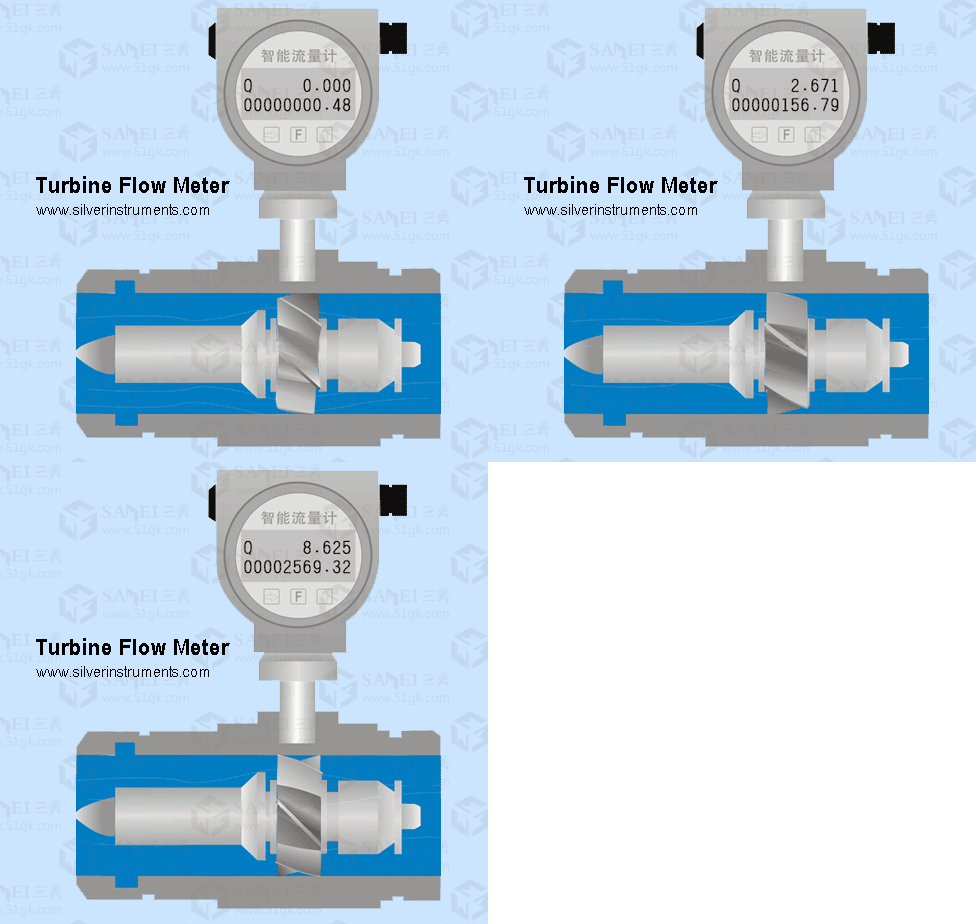
Rotors rotate as the fuel passing through TUF flow meter
When it comes to fuel flow measurement, turbine flow meters offer several advantages. They provide real-time data on fuel consumption, enabling better control and management of fuel usage. By accurately measuring fuel flow, turbine flow meters help optimize engine performance, reduce waste, and improve overall efficiency.
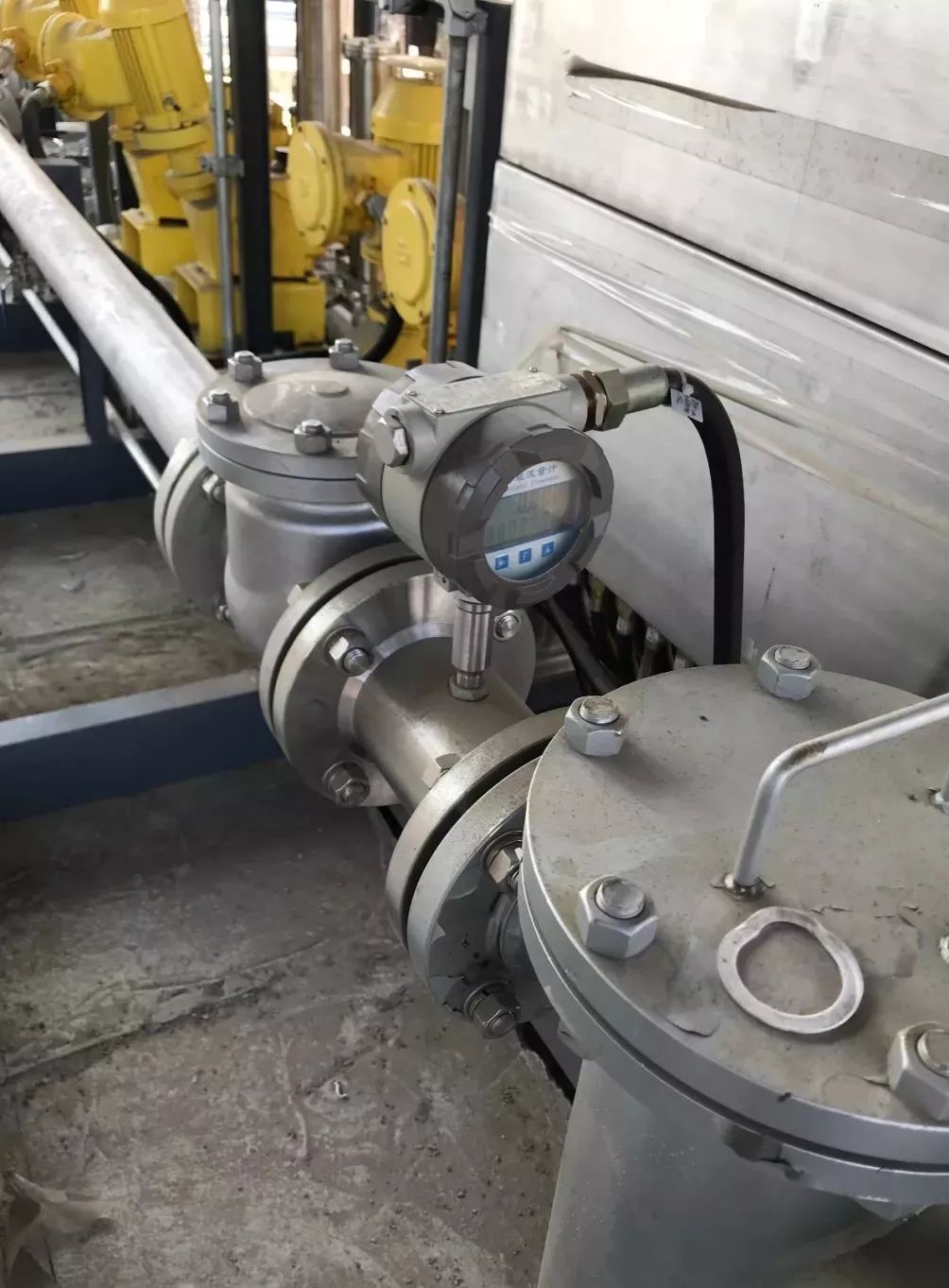
a) High Accuracy: Turbine flow meters offer excellent accuracy, the accuracy around 0.2% ~1.0%, ensuring precise measurement of fuel flow rates. This accuracy enables businesses to make informed decisions regarding fuel consumption and identify areas for improvement.
b) Wide Range of Applications: Turbine fuel flow meters can be used in various industries, including aviation, automotive, marine, and power generation. Their versatility makes them suitable for measuring different types of fuels, from gasoline and diesel to jet fuel and even biofuels.
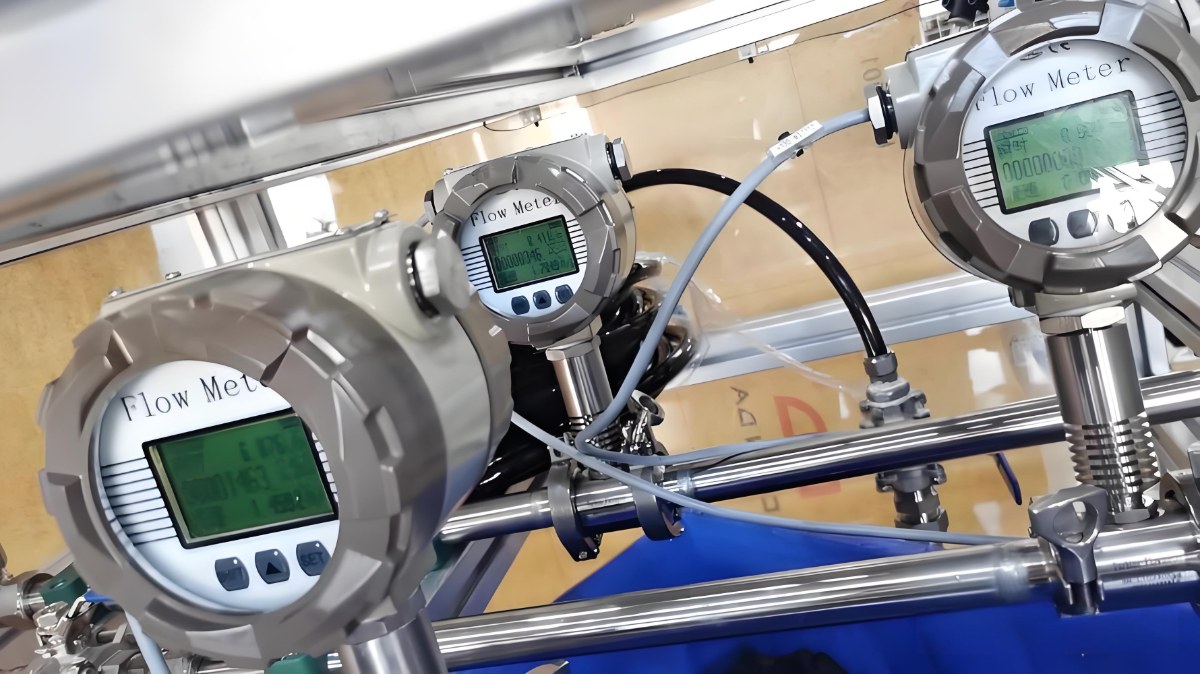
c) Compact and Lightweight: Turbine flow meters are known for their compact size and lightweight design, making them easy to install and integrate into existing fuel systems. Their compactness also means they require minimal space, making them suitable for installations with limited room.
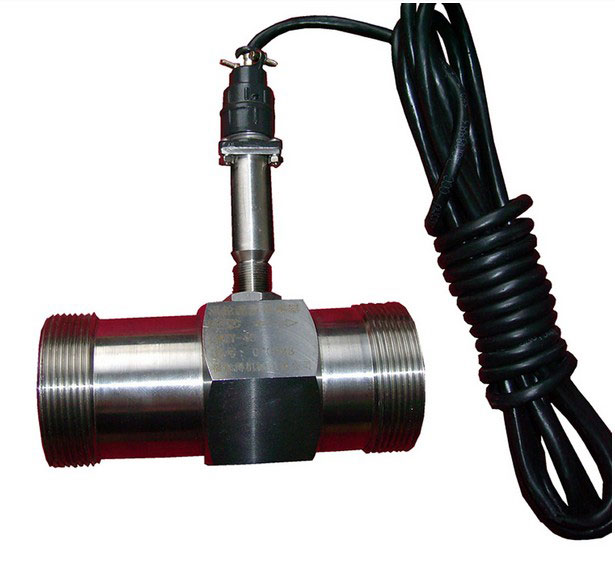
d) Durability: These turbine fuel flow meters are built to withstand harsh environments and operate reliably in extreme conditions. They are often made from durable materials like stainless steel, ensuring longevity and resistance to corrosion.
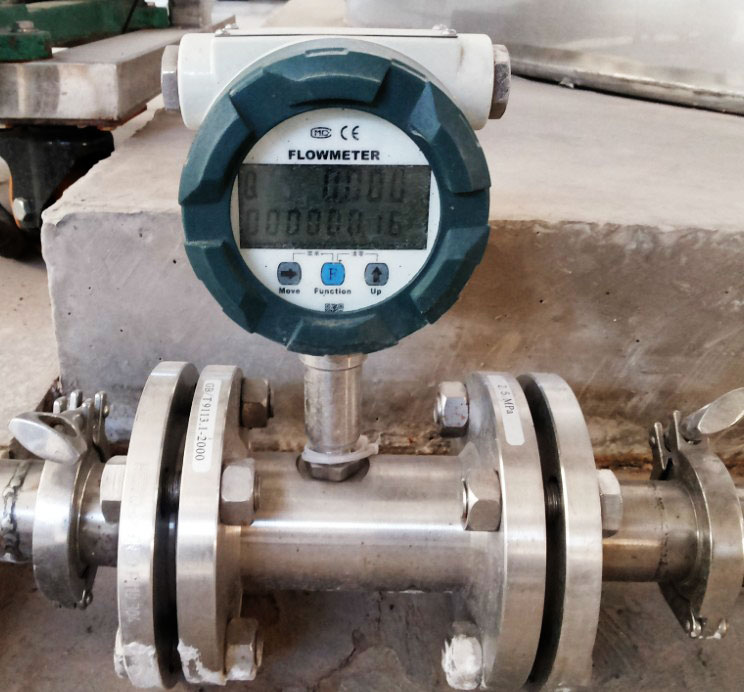
There are so many advantages to measuring fuel with a turbine flowmeter, so we all want to know how to choose a suitable turbine flowmeter?
Step 1:
Flow Range: The turbine fuel flow meter has a specified flow range, indicating the flow rates it can accurately measure. This range is typically given in units such as liters per minute (LPM), gallons per minute (GPM) or Cubic meters per hour (m3/h).For example, 1” turbine fuel flow meter can measure 1-10 m3/h, 2” turbine fuel flow transmitter can measure 17-176 gpm flow , 3” turbine flow sensor can measure 10-100 m3/hour fuel oil flow.
Below we list a table for turbine flow meter size and corresponding fuel flow range, we also list pressure loss which is considered as a important value when selected a correct flow meter.
| Flow Sensor Diameter | Standard Flow (m3/h) | Extended Flow(m3/h) | Start Flow (m3/h) | Max Pressure Loss(Kpa) | |
| (mm) | (in.) | ||||
| 4 | 0.15 | 0.04 to 0.25 | 0.04 to 0.4 | 0.02 | 120 |
| 6 | 0.25 | 0.1 to 0.6 | 0.06 to 0.6 | 0.05 | 80 |
| 10 | 0.4 | 0.2 to 1.2 | 0.15 to 1.5 | 0.07 | 50 |
| 15 | 0.5 | 0.6 to 3.6 | 0.5 to 5 | 0.35 | 35 |
| 20 | 0.75 | 0.8 to 8 | 0.45 to 9 | 0.3 | 35 |
| 25 | 1 | 1 to 10 | 0.5 to 10 | 0.4 | 35 |
| 32 | 1.25 | 1.5 to 15 | 0.8 to 15 | 0.6 | 35 |
| 40 | 1.5 | 2 to 20 | 1 to 20 | 0.6 | 35 |
| 50 | 2 | 4 to 40 | 2 to 40 | 1 | 35 |
| 65 | 2.5 | 7 to 70 | 5 to 70 | 4 | 25 |
| 80 | 3 | 10 to 100 | 7 to 100 | 5 | 25 |
| 100 | 4 | 20 to 200 | 10 to 200 | 8 | 25 |
| 125 | 5 | 25 to 250 | 13 to 250 | 10 | 25 |
| 150 | 6 | 30 to 300 | 15 to 300 | 12 | 25 |
| 200 | 8 | 80 to 800 | 40 to 800 | 20 | 25 |
| Accuracy | 0.5 % | 1.0% | --- | --- | |
Note: 1. Max Pressure Loss is the value when the flow meter working on the max flow, medium is water in room temperature.
2. 0.2% accuracy is possible, but it is customized product, and the flow range is narrower than standard Flow Range
Step 2
Accuracy: The accuracy of the turbine flow meter is a critical factor. It is usually expressed as a percentage of the actual flow rate. For example, an accuracy of ±1% means that the meter’s reading will be within 1% of the true flow rate. Silver Automation Instruments offer turbine fuel flow meter with accuracy 0.2% ~1.0%.
Please provide your fuel flow range and pipeline size. After our technical expertise calculates, we can determine the maximum accuracy of the fuel flow meter provided.
Step 3
Pressure Rating: The turbine flow meter has a specified pressure rating, indicating the maximum pressure it can withstand without affecting its accuracy or causing damage. This rating is usually given in units such as pounds per square inch (PSI) or bar. Standard turbine fuel flow meter can bear 232 psig pressures, however it has higher pressure, such as 150LB, 300lb, 500 PSI and so on.
Tell silverinstruments.com what is your operation pressure and nominal pressure, we will select a proper pressure rating fuel TUF for you.
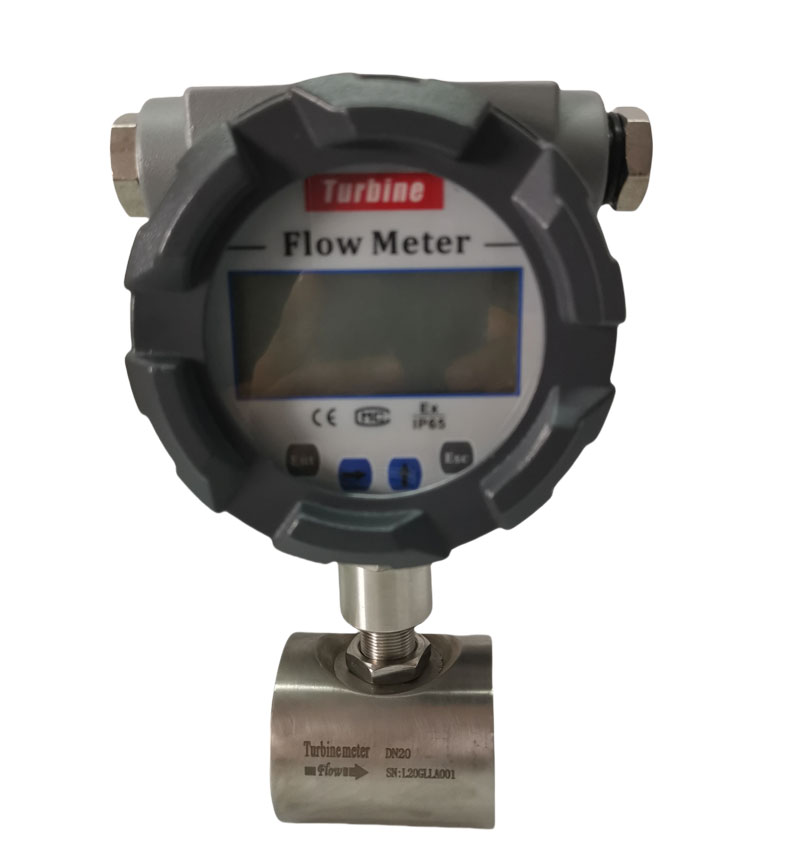
High pressure rating turbine fuel flow meter can max bear 100 bar pressure
Step 4
Temperature Range: The temperature range specifies the minimum and maximum temperatures at which the turbine flow meter can operate accurately. It is crucial to ensure that the turbine fuel flow meter can handle the temperature conditions of the fuel being measured. Silver Automation Instruments offer turbine flow meters can work on fluids with -20 °C ~ 150 °C.
Step 5
Material of Construction: The turbine flow meter’s body and internal components is made of materials that are compatible with the fuel being measured. Standard material is stainless steel 304; turbine fuel flow sensor material is option with SUS316. Please confirm that what kind of material you need.
Step 6
Output Signal: The turbine flow meters provide a suitable output signal that can be easily integrated into the existing fuel management system. Common output signals include pulse, 4-20mA, HART or Modbus communication. You should inform silverinstruments.com ,what kind of output you need , we will then choose a proper type turbine meter for you .
Step 7
Power Supply: The turbine flow meters require an external power supply 24V DC or operate on battery power. You should decide what kind of power supply you need.
Step 8
Calibration: It is essential to know whether the turbine flow meter comes pre-calibrated or if it requires calibration before use. Calibration ensures the accuracy and reliability of the meter’s readings. Silver Automation Instruments offer calibration report for each flow meter sold.
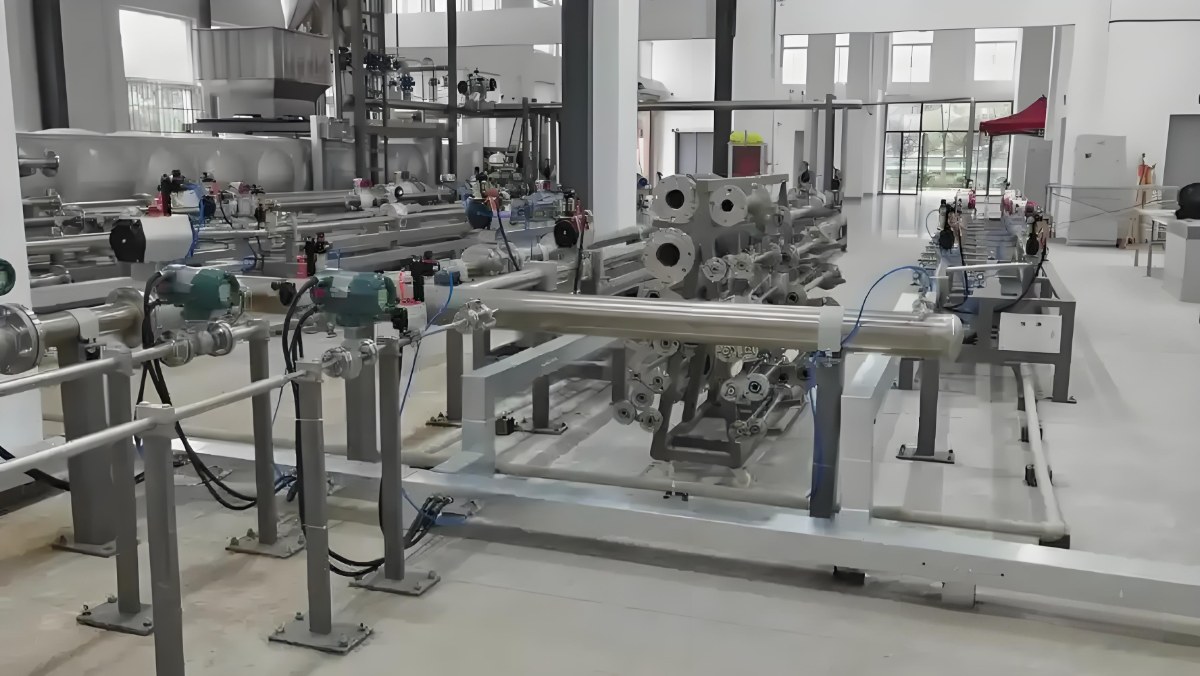
Silverinstruments.com provide calibration report for each fuel flow meter
When installing turbine fuel flow meters, it's crucial to choose a location that meets the following criteria:
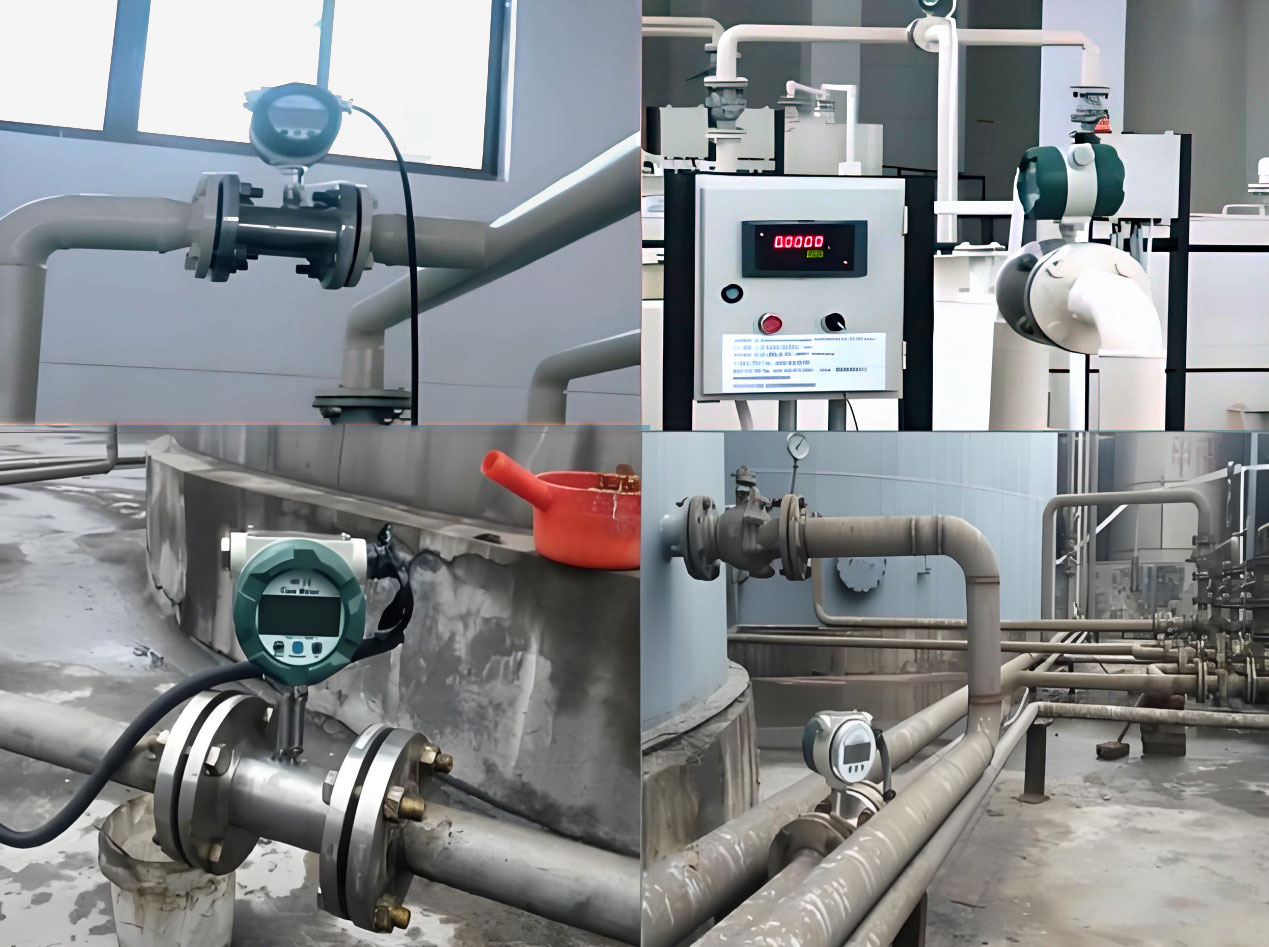
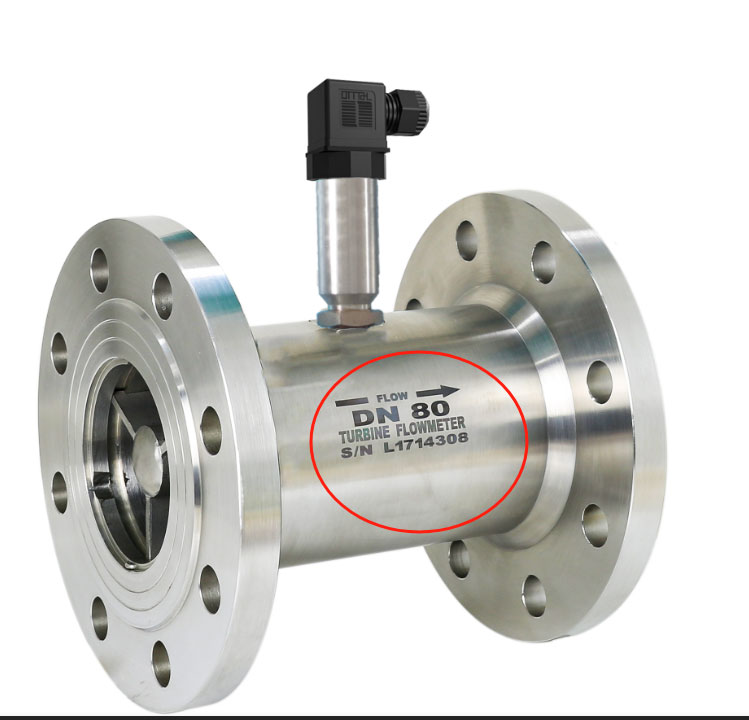
SILVER turbine fuel flow meters are designed for unidirectional flow measurement. The correct flow direction is indicated by an arrow on the fuel flow sensor body.
Flow disturbances caused by components such as elbows, valves, and reducers can impact the accuracy of the meter. To mitigate this, ensure the following straight pipe lengths:
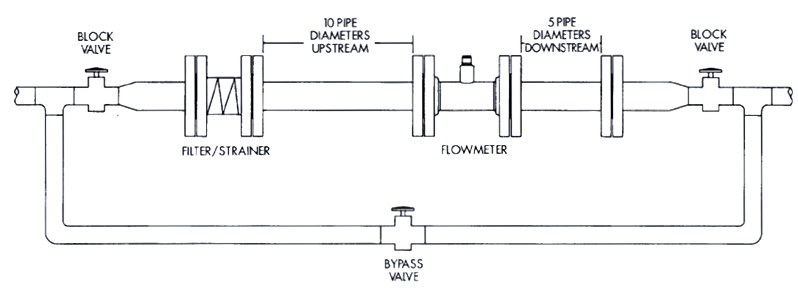
Diagram 1
- Upstream: A minimum straight pipe length of 10 times the internal diameter of the pipe is required. For a 50mm pipe, this means at least 500mm of straight piping upstream, with 1000mm recommended for optimal accuracy.
- Downstream: A minimum straight pipe length of 5 times the internal diameter is necessary. For a 50mm pipe, provide at least 250mm of straight piping downstream, with 500mm being ideal.
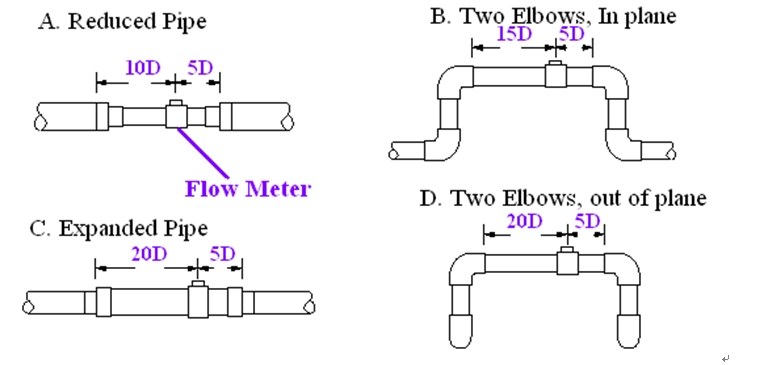
Refer to Diagram 1 for a typical fuel flow meter installation setup and Diagram 2 for detailed straight pipe length requirements when flow-altering devices are present.
Cavitation, often caused by entrained air or insufficient backpressure, can severely damage the meter's rotor and lead to inaccuracies. To prevent this:
- Ensure that the air or gas content in the fuel does not exceed 100 mg/l.
- Maintain a backpressure of at least 1.25 times the fluid's vapor pressure, plus twice the pressure drop across the flow meter. This can be calculated using Formula 1:
Formula 1: Pb ≥ 1.25 × Pv + 2 × (Pin – Pout)
- Pb: Backpressure
- Pv: Vapor Pressure
- Pin: Inlet Pressure
- Pout: Outlet Pressure
Install a control valve downstream of the fuel flow meter to create the necessary backpressure.
- Foreign Material: Debris in the fuel can clog the rotor and affect accuracy. Consider using screens to filter impurities.
- Air Removal: Ensure the system is free of air before operation to maintain measurement accuracy.
- Cover Plates: Do not remove cover plates unless necessary and only when the meter is powered down to avoid electrical shock or explosion risks.
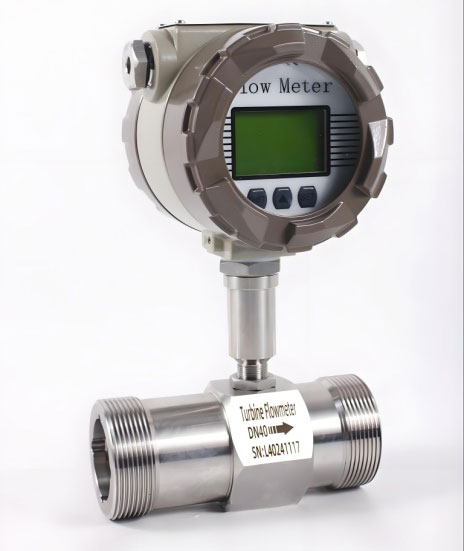
1. Use an appropriate sealing compound on all threads to prevent leaks, ensuring it doesn’t enter the flow path.
2. Verify that the outlet arrow points in the flow direction.
3. Secure the turbine using a wrench on the wrench flats only.
- The flange conforms to GB/T 9113-2000 (ISO 7005-1) RF standards, but customizations are possible.
- Use a gasket between the meter flange and the mating flange, selecting the material based on the fluid and operating conditions.
- Avoid over-tightening the flange bolts to prevent gasket compression.
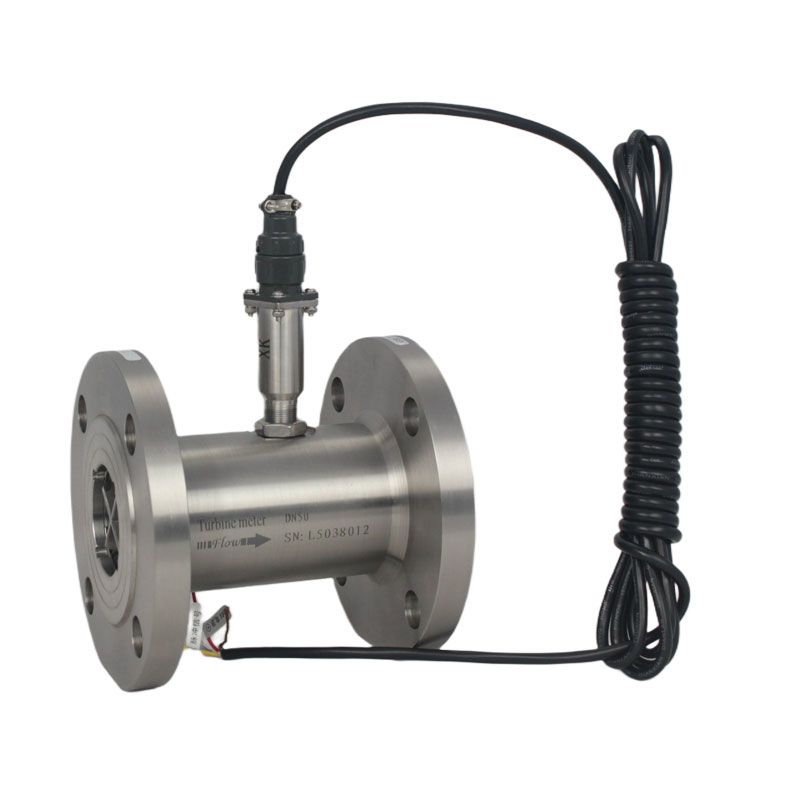
Flange connection turbine fuel flow meter
These guidelines are critical for achieving optimal performance and ensuring the long-term reliability of turbine fuel flow meters in various applications.
Silver Automation Instruments: Your Source for Affordable Turbine Fuel Flow Meters
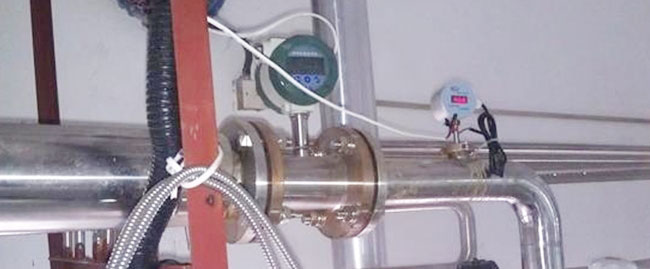
When it comes to acquiring turbine fuel flow meters, Silver Automation Instruments is a trusted provider. They offer a wide range of high-quality flow meters at competitive prices, making them an excellent choice for businesses seeking reliable and cost-effective flow measurement solutions. With their expertise and commitment to customer satisfaction, Silver Automation Instruments can assist in selecting the right turbine flow meter to meet specific fuel flow measurement.
Turbine fuel flow meters (TUF flowmeters) play an important role in optimizing fuel usage and enhancing efficiency. With their accurate fuel flow measurement capabilities, wide range of different fuel applications, compact and small design, and durability, these flow gauging devices are essential tools for various industries. By partnering with reputable suppliers like Silver Automation Instruments, businesses can acquire affordable turbine flow meters and take significant steps towards better fuel management. In addition to turbine flow meters, we also provide positive displacement flow meters, fuel mass flow meters, and rotameters flow meters for measuring fuel. Please feel free to inquire.
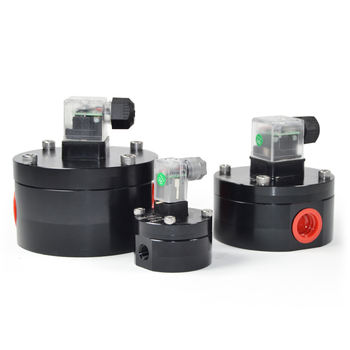 3/8 Inch fuel Flow meter
The 3/8" fuel flow meter is a precise instrument designed for measuring small diameter fuel flow, ideal for applications requiring accurate low-flow fuel monitoring.
VIEW
3/8 Inch fuel Flow meter
The 3/8" fuel flow meter is a precise instrument designed for measuring small diameter fuel flow, ideal for applications requiring accurate low-flow fuel monitoring.
VIEW
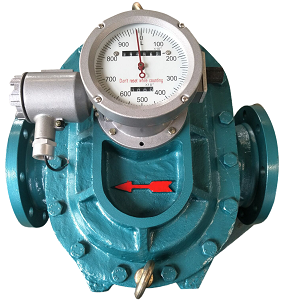 Diesel Flow Meter 3 Inch
diesel flow meter 3 inch is the flow meter is designed to be used with pipes or hoses that have a diameter of 3 inches (DN80) for diesel measurement.
VIEW
Diesel Flow Meter 3 Inch
diesel flow meter 3 inch is the flow meter is designed to be used with pipes or hoses that have a diameter of 3 inches (DN80) for diesel measurement.
VIEW
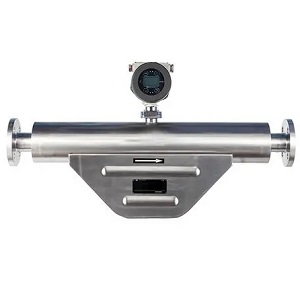 Fuel Oil Mass Flow Meter
A fuel oil mass flow meter is a type of flow meter that is specifically designed to measure the mass flow rate of fuel oil in a pipeline or process system. Coriolis flow meter is a kind of accurate fu...
VIEW
Fuel Oil Mass Flow Meter
A fuel oil mass flow meter is a type of flow meter that is specifically designed to measure the mass flow rate of fuel oil in a pipeline or process system. Coriolis flow meter is a kind of accurate fu...
VIEW
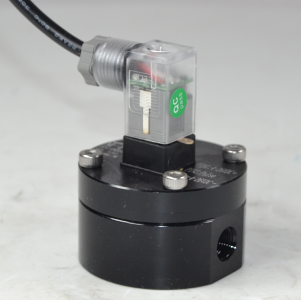 Low flow fuel flowmeter
Micro fuel flow meter can detect at least 0.5 ccm flow for fossil fuel, gasoline, petroleum, diesel fuel, ethanol,bio-diesel.,etc.Low cost but reliable working.
VIEW
Low flow fuel flowmeter
Micro fuel flow meter can detect at least 0.5 ccm flow for fossil fuel, gasoline, petroleum, diesel fuel, ethanol,bio-diesel.,etc.Low cost but reliable working.
VIEW
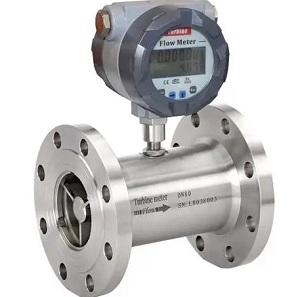 Turbine digital diesel fuel flow meter
Turbine flowmeter measures continuous and discontinuous liquid flow. Such as diesel, gasoline, methanol, kerosene, water, tap water, light refined oil, milk and other liquids. SLW series digital turbi...
VIEW
Turbine digital diesel fuel flow meter
Turbine flowmeter measures continuous and discontinuous liquid flow. Such as diesel, gasoline, methanol, kerosene, water, tap water, light refined oil, milk and other liquids. SLW series digital turbi...
VIEW
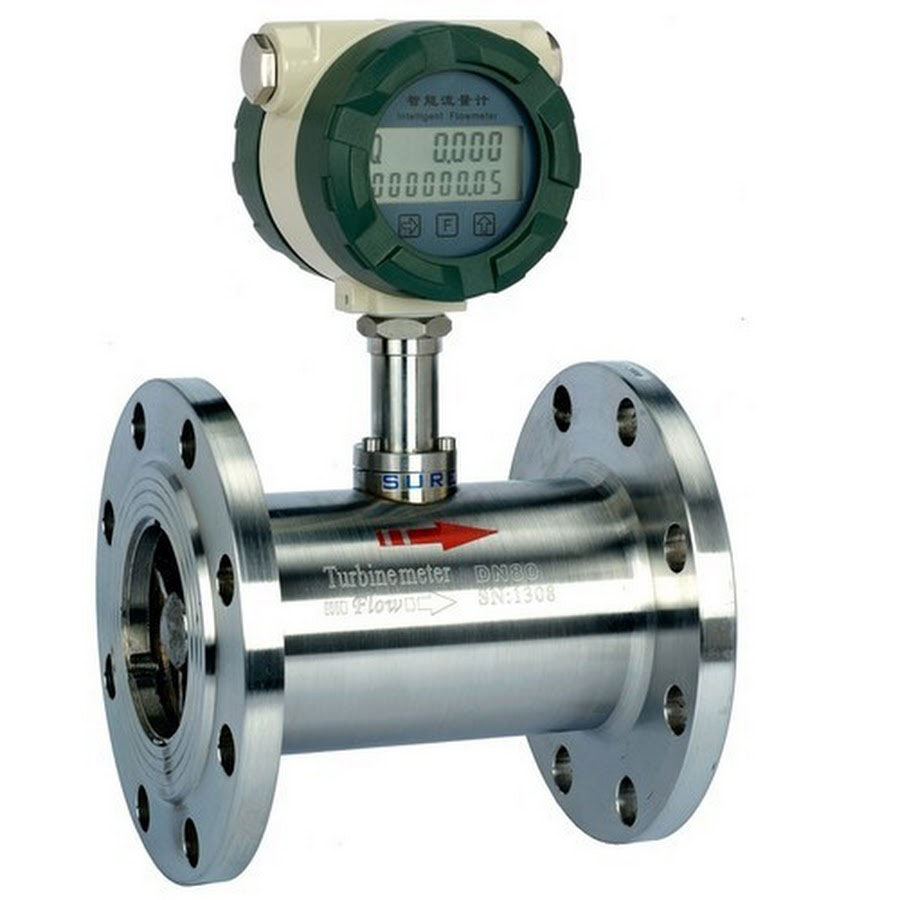 Biodiesel Flow meter
Why need biodiesel flow rate measurement?Biodiesel refers to vegetable oil (such as rapeseed oil, soybean oil, peanut oil, corn oil, cottonseed oil, etc.), animal oil (such as fish oil, lard, tallow,...
VIEW
Biodiesel Flow meter
Why need biodiesel flow rate measurement?Biodiesel refers to vegetable oil (such as rapeseed oil, soybean oil, peanut oil, corn oil, cottonseed oil, etc.), animal oil (such as fish oil, lard, tallow,...
VIEW
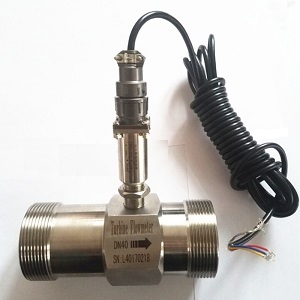 SLW-N Liquid Turbine flow sensor
Low cost turbine flow sensor. Pulse output. Fast response. For low viscosity and low corrosive liquid . Such as water, diesel,alcohol.
VIEW
SLW-N Liquid Turbine flow sensor
Low cost turbine flow sensor. Pulse output. Fast response. For low viscosity and low corrosive liquid . Such as water, diesel,alcohol.
VIEW