
English
A 1/2 inch flow meter, also called DN15, fits pipelines with an inside diameter close to 15 mm. This size shows up on sample lines, chemical dosing skids, small utility loops, and lab-scale process lines.
For liquids, an electromagnetic or Coriolis meter usually gives the best accuracy at DN15. For gas, a thermal mass meter is the common choice. Vortex and oval gear meters also come in this size, but each has a narrower fit depending on your fluid and flow rate.
Silver Automation Instruments builds DN15 electromagnetic, Coriolis, vortex, oval gear, and thermal mass flow meters with RS485 Modbus RTU and 4-20 mA HART output. Send us your fluid, pressure (bar), temperature (°C), and flow range, and we will recommend a model.
In flow meter sizing, 1/2 inch refers to the nominal connection size, not the exact bore. The metric equivalent is DN15, which corresponds to a nominal pipe diameter of roughly 15 mm (0.6 inch). Engineers in the US and parts of the Middle East tend to order by inch size, while buyers in Europe, Southeast Asia, and China usually specify DN15 directly. Both terms point to the same physical connection.
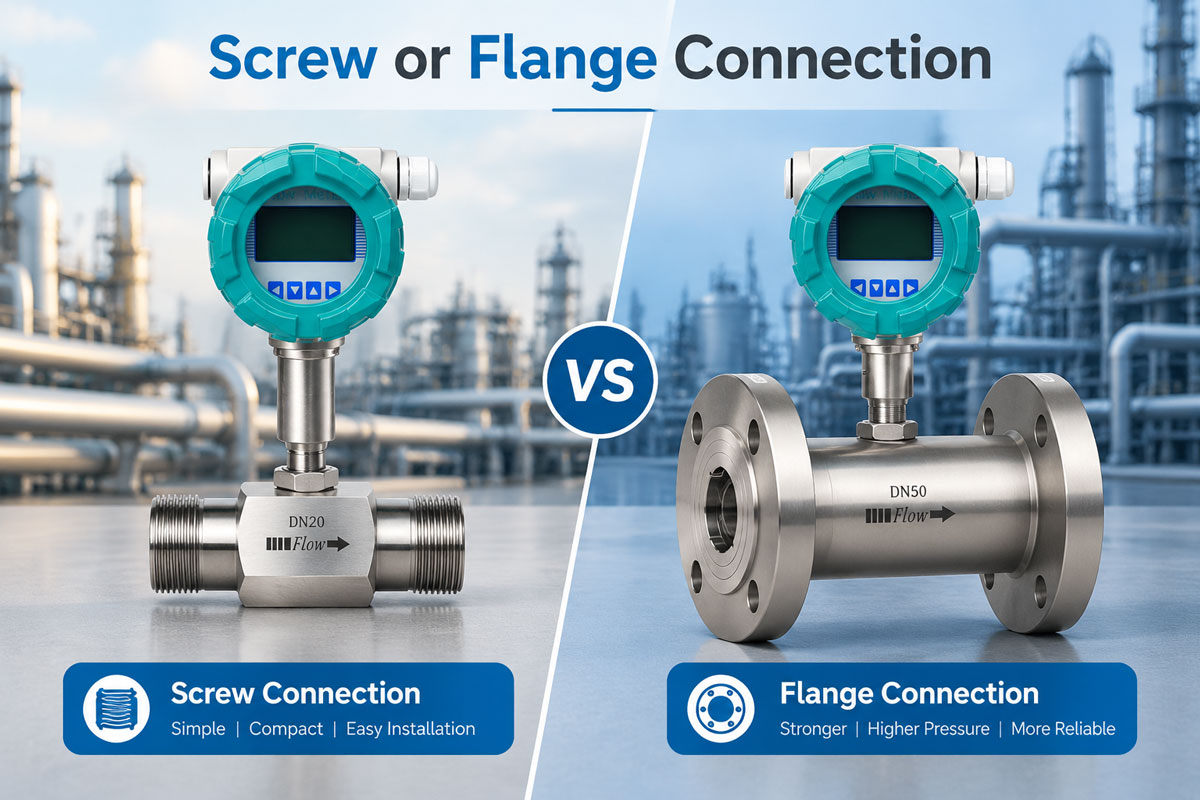
Connection style needs attention at this size. Threaded connections (NPT or BSP) are common on 1/2 inch flow meters because flanged DN15 spools are unusually short and awkward to fabricate. Most projects we quote for chemical injection skids, sample panels, or small utility loops end up specifying female NPT or BSP thread rather than ANSI or PN flanges, simply because the pipe run itself is threaded pipe.
Not every flow meter technology scales down cleanly to 1/2 inch. Some, like ultrasonic clamp-on meters, lose accuracy on small pipe because the sound path is too short to give a reliable transit-time difference. Below is a practical rundown of what actually works at this size.
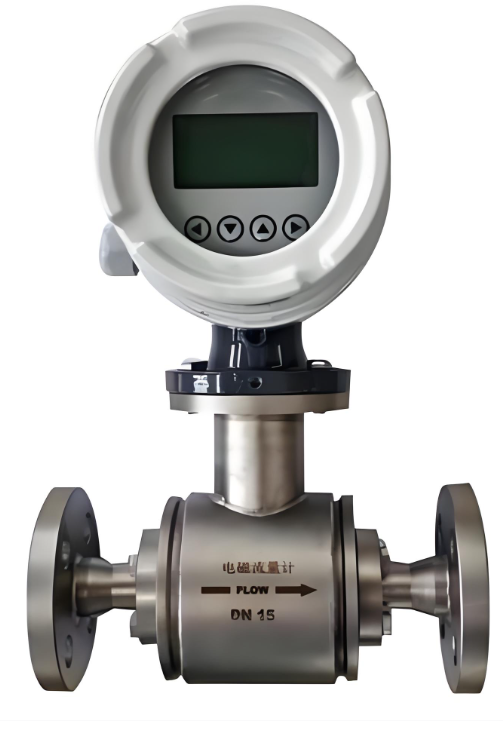
A 1/2 inch electromagnetic (mag) meter measures conductive liquids only: water, wastewater, acids, caustic solutions, and most water-based chemicals. It has no moving parts, so wear is not a concern even with mildly abrasive slurries. The catch is conductivity. Fluid conductivity needs to sit above roughly 5 µS/cm for the meter to read reliably, which rules out hydrocarbons, oils, and deionized water.
A 1/2 inch mag meter typically measures conductive liquid flow from about 5 to 100 LPM (0.3 to 6 m³/h, or 1.3 to 26.4 GPM). Turndown is generous, often 100:1 or better within that range, so it handles both a slow dosing rate and an occasional high-flow flush without needing a second instrument.
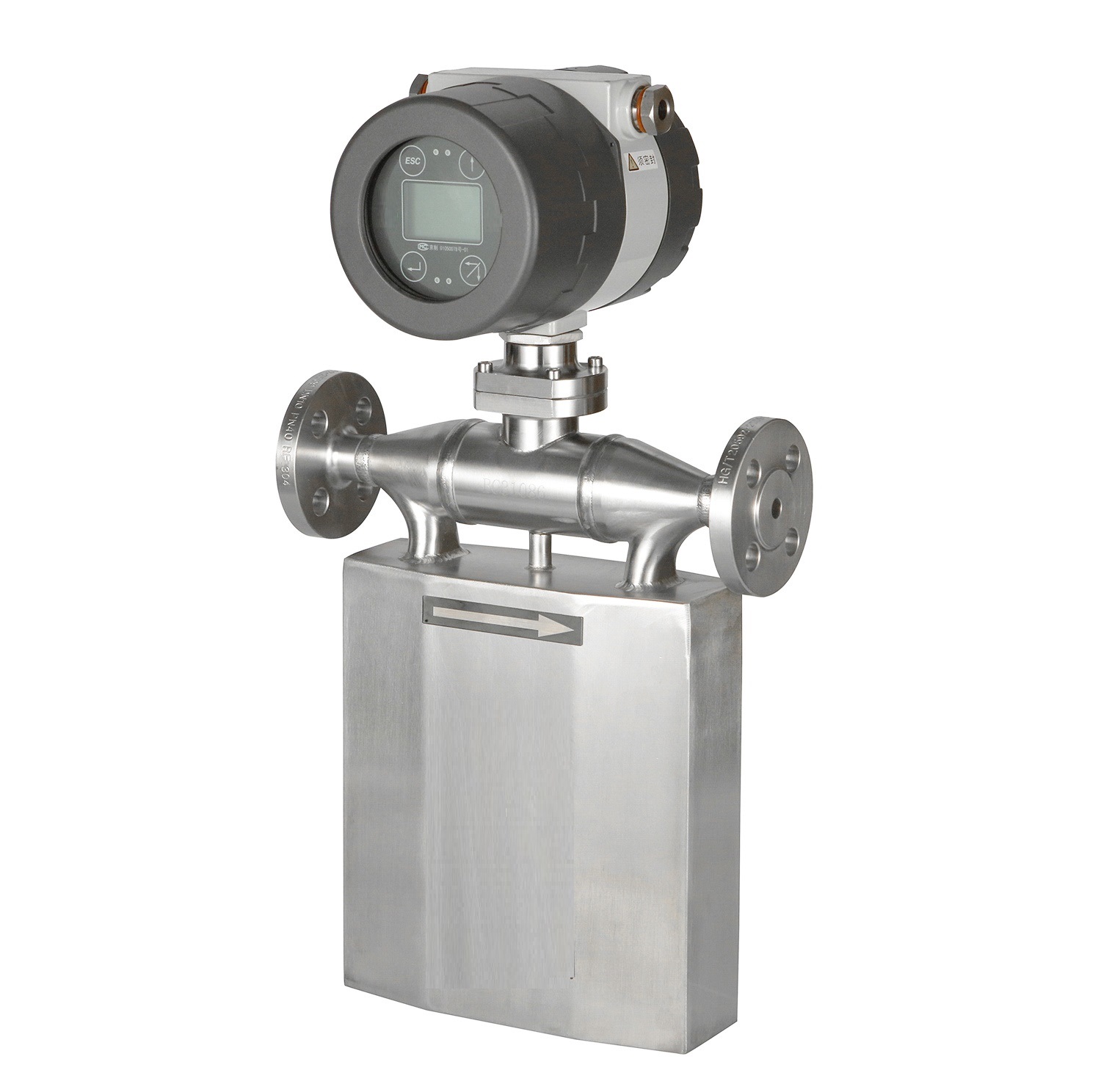
Coriolis meters measure mass directly, which is why labs and custody-adjacent applications like additive injection or catalyst dosing often specify them even at small bore. A 1/2 inch Coriolis meter reads mass flow and density in the same instrument, so if a process needs both, this saves installing two devices.
A standard 1/2 inch Coriolis meter measures up to about 3000 kg/h (110 lb/min) of liquid flow. We also build low-flow versions on the same 1/2 inch connection size, down to around 50 kg/h (1.8 lb/min), for applications like precision additive dosing where the standard range would sit too far above the actual flow rate.
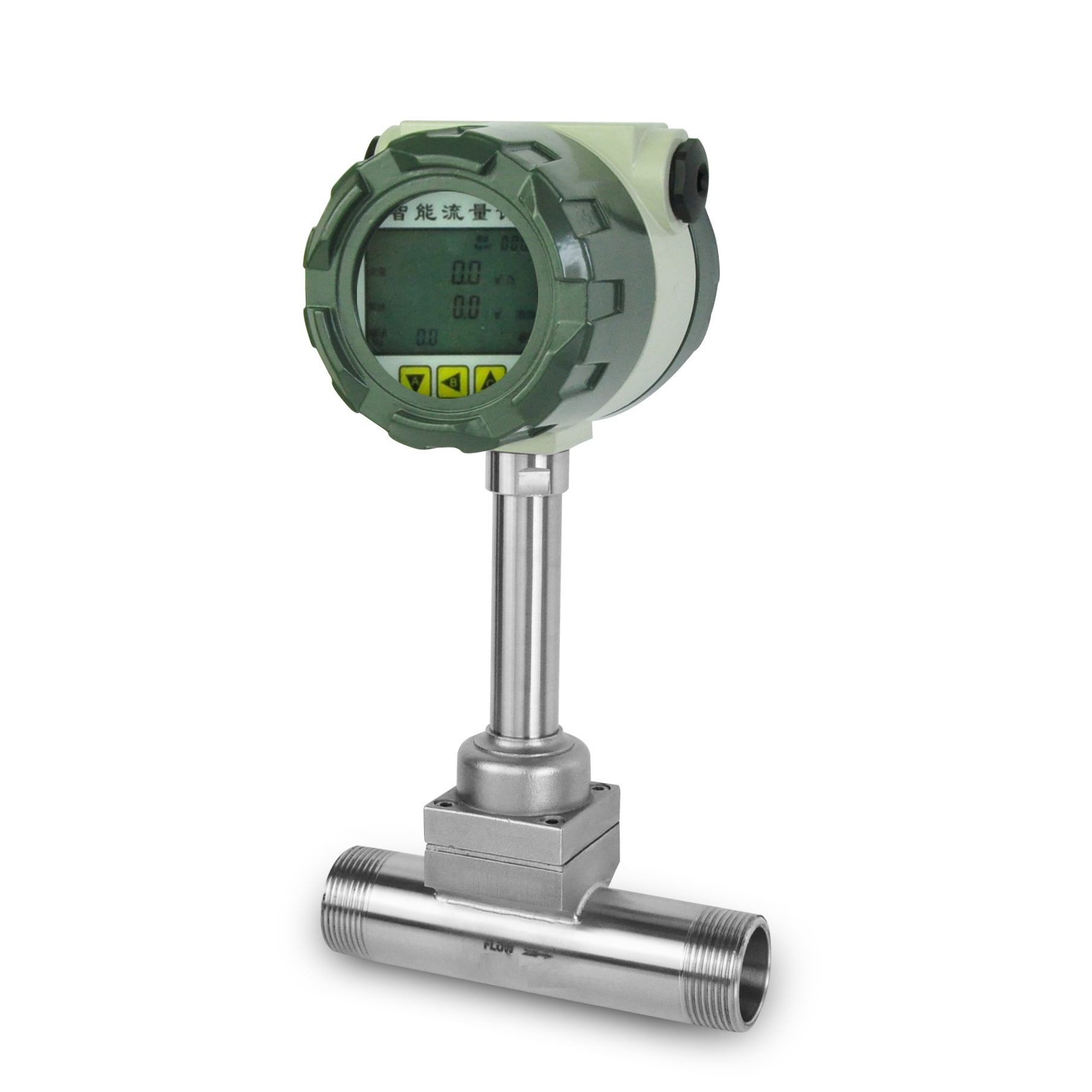
A 1/2 inch vortex meter measures liquid, steam, and gas, provided the flow stays above the meter's minimum velocity. On liquid service, DN15 vortex meters typically cover 0.2 to 5 m³/h (0.88 to 22 GPM) liquid and 4-16 m3/h gas. It works by shedding vortices behind a bluff body and counting the shedding frequency. At DN15, the bore is small enough that minimum flow velocity becomes the limiting factor rather than maximum flow. Below a certain velocity, typically around 1 m/s for liquid, the vortex signal gets too weak to count reliably, so vortex meters are a poor fit for very low, steady dosing flows even though they handle steam and saturated gas well.
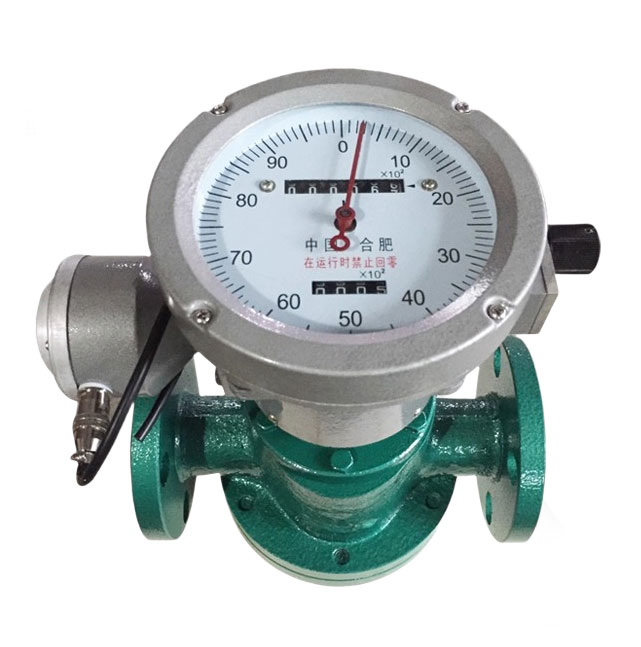
A 1/2 inch oval gear meter measures different kind of oil or viscous liquids: diesel, petrol, lubricating oil, glycerin, resin, and similar fluids where the body of the liquid helps rather than hurts accuracy. Typical DN15 range runs from 0.3 to 1.5 m³/h (1.32 to 6.6 GPM). Oval gear meters are positive displacement instruments, and DN15 is a common size for them for exactly this reason. Viscosity actually helps sealing between the gears and the meter body, so accuracy tends to improve, not suffer, as viscosity climbs. The tradeoff is that oval gear meters have moving parts and need a strainer upstream, since any solid debris in the line can jam the gears.
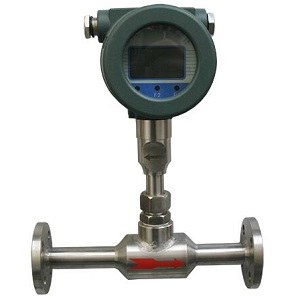
A 1/2 inch thermal mass meter measures clean, dry, single-component gas: compressed air, nitrogen, CO2, oxygen, and similar. Typical DN15 range runs from 0 to 30 Nm³/h (0 to 17.7 SCFM). It reads mass flow directly using a heated sensor element, without needing a separate pressure and temperature compensation loop. This makes it a common pick for compressed air audits, nitrogen purge lines, and small oxygen or fuel gas metering points. Thermal meters suit low-pressure, single-component gas streams; they are not the right tool for two-phase flow or gas mixtures with rapidly changing composition.
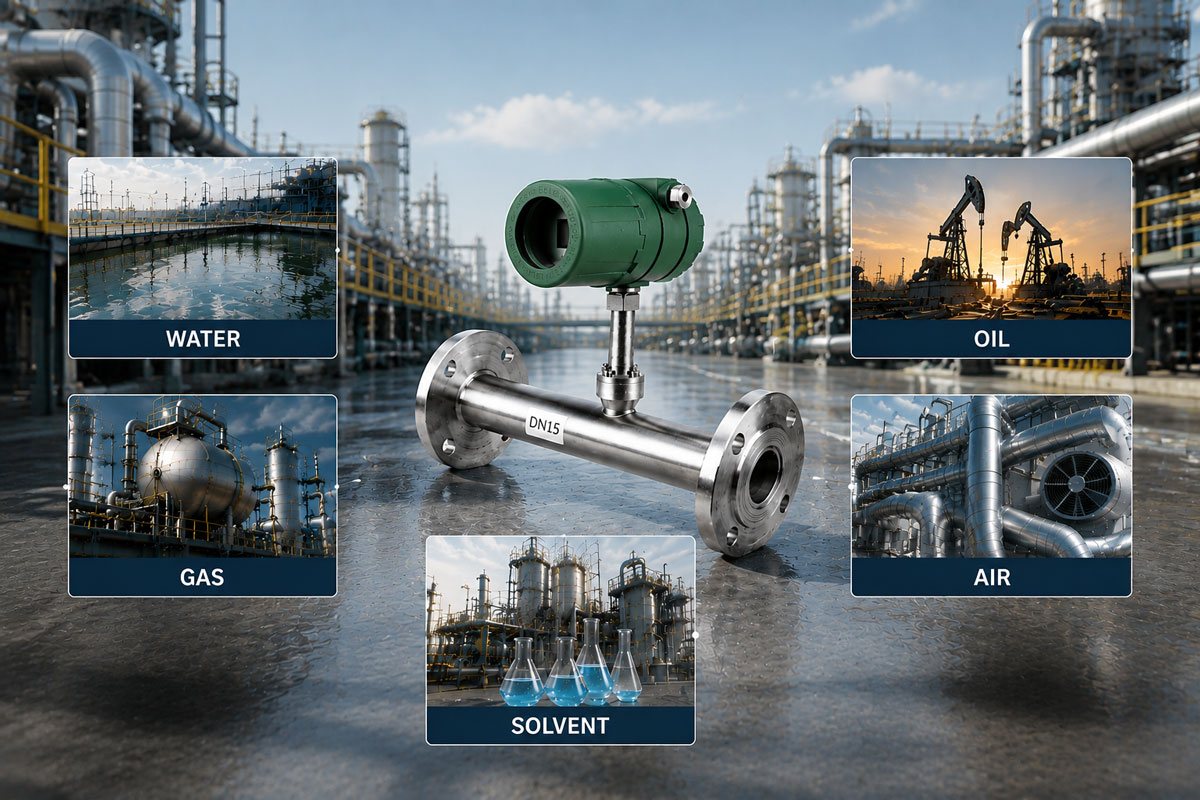
Most 1/2 inch flow meter inquiries we get start with a fluid name, not a technology name. The customer knows they need to measure water, or a solvent, or nitrogen, and asks us to pick the meter. So it helps to walk through the four fluid families we see most often at this size and what actually works for each one.
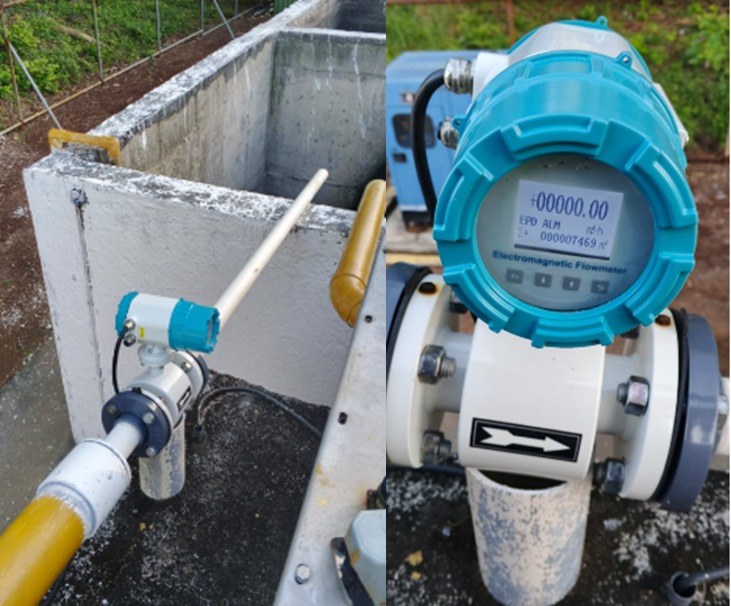
Clean process water and most utility water are conductive enough for a DN15 (1/2”) electromagnetic meter, and this is the default choice for tap water, cooling water, and treated effluent. It has no moving parts, so there is nothing to foul even if the water carries a little sediment.
Reverse osmosis water and deionized water are the exception. Once conductivity drops much below 5 µS/cm, a mag meter loses its signal, so RO product water, boiler feedwater after polishing, and lab-grade DI water need a different technology. A 1/2 inch turbine flow meter handles this well, since it does not depend on conductivity at all. An oval gear meter also works on clean, low-conductivity water, though it is a less common choice unless the customer already standardizes on oval gear elsewhere in the plant.
One detail worth checking on water service specifically: if the line ever runs partly empty, such as a drain header or an intermittent wash-down line, a magnetic flow meter or turbine flow meter ( TUF) needs to stay full to read correctly.
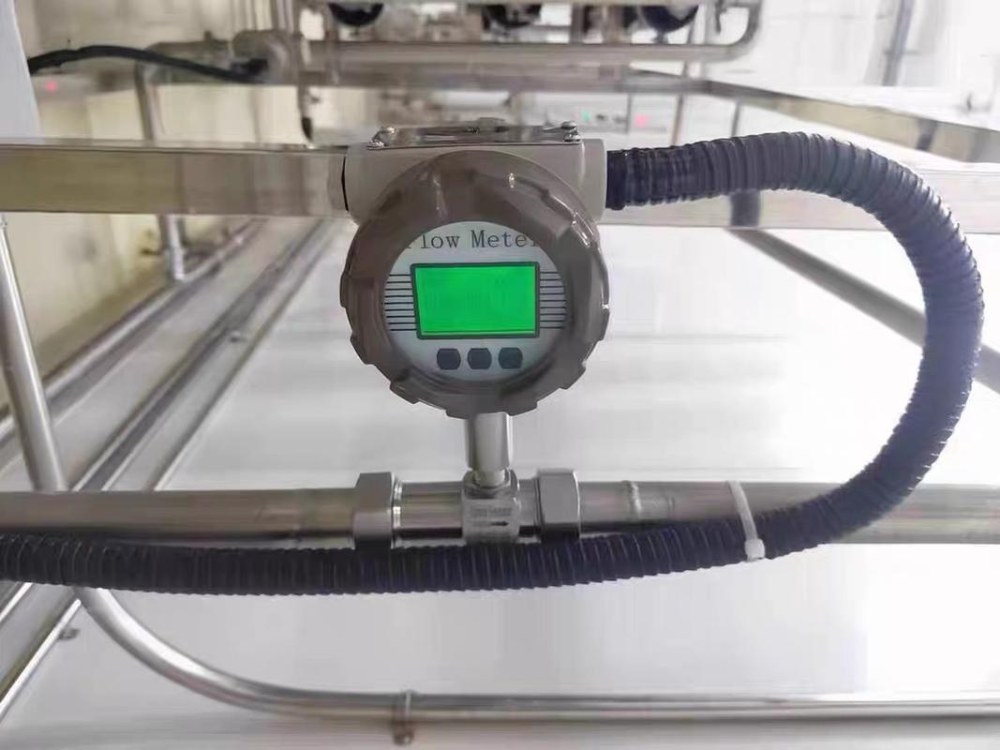
Solvents are usually the fluid family that trips people up, because most organic solvents (acetone, toluene, IPA, thinners, and similar) have conductivity too low for an electromagnetic meter to read. A DN15 turbine flow meter is the most common recommendation here, since it is low cost and high accuracy and holds up well against a wide range of solvent chemistries when the wetted parts are stainless steel
A DN15 (1/2 inch) oval gear meter (PD flow meter) is the other practical option, especially where the solvent has some body to it, like a resin thinner or a lubricating solvent blend, rather than a thin, low-viscosity liquid. On very thin, fast-evaporating solvents, oval gear meters can slip a little at low flow.
Flammability is the other factor that changes the order for solvent service. If the line sits in a classified area, the 1/2 inch solvent flow sensors needs an ATEX or equivalent explosion-proof rating, and this should go on the purchase order from the start rather than being added after the fact, since the enclosure and wiring method both depend on the zone classification.
Silverinstruments.com offers 1/2” solvent flow meter with ATEX approved.
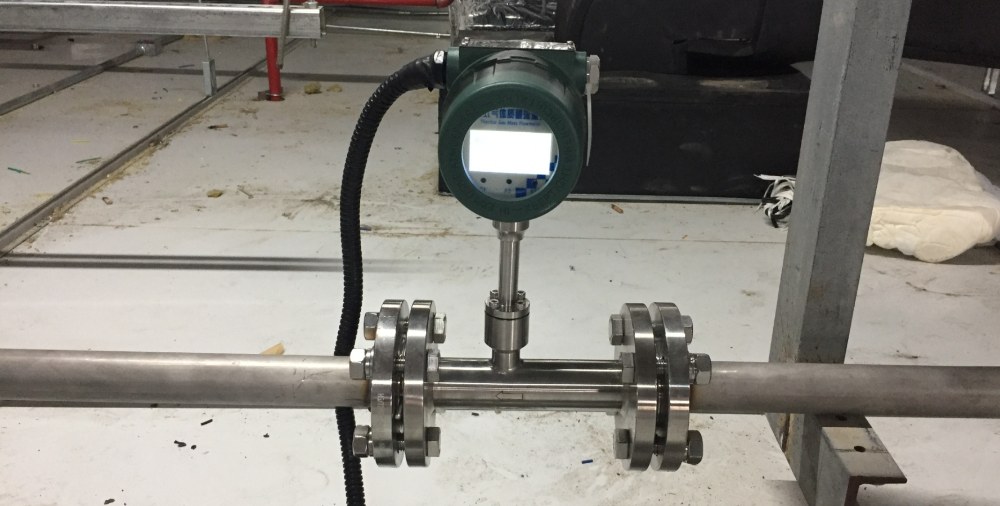
For gas, a DN15 thermal mass meter is the starting point for most applications: compressed air, nitrogen, oxygen, and other clean, dry, single-component gases. It reads mass flow directly, which matters for gas because volume changes with pressure and temperature, and a thermal meter's internal compensation removes the need for a separate calculation.
Steam and saturated gas are a partial exception. A 1/2” vortex flow meter handles steam reasonably well because vortex shedding is not affected by density the same way a thermal sensor is, but only above the meter's minimum velocity, which rules out very low, intermittent steam sampling.
It is worth repeating a point that comes up often on gas inquiries: electromagnetic and Coriolis meters are not built for gas service at this size. A mag meter needs a conductive liquid to generate a signal at all, and a DN15 Coriolis tube is sized and tuned for a liquid density range, so gas at typical process pressures will not give a stable reading on either technology.
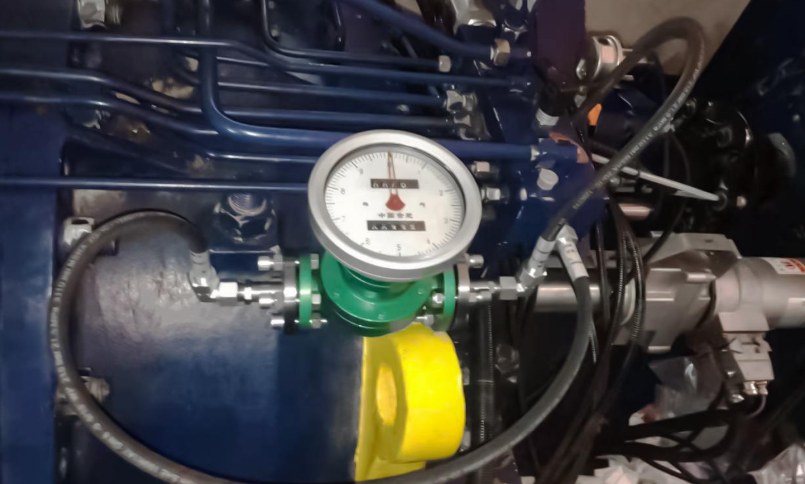
Oil, whether lubricating oil, hydraulic oil, or diesel fuel, is where a 1/2 inch oval gear flow meter tends to outperform everything else. Oil has essentially no conductivity, so mag meters are out, and its viscosity actually improves oval gear accuracy rather than hurting it, since the thicker fluid seals the small clearance between the gears and the meter body more effectively.
Where the application calls for higher accuracy, such as fuel reconciliation or additive dosing where every liter is tracked against a cost center, a DN15 Coriolis meter is worth the extra cost. It reads mass directly, so temperature-driven density changes in the oil do not need a separate correction, and the density output doubles as a rough quality check on the oil batch.
Cold climates add one more consideration on oil service. As oil viscosity climbs sharply at low temperature, an oval gear meter's pressure drop rises with it, so a line running outdoors in a cold region may need either heat tracing on the meter run or a wider turndown allowance than the same application would need in a warm climate.
We see the same handful of specification errors repeat across regions and industries, so it is worth naming them directly.
Flow range at 1/2 inch depends heavily on meter type and fluid, so treat the numbers below as a starting reference rather than a guarantee. We size every quotation against the actual fluid and pipe velocity rather than a generic table.
Most DN15 inquiries we receive fall into a handful of recurring scenarios. In water treatment plants, DN15 electromagnetic meters show up on chemical dosing lines feeding coagulant or chlorine into a much larger main. In a food and beverage plant, we often see DN15 oval gear meters on flavor or oil injection skids, where the flow is small but needs to be precise batch after batch.
In the Middle East, DN15 thermal mass meters get specified fairly often on nitrogen blanketing lines for storage tanks, where the gas flow is intermittent and the pipe run is short. On the liquid oxygen side, some plants also use a small DN15 Coriolis meter on the sample or vent line feeding an analyzer skid, separate from the main plant metering point.
In Southeast Asia, we have quoted DN15 vortex meters for steam sampling on smaller boiler skids, and DN15 mag meters for effluent monitoring at the outlet of package wastewater units serving textile and food processing plants. In Africa, DN15 oval gear meters turn up on fuel transfer skids at generator rooms and small diesel depots, where the flow is modest but every liter needs to be tracked for reconciliation.
None of these applications need a large flow range. What they need is an instrument that stays accurate and stable at a low, steady flow rate through a short run of small pipe, and that keeps working with minimal maintenance in a location where a technician may not visit the site every week. That last point pushes many buyers toward electromagnetic or thermal mass technology at DN15, simply because there is nothing mechanical inside to wear out between visits.
Straight pipe requirements are often expressed as a multiple of pipe diameter (D), and at DN15 that translates into a short physical run, which is one advantage of small-bore installations. A typical mag meter still wants somewhere around 5D upstream and 3D downstream, but 5D at DN15 is only about 75 mm, so it fits into tight skid layouts more easily than the same rule would at DN100.
Orientation matters more at this size than people expect. A DN15 mag meter or Coriolis meter should run full of liquid at all times, so a vertical, upward-flow installation is often preferred on lines that might not stay full, such as gravity-fed drain or sample lines. For gas thermal meters, horizontal mounting with the sensor element in the correct orientation avoids condensate pooling around the probe on humid air lines.
Because DN15 hardware is physically small, thread sealant and installation torque become bigger risk factors than on larger meters. Over-tightening a threaded DN15 body against a mismatched female thread is a common cause of hairline cracks in the meter housing, so we always recommend PTFE tape rather than a paste sealant, and a torque wrench rather than a pipe wrench, on any threaded process connection this size.
Thermal expansion also deserves a mention at this scale. A DN15 Coriolis meter measuring a hot fluid, say above 80°C (176°F), will see more relative stress at its process connections than a larger meter would, simply because the threaded joint has less material around it to absorb movement. Where the line runs hot, we recommend a flanged connection over threaded whenever the piping standard allows it, and a short flexible run on either side of the meter if vibration is present.
Electrical wiring at DN15 is usually simpler than the mechanical fit, but it is easy to overlook cable strain relief on a small meter body. Because the enclosure is compact, a stiff cable run pulling on the terminal compartment can work a connection loose over months of vibration. A drip loop and a properly sized cable gland solve this at almost no cost, and it is worth specifying on the purchase order rather than leaving it to whoever does the field wiring.
| Meter Type | Typical Flow Range | Fluid Suitability | Accuracy | Output | Connection |
| Electromagnetic | 0.3-6 m³/h (5-100 LPM; 1.3-26.4 GPM) | Conductive liquids, > 5 µS/cm | ±0.5% of reading | 4-20 mA, pulse, RS485 Modbus RTU | NPT / BSP thread, flange on request |
| Coriolis | Up to 3000 kg/h (110 lb/min); low-flow to 50 kg/h (1.8 lb/min) | Liquids, some slurries | ±0.15% of reading | 4-20 mA HART, RS485 Modbus RTU | NPT / BSP thread, flange on request |
| Vortex | 0.6-6 m³/h liquid (2.6-26 GPM) | Liquid, steam, gas (above min. velocity) | ±1.0% of reading | 4-20 mA HART, pulse, RS485 Modbus RTU | Flanged, wafer, or threaded |
| Oval Gear | 0.03-2.5 m³/h (0.13-11 GPM) | Viscous liquids, oils, resins | ±0.5% of reading | 4-20 mA, pulse, RS485 Modbus RTU | NPT / BSP thread, flange on request |
| Thermal Mass | 0-30 Nm³/h (0-17.7 SCFM) | Clean, dry, single-component gas | ±1.0% of reading | 4-20 mA HART, RS485 Modbus RTU | NPT / BSP thread, insertion or inline |
Ranges above are representative for standard DN15 bodies and vary by exact model and turndown. Confirm the figure for your process against the datasheet before specifying, especially near the low end of the range.
If you have a 1/2 inch line to instrument, send the details below to sales@silverinstruments.com and we will recommend a meter type and model within one business day.
Contact: sales@silverinstruments.com | www.silverinstruments.com