
English
Case Study: 80G Radar Level Measurement in a Grain Silo — Maize and Wheat Application: Grain Storage (Maize / Wheat) | Product: Silver Instruments SDRD87 80G Radar Level Meter | Range: 18.2 m
A grain storage facility measuring maize and wheat in a 20.4 m silo selected the Silver Instruments SDRD87 80G FMCW radar level meters. Measuring range 18.2 m, 40°C operating temperature, 70% humidity, and granular material at 500–3,000 μm particle size, 720 kg /m³ bulk density. DN100 PN16 SS316L flange, PTFE antenna, 4-20 mA / HART 2-wire output, Ex d ia T2~T6 Gb ATEX approval. Non-contact measurement eliminates sensor wear on abrasive grain surfaces.
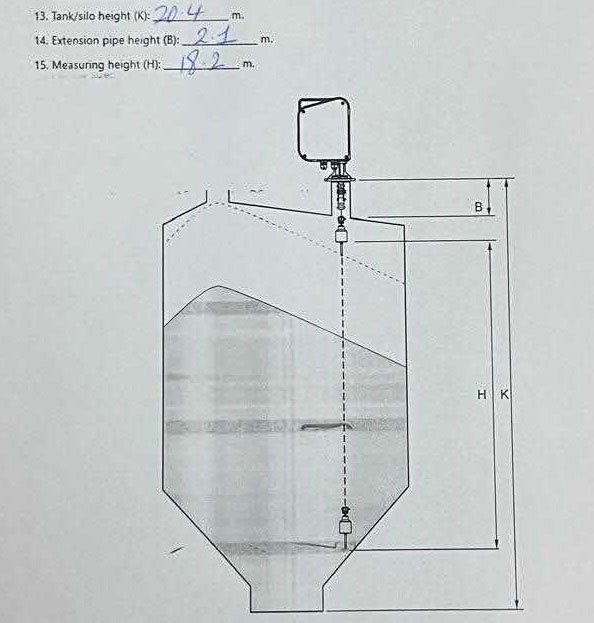
A grain storage operator submitted an enquiry form for a silo level measurement requirement. The silo stores maize and wheat in alternating cycles. Total silo height K is 20.4 m. The extension pipe above the roof is 2.1 m (B). That puts the actual measuring span H at 18.2 m from the flange face down to the silo floor.
The customer marked granular material, particle size 500 to 3,000 μm, bulk density 720 kg/m³. Tank temperature reaches 40°C. Humidity inside the silo is 70% — which rules out ultrasonic level meters immediately. Ultrasonic attenuation in high-humidity, dust-laden air is significant, and ultrasonic units frequently lose echo on dry grain surfaces with low acoustic reflectivity.
Power supply is AC 220 V. The customer requested a flange connection ("as per availability") and no RCU controller or separate control box. One instrument, one cable, straight to the PLC.
The SDRD87 80G radar level meter was selected. Here is why, and how it was configured.
Grain silos present three problems for level measurement: dust during filling, an uneven and shifting surface, and moderate dielectric constant (typically εr 2 to 4 for dry grain).
Ultrasonic sensors struggle with both the dust and the low sound reflectivity of grain. Guided wave radar works but requires a probe running the full depth of the silo — on an 18 m silo that is a long, exposed probe subject to mechanical damage during grain loading.
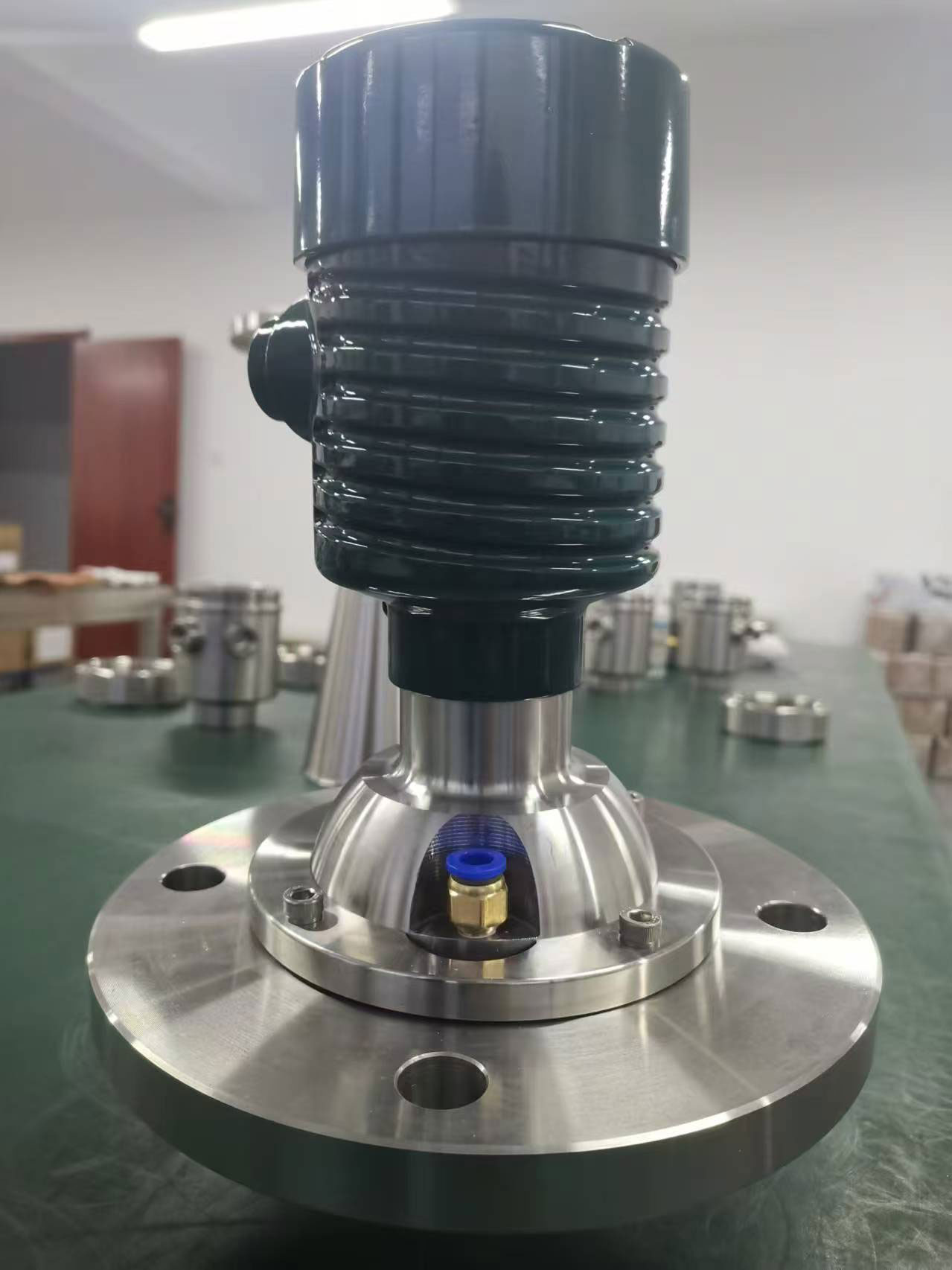
80G Radar level meter with Gimbal flange for solids
Non-contact 80G radar avoids both problems. The 80 GHz frequency produces a 4° beam angle — tight enough to avoid false echoes from silo walls at 18 m depth. The FMCW signal penetrates grain dust without attenuation. And the ±5 mm accuracy is more than sufficient for inventory management in a grain store.
In practice, the sensor mounts on the silo roof, points straight down, and never touches the grain. There is no mechanical wear. No calibration drift from abrasion. The PTFE antenna surface is grain-safe and easy to clean if dust accumulates.
The SDRD87 is mounted at the top of the extension pipe (B = 2.1 m). This keeps the antenna 2.1 m above the roof, allowing space for maintenance access and keeping it clear of any roof condensation.
The gimbal (NW antenna option) allows fine angle adjustment after installation. On a grain silo where the fill point may be off-centre, being able to tilt the beam 5 to 10° toward the main grain mass helps establish a stable echo. We have seen this on customer sites where centre-fill creates a conical pile — the gimbal lets the technician aim at the slope rather than the peak.
Process connection is DN100 PN16 flange in SS316L. The flange matches the roof nozzle the customer had available. FKM sealing handles the 40°C process temperature with margin to spare. Output is 4-20 mA / HART 2-wire, loop-powered from a 24V DC supply derived from the site’s AC 220 V panel. The M20x1.5 cable entry matches standard industrial conduit practice in most markets.
The unit carries Ex d ia T2~T6 Gb approval (intrinsic safety plus explosion-proof). Grain dust is combustible. ATEX / IECEx Zone 1 certification is not always a mandatory requirement for grain silos, but having it means the same instrument model covers both standard and classified installations without a product change.
| Parameter | Value |
| Model | SDRD87-G-NW-A-FC-A-B-A-M-A |
| Measuring principle | 80G FMCW (Frequency Modulated Continuous Wave) |
| Beam angle (3dB) | 4° |
| Measurement range | 18.2 m (silo K = 20.4 m, extension pipe B = 2.1 m) |
| Accuracy | ±5 mm |
| Operating temperature | -40 to 130°C (NW antenna) |
| Operating pressure | Normal pressure (non-pressurised silo) |
| Process connection | DN100 PN16 Flange, SS316L |
| Antenna material | PTFE (-40 to 200°C) |
| Sealing | FKM (-40 to 200°C) |
| Output signal | 4-20 mA / HART, 2-wire |
| Power supply | 24V DC (loop-powered) |
| Housing | Aluminium / IP67 |
| Cable entry | M20 x 1.5 |
| Display | Integral LCD |
| Approvals | Ex d ia T2~T6 Gb (intrinsic safety + explosion-proof) |
| Medium | Maize / Wheat (granular, 500–3,000 μm, 720 kg/m³) |
| Power supply voltage | AC 220 V (converted to 24V DC at panel) |
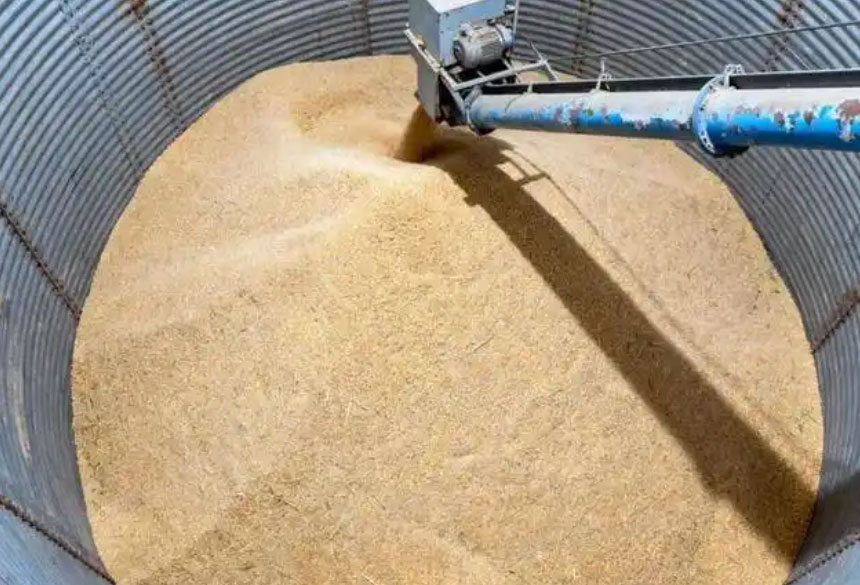
If you have a grain, feed, or bulk solid silo application, send us these parameters and we will confirm the model and quote within 24 hours:
Contact Silver Automation Instruments: inquiry@silverinstruments.com | WhatsApp +86-18936759191 | SDRD87 product page