
English
Coriolis Mass Flowmeter (CMF) can be regarded as the real mass flow measurement solution, which has a series of engineering application advantages. As a mass flow meter, the CMF has been widely used in industry controlling and energy saving management fields such as petrochemical and pharmacy. This comprehensive guide summarizes key selection criteria and application methods from design principle and structure of the CMF, and provides essential instructions on its installation and operation. We also explain the working principles and troubleshooting methods to help you make informed decisions for your chemical engineering applications.
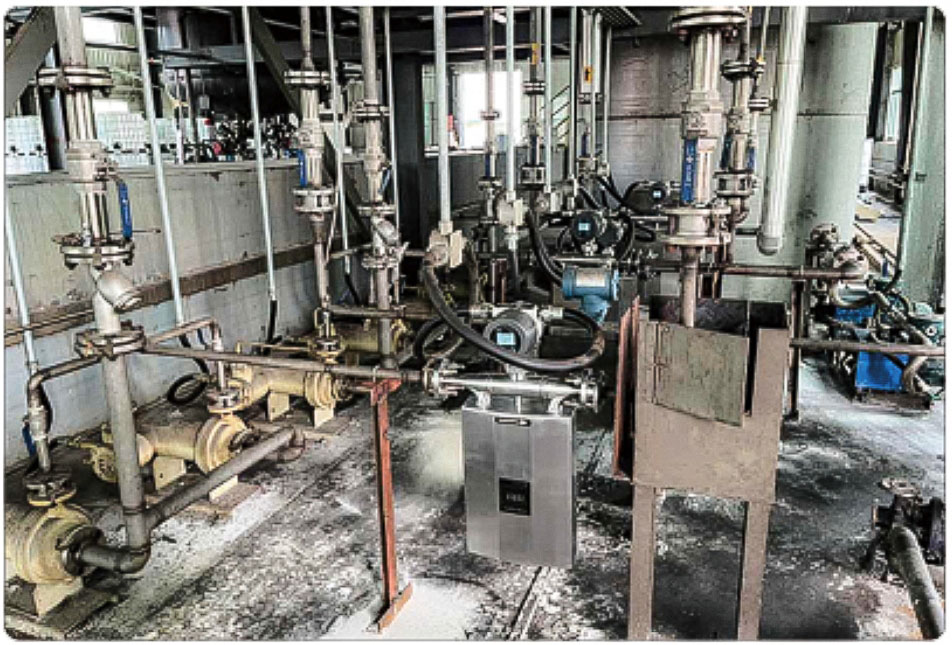
Real mass flow measurement solution-Coriolis flow meter
In industrial production, flow parameters are extremely important for process control and material balance. At present, there are various types of flow meters, among which the most common are volumetric flow meters, such as throttling flow meters, electromagnetic flow meters, turbine flow meters, and ultrasonic flow meters.
However, due to the fact that chemical engineers are more concerned about critical factors such as economic accounting and precise material balance in actual production processes, the application of volumetric flow meters is often limited. How to accurately measure the mass of fluids has become a crucial challenge in chemical engineering applications.
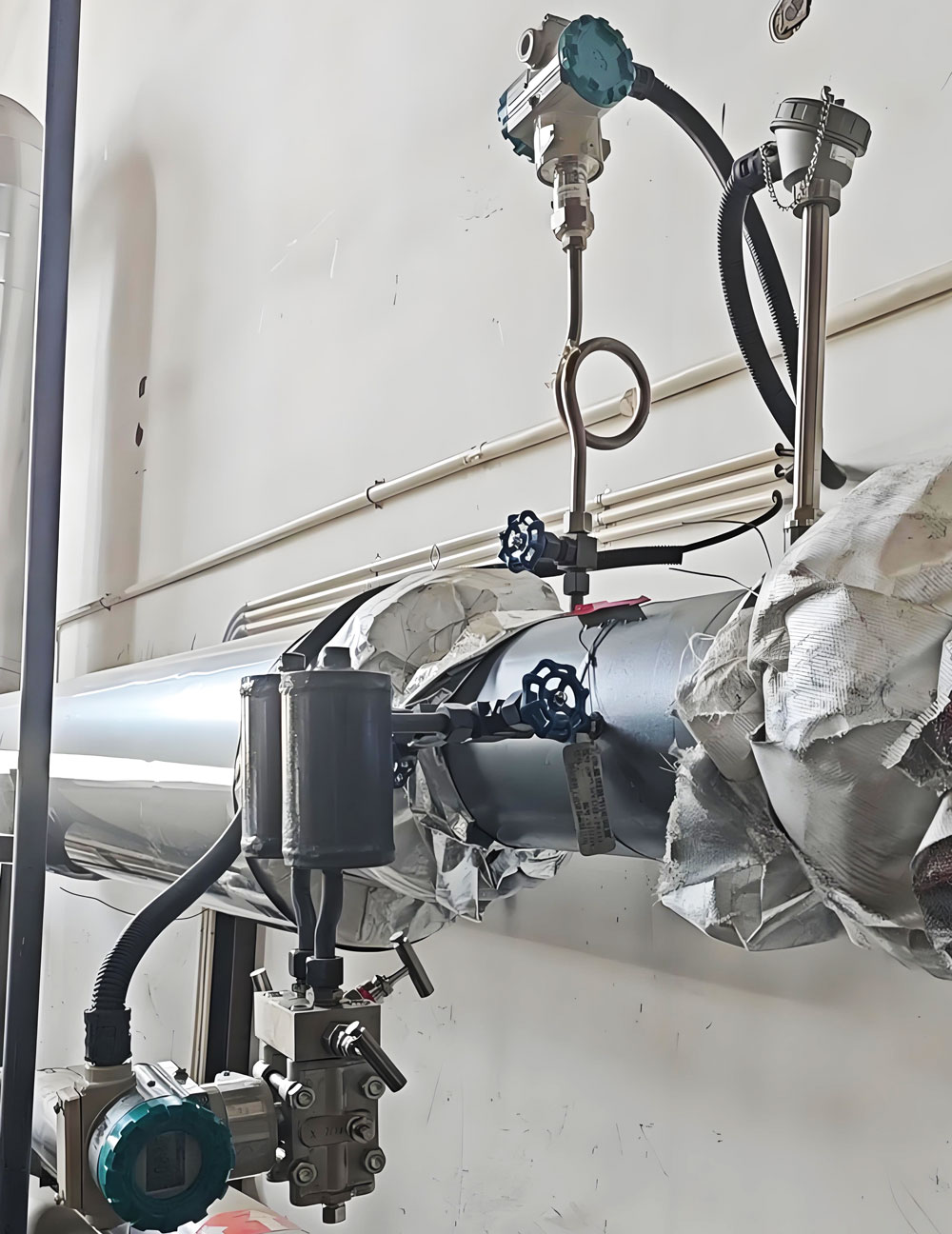
Traditional method has complex structure to achieve indirect mass flow measurement
Although some facilities use volumetric flow meters combined with fluid density calculations to determine mass flow, this method has significant drawbacks:
This is why chemical engineering professionals urgently need a flow meter that can directly measure mass flow rate with exceptional accuracy. Coriolis Mass Flowmeter (CMF), also known as Coriolis force mass flowmeter, addresses exactly this need by directly measuring fluid mass flow rate with extremely high accuracy.
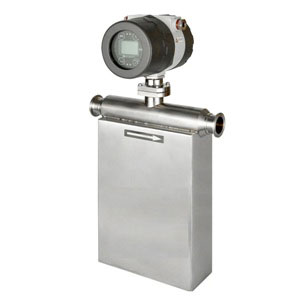
The technology was born in the United States and was initially perfected, commercialized, and introduced to the market by the famous brand Micro Motion under Emerson in the 1980s. The Coriolis mass flowmeter can accurately measure the mass flow rate and medium density of corrosive and explosive media commonly found in chemical processes, while also playing a crucial role in inventory control, batch control, and trade settlement.
For chemical engineering applications, the Coriolis mass flowmeter represents a milestone in measurement technology - it realizes the long-standing desire of engineers to directly measure mass flow while achieving the precision required for critical chemical processes.
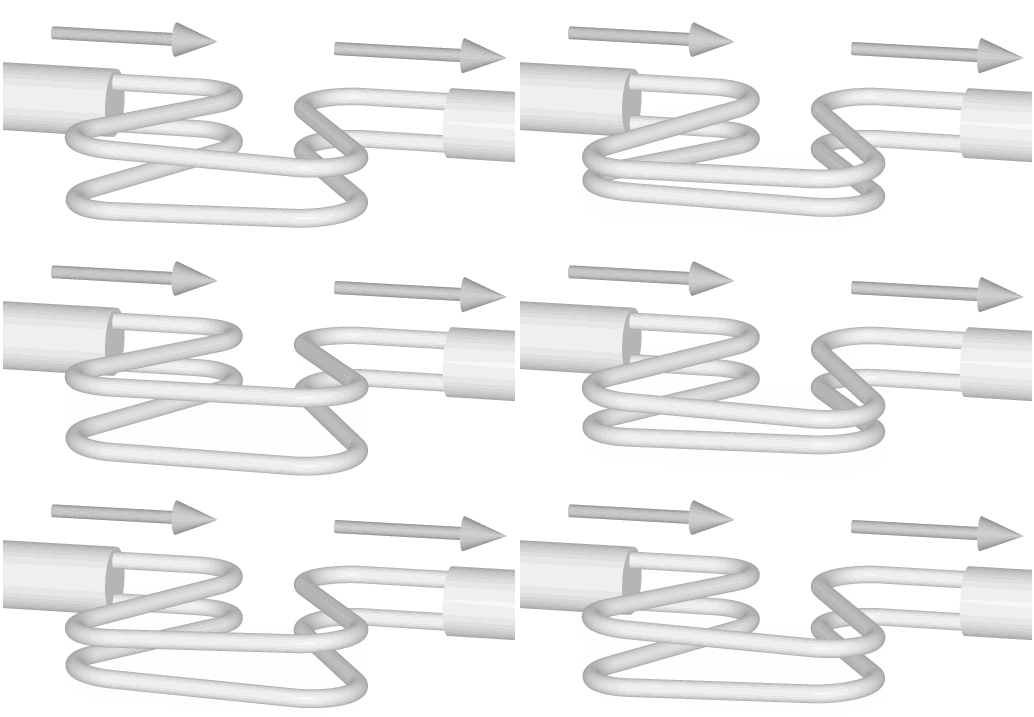
The Coriolis Effect in Flow Measurement
Coriolis mass flowmeter is a flow measurement instrument based on the Coriolis effect. When a particle undergoes linear motion in a rotating system, it will continue to move in its original direction due to inertia. However, the system itself maintains rotation, causing the particle's position in the rotating system to change over time. From the perspective of the rotating system, this creates a measurable deflection that can be used to determine mass flow.
The calculation formula for Coriolis force is:
Fc = 2m × ω × v
Where:
The Coriolis mass flow meter utilizes this principle by creating a controlled rotating system. Two U-shaped tubes (or sometimes one tube) vibrate at a specific frequency under the action of a driving coil. The measured fluid flows through the U-shaped tubes in a direction perpendicular to the vibration direction.
Under the action of Coriolis force, the U-shaped tubes produce a measurable torsion angle θ, creating a time difference when the two ends of the U-shaped tubes pass through the vibration center. This time difference is directly proportional to the mass flow rate (qm):
Δt = (qm × r) / (Ks × ω)
Where:
The Coriolis mass flowmeter consists of two essential parts:
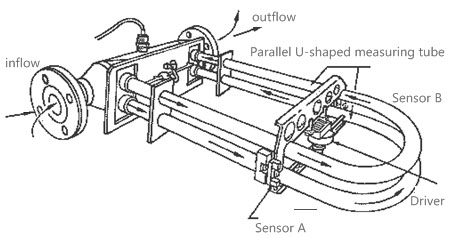
The measuring tube consists of two parallel U-shaped tubes, with a driver system (excitation coil and permanent magnet) that creates perpendicular movement to the pipeline. Two detectors located at the straight pipe ends monitor vibration and detect displacement, measuring the vibration time difference between the tubes to provide accurate mass flow data.
Performance and reliability should be your primary factors when selecting a Coriolis flowmeter for chemical engineering applications. Here's what you need to evaluate:
Accuracy Requirements
Consider these three critical accuracy parameters:
Key accuracy factors include:
Important Note: Different manufacturers often provide accuracy specifications based on different standards. Ensure you're comparing equivalent metrics when evaluating options.
Pressure Loss Considerations
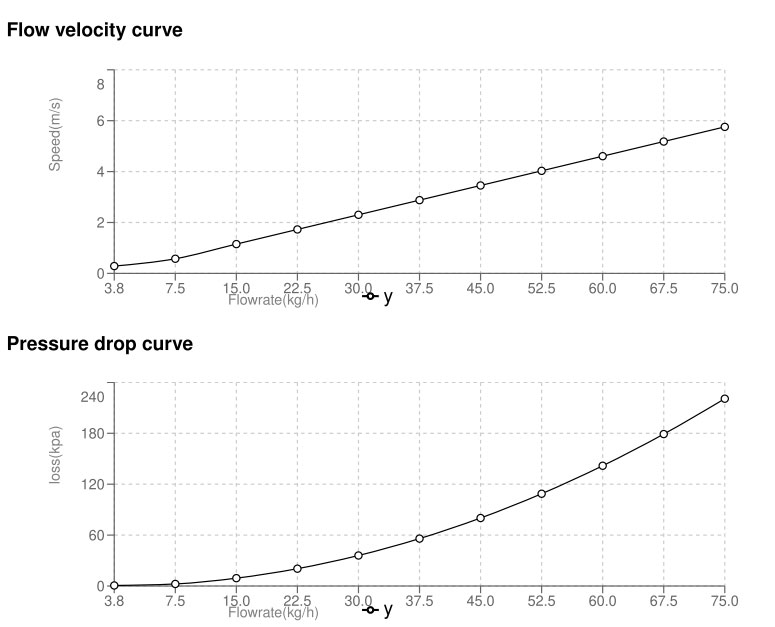
Pressure loss curve and flow velocity curve of Coriolis meter should be considered
For chemical engineering applications, pressure loss can significantly impact your process efficiency and operating costs. You need to:
Selection Tip: High flow rates with large errors result in larger pressure loss values. Conversely, low flow rates reduce pressure loss but may compromise sensitivity and accuracy.
Range Capability Assessment
Evaluate your application's flow range requirements:
Range Utilization Optimization
Range utilization directly impacts your measurement performance. Calculate this using:
For chemical engineering applications, material compatibility is crucial:
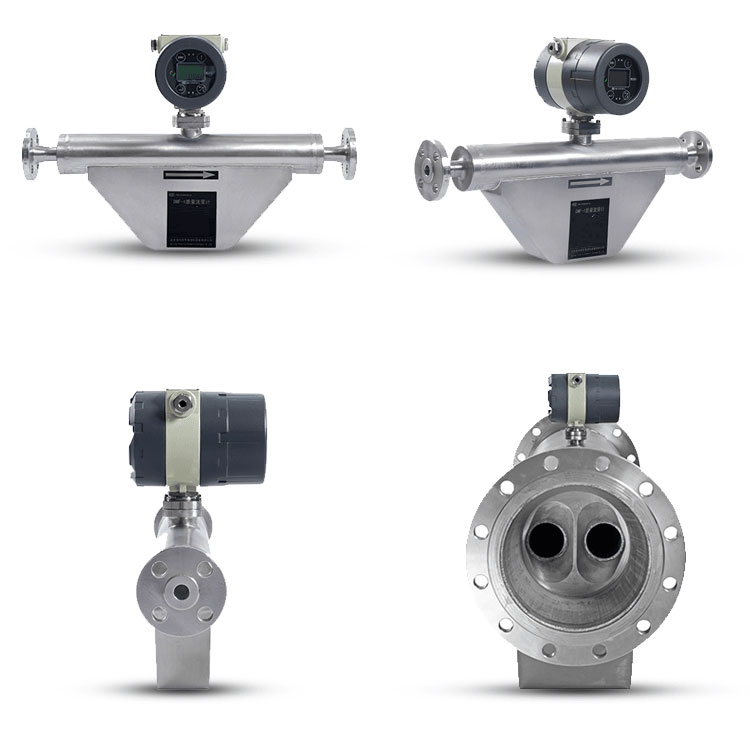
Wet parts material should be considered whether it is compatible to the fluids
Wetted Materials
Seal and Gasket Materials
Process Connection Options
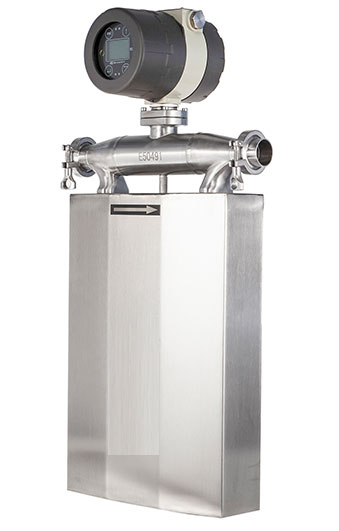
Tri-clamp sanitary Coriolis flow meter
Proper installation is critical for achieving specified accuracy and long-term reliability. Follow these essential steps:
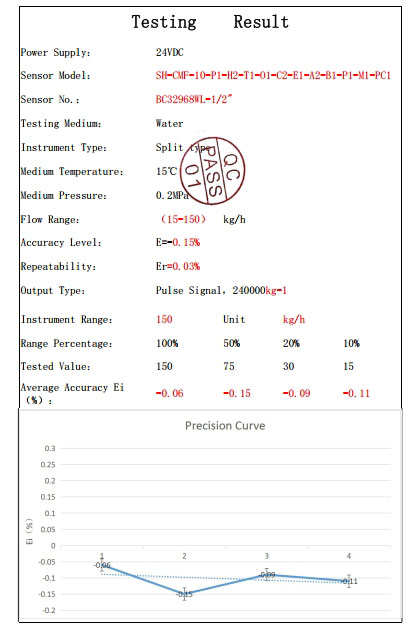
Factory calibration verification for Coriolis mass flow meter
Factory Calibration Verification
Environmental Considerations
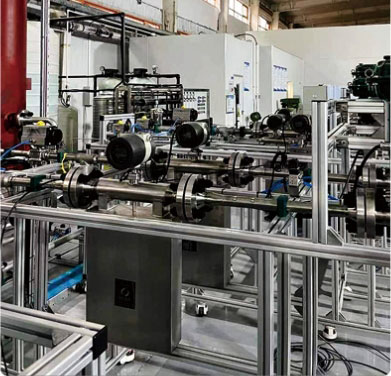
No straight pipeline needed before and after Coriolis mass flow meter
Pipeline Preparation
Upstream and Downstream Requirements
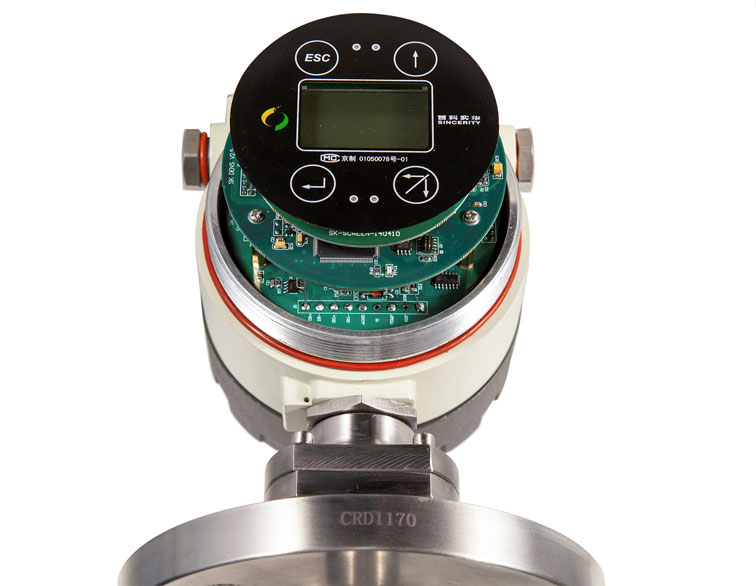
Electrical wiring of Coriolis flow meter
Wiring and Connections
Before putting your Coriolis flowmeter into service:
Verification Steps
Zero Point Calibration Process
Critical for accurate measurements in chemical processes:
Quick diagnostic guide for chemical engineering applications:
| Problem | Potential Causes | Solutions |
| Converter no display | Power supply issues, blown fuses | Check power supply and replace fuses |
| Zero drift | Valve leakage, calibration issues, two-phase flow | Check valves, verify calibration, inspect for gas entrainment |
| Fluctuating readings | Insufficient damping, vibration interference | Adjust damping settings, check for external vibrations |
| Incorrect mass flow | Calibration coefficient errors, wrong units | Verify calibration coefficients and flow units |
| Density reading errors | Two-phase flow, vibration issues | Check for gas bubbles, eliminate vibration sources |
Recommended maintenance intervals for chemical applications:
Coriolis mass flow meters offer unmatched accuracy and reliability for chemical engineering applications, but their advanced technology comes with higher initial investment costs. The key to successful implementation is matching the technology to your specific needs and budget.
Coriolis mass flowmeters are ideal when you need:
For applications with less stringent accuracy requirements and no special circumstances, alternative technologies may be more cost-effective. However, consider the total cost of ownership, including:
Selecting the right Coriolis mass flowmeter requires careful consideration of multiple factors unique to your application. The wrong selection can result in:
Coriolis mass flow meters play an increasingly important role in chemical engineering applications, offering unparalleled accuracy for process control, measurement management, and energy conservation. Their advanced technology enables direct mass flow measurement that traditional volumetric meters simply cannot match.
The key to success lies in proper selection, installation, and operation. By carefully weighing your specific process conditions, accuracy requirements, and budget constraints, you can select a Coriolis mass flowmeter that delivers exceptional value and performance for your chemical engineering applications.
Remember: The initial investment in quality Coriolis flow measurement technology often pays for itself through improved process control, reduced waste, and enhanced product quality.
Need Expert Help with Your Coriolis Flowmeter Selection?
Don't risk making the wrong choice for your critical chemical processes. Our technical experts have extensive experience in Coriolis flowmeter applications across diverse chemical engineering environments.
Contact us today for:
✅ Free application consultation and sizing
✅ Customized technical specifications
✅ Competitive pricing and delivery options
✅ Installation and commissioning support
✅ Ongoing technical support and maintenance
Get Your Custom Quote Now - Our experts are ready to help you select the perfect Coriolis mass flowmeter solution for your specific chemical engineering application.