
English
Flow Meter for Caramel, Syrup, and High-Viscosity Food Liquids: 1500 cP Sizing Guide
For caramel, syrup, molasses, and similar high-viscosity food liquids around 1,500 cP and specific gravity 1.35, two flow meter types work well: a sanitary stainless steel oval gear flow meter for volumetric measurement on gravity-fed or low-pressure lines, and a sanitary Coriolis mass flow meter for plants that need true mass flow, density, and Brix calculation. For a 2" line at 55 GPM with only 5 PSI driving pressure, the oval gear is usually the safer pick. Coriolis becomes the right tool when a feed pump is in place or when recipe batching needs mass-based control.
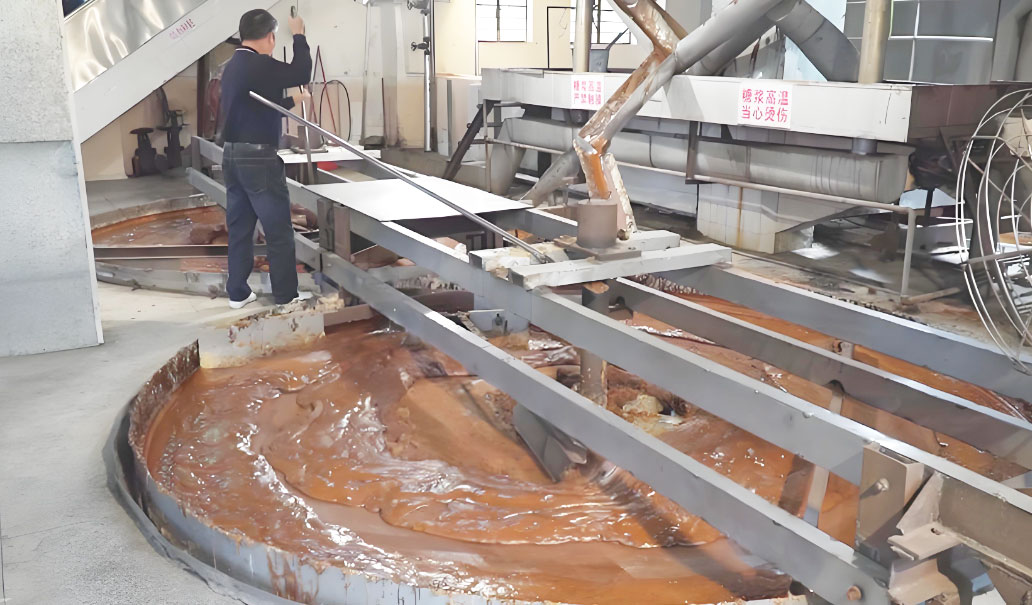
The application: caramel at 1,500 cP, 55 GPM, 2" line
A North American food processing plant producing caramel and syrup sent us this brief recently:
The 5 PSI ceiling is the constraint that decides everything. Most flow meters need a few PSI of pressure drop to operate, so on a 5 PSI gravity line you have very little margin to spend. The meter you pick has to fit inside that budget without starving the downstream process.
Walk through the usual suspects:
That leaves two practical choices: oval gear (positive displacement) and Coriolis. Both handle high viscosity well, both come in sanitary stainless steel for food contact, and both will give accurate results on caramel. The choice between them comes down to pressure budget and what you need to measure.
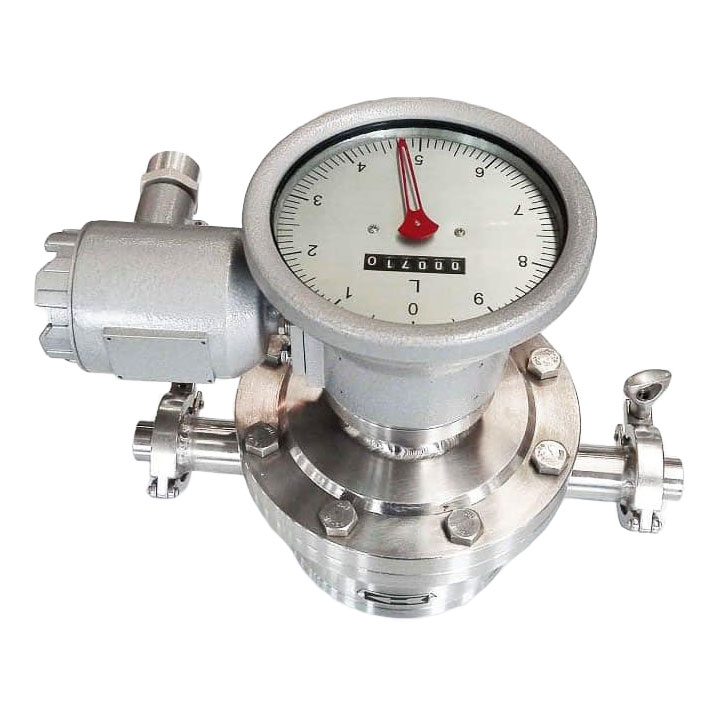
Sanitary oval gear flow meter for syrup
An oval gear meter has two precision-machined oval rotors meshed together inside the meter body. Liquid passing through pushes the gears around. Each rotation displaces a fixed volume, so the rotation count is a direct volume measurement. Higher viscosity actually improves accuracy because the seal between the gears and the chamber wall gets tighter as the liquid thickens.
Price guide: USD 2,800 to 3,800 for a 2" sanitary high viscosity oval gear meter with pulse and 4-20 mA output. Lead time 10 to 15 working days.
For the 1,500 cP caramel case, a 2" sanitary oval gear flow meter gives:
The 2 to 3 PSI pressure drop is the number to watch. On a 5 PSI gravity head you have just enough margin. Here is the thing about caramel viscosity: it changes fast with temperature. At 73 °F you are at 1,500 cP, but drop to 65 °F and viscosity can climb to 2,500 cP or higher. At that point the pressure drop across the meter could exceed your 5 PSI head and flow will slow or stall. We tell food customers to either keep the upstream tank one or two feet higher than planned, or add a small variable-speed feed pump as backup. It costs little and saves the production line on cold mornings.
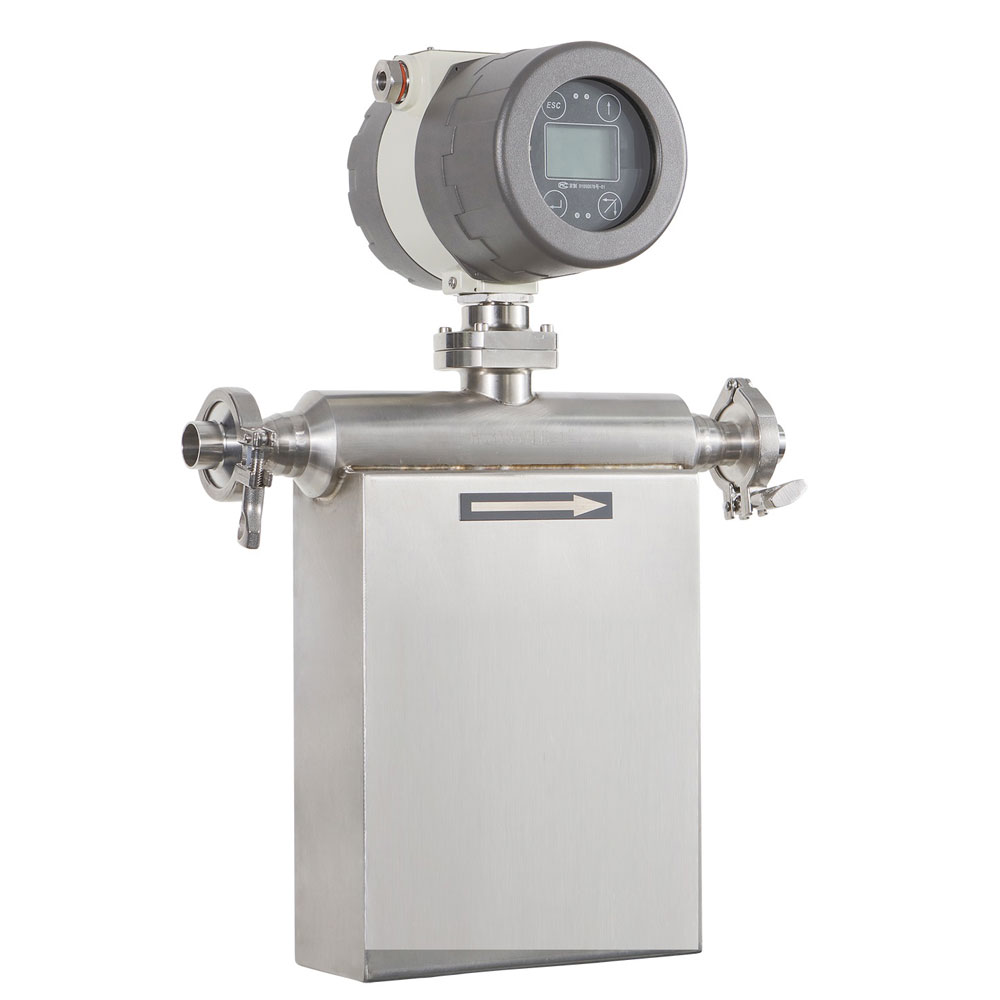
Sanitary Coriolis mass flow meter for molasses
A Coriolis meter measures true mass flow by sensing the deflection of vibrating tubes carrying the fluid. It does not care about viscosity, conductivity, or flow profile. It also gives you density in real time, which means you can calculate Brix or sugar concentration directly from the meter output. That matters for caramel batching where consistency drives product quality.
For the same 2" caramel line, a sanitary Coriolis meter gives:
The pressure drop is the deal-breaker for a pure 5 PSI gravity line. A Coriolis meter on caramel at 1,500 cP needs more head than gravity alone can give. If the plant has a feed pump anywhere in the process (most caramel lines do, for filling or transfer), the Coriolis becomes the better choice because the pump can supply 15 to 30 PSI inlet pressure without trouble.
When does Coriolis pay back its higher cost? Three cases:
1.Recipe batching where you dose by mass (kg of caramel into a mixer), not by volume
2.Brix or sugar concentration monitoring directly from density
3.Custody transfer between supplier and packaging plant, where ±0.1% accuracy is needed
Price guide: USD 5,500 to 9,000 for a 2" sanitary Coriolis meter. Lead time 15 to 25 working days.
| Criterion | Oval Gear (Sanitary) | Coriolis (Sanitary) |
| Best for | Gravity or low-pressure lines | Pumped lines, mass batching |
| Accuracy | ±0.5% of reading | ±0.1% of mass flow |
| Measures density / Brix | No | Yes |
| Pressure drop at 1,500 cP, 55 GPM | 2 to 3 PSI | 6 to 10 PSI |
| Moving parts | Yes (gears) | No |
| CIP / SIP compatible | Yes, with sanitary version | Yes |
If you measure caramel, syrup, honey, molasses, condensed milk, fruit puree, or any other high-viscosity food liquid, send us:
We will come back with a model recommendation, pressure drop calculation for your duty point, price, and lead time within one working day. See our oval gear flow meter and Coriolis mass flow meter ranges for full configuration options.
we will contact you within 24 hours..