
English
A liquid turbine flow meter is a precision instrument designed to measure volumetric flow rates of clean, low-viscosity liquids. Our liquid turbine meters achieve an accuracy of ±1.0% of reading as standard, with ±0.5% available for selected line sizes. Behind every accurate flow reading is a set of carefully engineered components, each contributing to the meter's overall performance.
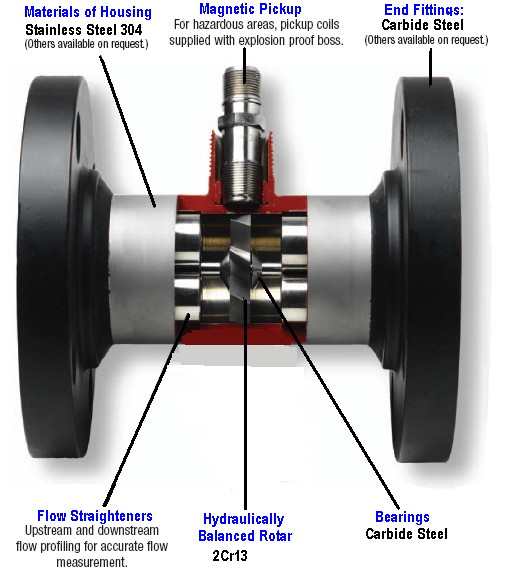
The meter body is the structural foundation of the instrument, enclosing all internal components and interfacing directly with the pipeline. 304 stainless steel is our standard housing material, covering most clean liquid applications including water, light oils, and general industrial fluids. We also offer 316 stainless steel housings for installations involving mildly corrosive media or processes where greater resistance to chloride containing liquids is required. The housing is typically manufactured as a straight-bore tube with precision-machined inner walls to minimize turbulence-induced measurement error.
End fittings serve as the connection points between the meter body and the upstream and downstream piping. We manufacture them from carbide steel, chosen for its hardness and resistance to erosion at the meter inlet and outlet where flow velocities are highest. We offer flanged, threaded, tri-clamp, and wafer-type connections, allowing the meter to be integrated into a wide range of pipeline configurations.
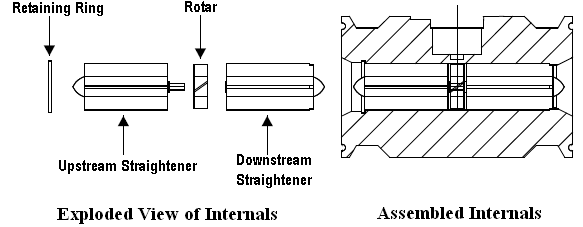
Upstream and downstream flow straighteners are among the most functionally important structural elements in a turbine flow meter. Mounted at both ends of the meter bore, they condition the incoming liquid stream by breaking up swirl and asymmetric velocity profiles before the flow reaches the rotor.
Without adequate flow conditioning, distorted inlet profiles produce measurement errors that cannot be corrected through calibration alone. Upstream elbows, valves, and pipe reducers are common sources of such distortion, introducing swirl or uneven velocity distribution into the flow stream. The flow straighteners ensure that the rotor responds to a well-developed, symmetrical flow profile, which is a prerequisite for accurate and repeatable measurement across the full operating range.
The rotor is the primary sensing element. As liquid passes through the meter, it imparts kinetic energy to the rotor blades, causing the rotor to spin at an angular velocity proportional to the volumetric flow rate. our rotor in this design is hydraulically balanced and machined from 2Cr13 stainless steel, a martensitic grade that combines adequate corrosion resistance with the hardness needed to maintain blade geometry under continuous liquid impingement.
Hydraulic balancing minimizes axial thrust forces acting on the rotor during operation. This reduces wear on the bearings, extends service life, and preserves measurement linearity over time. The blade angle, blade count, and rotor diameter are engineered together to define the meter's flow range, pressure drop characteristics, and K-factor.
The rotor shaft is supported by carbide steel bearings, selected for their exceptional hardness and wear resistance. Turbine flow meter bearings operate under continuous load in a fully wetted environment, with no opportunity for external lubrication. Carbide materials hold their dimensional tolerances under these conditions far longer than conventional steel, maintaining the rotor's central position within the bore and ensuring that the air gap between rotor and housing remains consistent.
Bearing wear is the primary life-limiting factor in turbine flow meters, particularly in applications where the liquid carries fine particulate matter. Specifying carbide bearings is the standard approach to extending calibration intervals and reducing maintenance frequency.
The magnetic pickup is the signal generation element of the meter. It is threaded into the top of the housing directly above the rotor and operates on the principle of magnetic reluctance. As each rotor blade passes beneath the pickup, it causes a change in the local magnetic field, inducing a voltage pulse in the pickup coil. The frequency of these pulses is directly proportional to rotor speed and therefore to volumetric flow rate.
The pickup produces a clean pulse train output that can be conditioned into a 4–20 mA analog signal, a frequency output, or a digital signal depending on the associated transmitter or signal converter. For hazardous area installations, we supply pickup coils with an explosion-proof boss rated to ExdIIBT6, meeting area classification requirements without the need for a separate enclosure.
Each component of a liquid turbine flow meter plays a defined role in achieving accurate, stable flow measurement. The stainless steel housing and carbide end fittings provide structural integrity and chemical compatibility. The flow straighteners remove inlet disturbances before they can influence the rotor. The hydraulically balanced 2Cr13 rotor converts flow velocity into a measurable rotational signal. Carbide bearings sustain that motion with minimal wear, and the magnetic pickup translates rotor speed into an electrical output suitable for process control or custody transfer applications.
Selecting the right turbine flow meter requires matching housing material, rotor grade, output type, and connection standard to the demands of the process fluid and installation environment. We offer a range of configurations to meet these requirements. Contact us to discuss your application.
we will contact you within 24 hours..
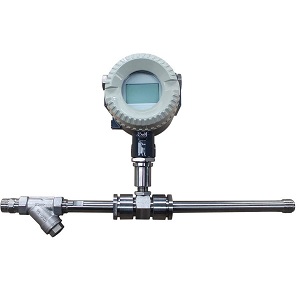 3/8 inch liquid turbine flow meter
3/8 inch low flow liquid flow meter. Low flow detects from 150LPH. Screw connection. For water, chemical addictive, diesel.
VIEW
3/8 inch liquid turbine flow meter
3/8 inch low flow liquid flow meter. Low flow detects from 150LPH. Screw connection. For water, chemical addictive, diesel.
VIEW
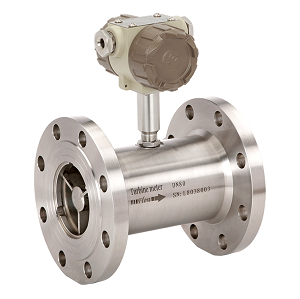 Liquid turbine flow meter with 4-20mA output
Liquid meter 4-20mA analog output. Volumetric in-line liquid flow meter. Low cost flow transmitter. For clean and non-corrosive liquid.
VIEW
Liquid turbine flow meter with 4-20mA output
Liquid meter 4-20mA analog output. Volumetric in-line liquid flow meter. Low cost flow transmitter. For clean and non-corrosive liquid.
VIEW
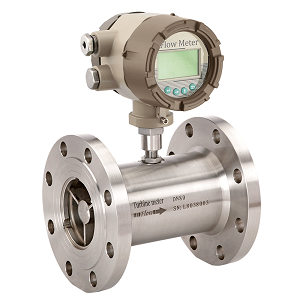 Liquid turbine flow meter with MODBUS
Turbine meter MODBUS RTU RS485. Display shows flow rate and total flow. High accuracy: 0.5% of Reading Low cost flow meter for clean, low viscosity liquid.
VIEW
Liquid turbine flow meter with MODBUS
Turbine meter MODBUS RTU RS485. Display shows flow rate and total flow. High accuracy: 0.5% of Reading Low cost flow meter for clean, low viscosity liquid.
VIEW
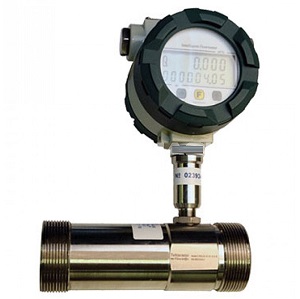 Thread connection liquid turbine flow meter
Thread connection for easy install. Liquid turbine flow size 4mm to 3”. Stainless steel liquid flow meter. For fuel, diesel, water, kerosene, solvent.
VIEW
Thread connection liquid turbine flow meter
Thread connection for easy install. Liquid turbine flow size 4mm to 3”. Stainless steel liquid flow meter. For fuel, diesel, water, kerosene, solvent.
VIEW
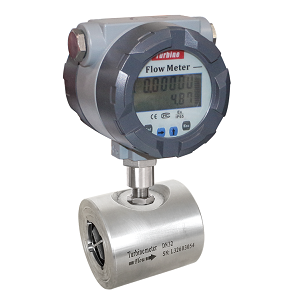 Wafer liquid turbine flow meter
Wafer process connection. Small size and light weight. High pressure liquid flow measurement. Liquid turbine flow sensor DN4-8 inches.
VIEW
Wafer liquid turbine flow meter
Wafer process connection. Small size and light weight. High pressure liquid flow measurement. Liquid turbine flow sensor DN4-8 inches.
VIEW
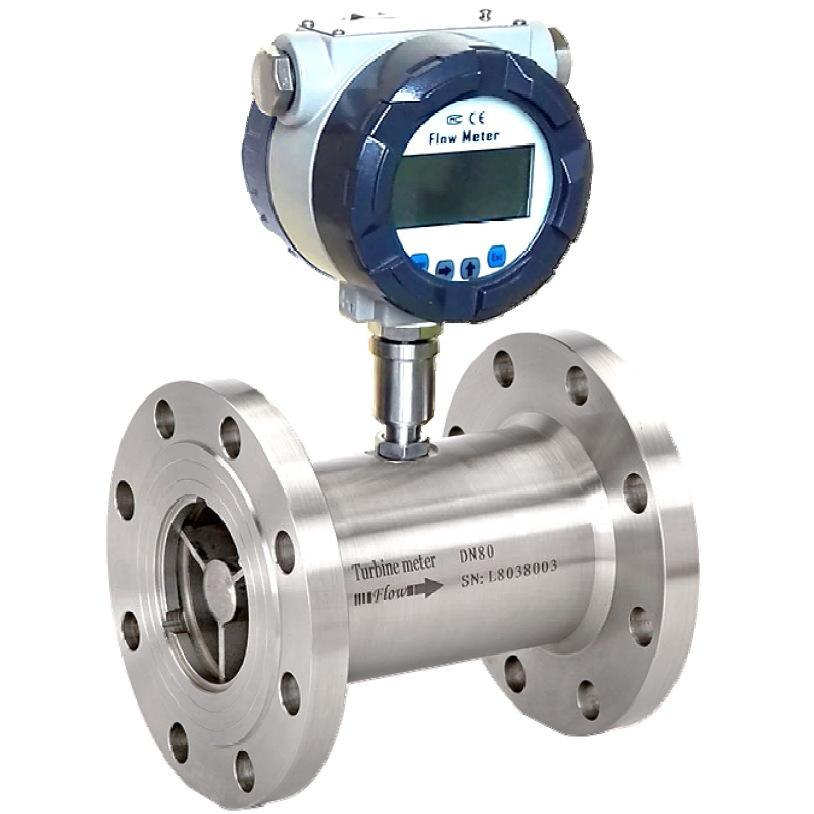 Battery operated liquid turbine flow meter
3.6V lithium battery operated. Long battery life Display shows flow rate and total flow. Low cost liquid flow meter .
VIEW
Battery operated liquid turbine flow meter
3.6V lithium battery operated. Long battery life Display shows flow rate and total flow. Low cost liquid flow meter .
VIEW
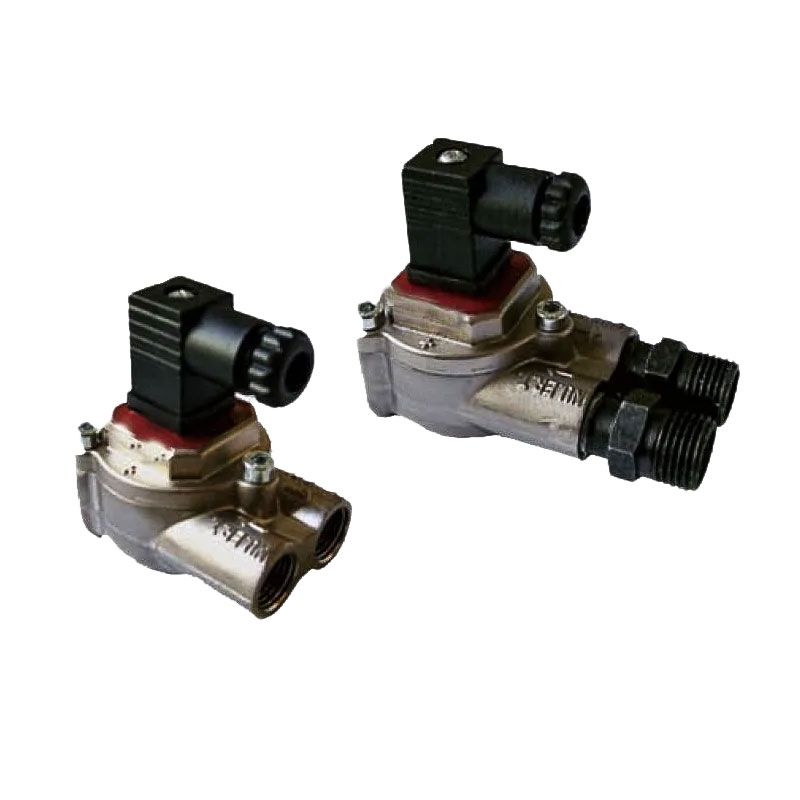 Low Flow Liquid Turbine Flow meter
Mini-flowmeter to measure Low flow rate from 0.035 L/min to 3 L/min for clean and non-corrosive liquids flow measurement.
VIEW
Low Flow Liquid Turbine Flow meter
Mini-flowmeter to measure Low flow rate from 0.035 L/min to 3 L/min for clean and non-corrosive liquids flow measurement.
VIEW
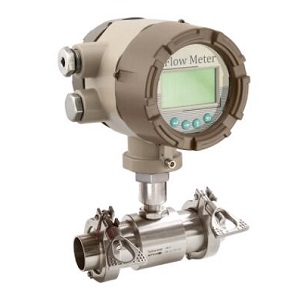 Sanitary Hygienic Liquid Turbine Flow meter
Hygienic Turbine Flow meter is for clean water, milk, palm oil, edible oil, vegetable oil, fish oil flow measurement ,it is used in the dairy, beverage, food processing and pharmaceutical industries.
VIEW
Liquid Turbine Flow Meter
Liquid Turbine flow meter is a kind of low cost digital flow meter for diesel ,petrol,water,palm oil. it is for clean, low viscosity ,non-corrosive liquid.
VIEW
Sanitary Hygienic Liquid Turbine Flow meter
Hygienic Turbine Flow meter is for clean water, milk, palm oil, edible oil, vegetable oil, fish oil flow measurement ,it is used in the dairy, beverage, food processing and pharmaceutical industries.
VIEW
Liquid Turbine Flow Meter
Liquid Turbine flow meter is a kind of low cost digital flow meter for diesel ,petrol,water,palm oil. it is for clean, low viscosity ,non-corrosive liquid.
VIEW