
English
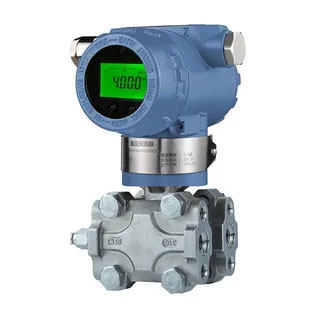

Pressure Transmitter for Corrosive gas or liquidThe SH308-C series ceramic capacitive pressure transmitters, designed with high-purity alumina ceramics (Al2O3, 99%) as the diaphragm material, are idea...
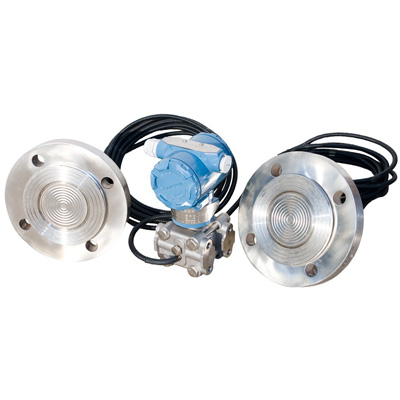
Remote diaphragm for corrosive or viscous fluids.
DP Transmitters or Pressure Transmitters.
316L,HC, Tan, Monel diaphragm.
An RS485 MODBUS pressure transmitter is an industrial sensor that measures pressure and sends digital signals over an RS485 network. These smart devices send pressure data digitally over the MODBUS RTU protocol. This means that multiple transmitters or DP transmitters can connect to a single two-wire bus, which is different from traditional 4-20mA analog transmitters.
There are a number of benefits to using the RS485 interface instead of analog communication. You can connect up to 247 field instruments(not limited to pressure transmitters; can also be DP , absolute pressure transmitters, level meter ,flow meter or temperature transmitters) to one network, send data up to 1200 meters without losing signal quality, and get more detailed diagnostic information than just pressure readings. Because it is open, reliable, and works with almost all industrial control systems, the MODBUS protocol has become the popular standard in the industry.
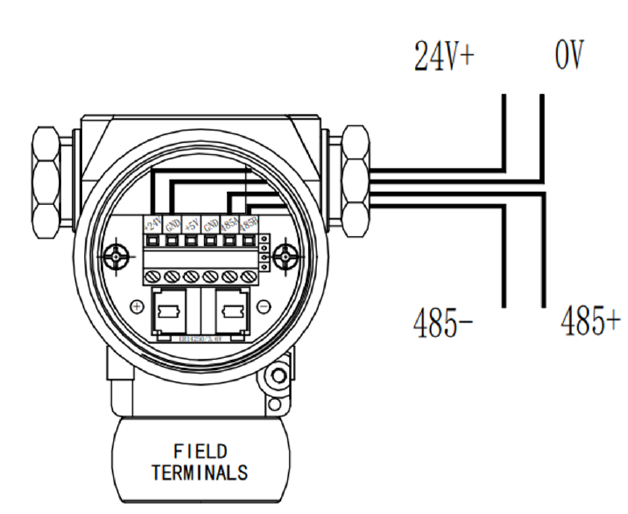
Most of the time, these transmitters or transducers measure gauge pressure, negative pressure, compound pressure, absolute pressure, or differential pressure. They turn mechanical pressure into electrical signals using pressure sensor technologies such as piezoresistive silicon, monocrystalline silicon, or metal capacitive sensors or other technologies. After that, the onboard microprocessor digitizes the signal, adds temperature compensation, and packages the data according to MODBUS standards before sending it over the RS485 bus.
Many modern RS485 pressure transmitters have LCD displays that let operators see readings right away or configure parameters through the displays while also sending data to control rooms. This dual function makes them very useful for both local monitoring and centralized control.
The price of RS485 pressure transmitters depends on their features, but you can get excellent ones starting from $300. We make pressure, differential pressure transmitters or diaphragm seal, chemical seal pressure transmitters at silverinstruments.com. We've been doing it for 30 years, so we know what we're doing. Our products are very stable and cost-effective.
There are a number of things that affect MODBUS pressure transducer prices:
Piezoresistive silicon sensors (like the SH308 series) are usually cheaper than monocrystalline silicon sensors (SH-M series) or capacitive pressure transducers, but all work very well. The SH-M series with monocrystalline silicon can measure accuracy to within ±0.075% or ±0.1%, while the diffusive silicon models can measure accuracy to within ±0.1%, ±0.2%, or ±0.5%.
Low-range differential pressure transmitters 1 Kpa may cost more than normal pressure sensors 10 psi, 100 psi or 200 psi. Our products come in a wide range of sizes, from 0 to 7 kPa to 0 to 70 MPa, so they can be used in almost any industrial setting.
The structure of the pressure sensor also affects the price. For example, tri-clamp diaphragm transmitters, flange diaphragm transmitters, high-pressure diaphragm transmitters (such as diaphragm transmitters with 900LB flanges), capillary transmitters, and transmitters that withstand high temperatures will all affect the price of MODBUS transmitters/differential pressure transmitters. Also users need male or female pressure transmitters with MODBUS also affect price.
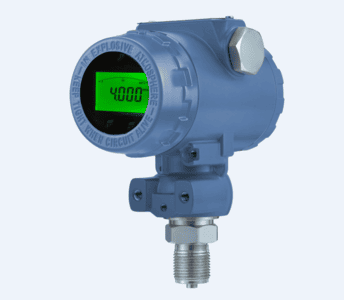 | 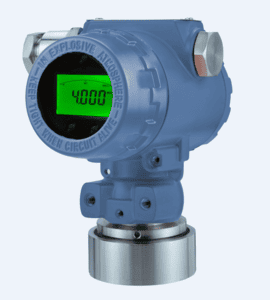 |
| Male Pressure transmitter | Female Pressure Transmitter |
Standard 316L stainless steel wetted parts are the cheapest, but using exotic materials like Hastelloy C-276, Tantalum, or Monel for corrosive applications raises costs. But spending money on the right materials stops early failure and lowers costs in the long run.
Basic RS485 transmitters without displays are cheaper than those with LCD screens, HART protocol compatibility, or certifications that say they are safe from ATEX explosions (Exd II BT4 or Exia IIC T6).
Our RS485 pressure transmitters that cost from $300 are still high quality. Those pressure transducers work well in tough industrial settings because they are stable within ±0.2% per year and can handle temperatures from -40°C to +85°C (or -40°C to +105°C for metal capacitive models).
There are good reasons to choose RS485 transmitters over older analog 4-20mA pressure transmitters when it comes to MODBUS RTU communication:
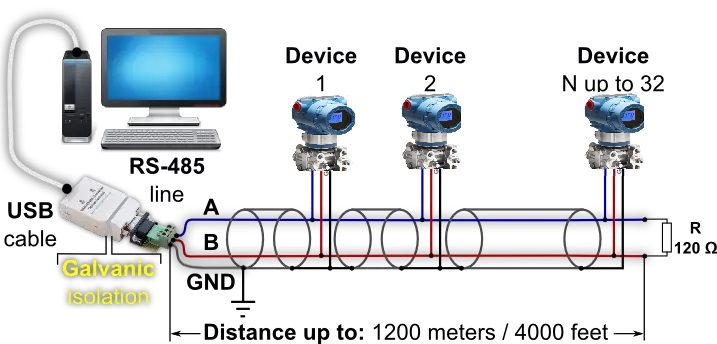
You can connect many transmitters to one cable pair. In a big building with a lot of places to measure pressure, this cuts down on wiring costs and installation time by a huge amount compared to running separate 4-20mA pressure transducer circuits.
MODBUS lets data flow in both directions, unlike one-way analog signals. You can change the pressure transmitter's settings from a distance without having to touch it. For example, you can change the pressure units, the zero points, the decimal places, or the damping values even without seeing those digital pressure sensors. This is very useful for transmitters that are in dangerous places or hard-to-reach places.
MODBUS pressure transmitters do more than just read pressure measurement value. You can see the battery voltage, signal quality indicators, diagnostic codes, and configuration parameters. Register addresses, configuration settings, calibration coefficients, and pressure and temperature in both floating-point and integer formats.
RS485 sends digital data that is not affected by electrical noise, which can make analog 4-20mA current signals less clear. When there are VFDs, motors, and welding equipment in an industrial area that makes a lot of noise or transfer the data in long distance, digital MODBUS communication can keep the signal clear, but analog 4-20mA loops can get messed up or week signal value.
MODBUS communication is supported by all modern SCADA systems, PLCs, and DCS controllers. It's easy to integrate, and the open protocol means you don't have to use proprietary systems.
Digital communication is becoming more and more important as Industry 4.0 and IIoT projects grow. RS485 MODBUS transmitters work perfectly with smart factory architectures, allowing for predictive maintenance and advanced analytics.
The protocol works with baud rates from 1200 to 38400 bps and lets you set the parity to none, odd, or even. This makes it work with existing network infrastructure. View or download MODBUS RS485 pressure transmitter setting for more technical information of MODBUS Pressure transmitter informaiton.
Understanding technical specifications will help you choose the right transmitter for your needs.
- Serial interface: RS485, half-duplex
- Protocol: MODBUS RTU
- Baud Rate: 1200, 2400, 4800, 9600, 19200, and 38400 bps
- Range of Addresses: 1 to 247 (can be changed)
- Function Codes: 03H (Read Holding Registers), 04H (Read Input Registers), 06H (Write Single Register), 10H (Write Multiple Registers)
- Bits for data: 8 bits - Bits for stopping: 1 bit
- Parity: None, Odd, or Even
- Power supply: 10–32V DC
- Power Use: Low power design, usually less than 1W
- Load Resistance: This doesn't apply to RS485 (unlike 4-20mA, which needs loop resistance calculation)
- Output: A digital RS485 differential signal
- Accuracy: ±0.075%, ±0.1%, ±0.2%, or ±0.5% FSO, depending on the model - Stability: ±0.2% URL per year
- Temperature Effect: ≤±0.1% to ±0.2% F.S. per 10°C - Static Pressure Effect: ≤±0.1% to ±0.2% per MPa (for DP models)
- Time to respond: 0.25 seconds
- Damping can be set anywhere from 0 to 99.9 seconds.
- Differential Pressure: 0–1.6 kPa to 0–10 MPa
- Gauge Pressure: 0–6 kPa to 0–40 MPa
- The pressure is between 0 and 40 kPa and 0 and 20 MPa.
- Range Ratio: Up to 100:1 on models made of monocrystalline silicon
- Standard operating temperature is -40°C to +85°C; for metal capacitive sensors, it is -40°C to +105°C.
- Temperature for storage: -40°C to +90°C
- Humidity: 95% RH or less
- IP65 or IP67 for ingress protection
In MODBUS registers, you can find pressure data in a number of different formats:
- Floating Point (IEEE 754, CDAB byte order): 0x0000–0x0001
- Register 0x0004 for signed integers (the value depends on the decimal place setting)
- Temperature (if it has one): a floating point number between 0x0002 and 0x0003 and an integer number between 0x0005 and 0x0006
- Housing: die-cast aluminum with a polyurethane coating
- Sensor Diaphragm: 316L SS (standard), Hastelloy C-276, Tantalum, or Monel
- Process Connections: 316 SS with different thread types (NPT, metric, G-thread)
- Sealing: gaskets made of fluororubber (FKM), EPDM, or copper
- Fill Fluid: Silicone oil or fluorocarbon oil
- Pressure Units: Pa, kPa, MPa, mmH2O, mH2O, bar, psi, atm, kgf/cm², mm, m, kN
- Decimal Places: 0 to 4 digits (the user can choose)
- Adjusting the zero/span: using buttons or MODBUS commands
- Display: Optional LCD with a backlight and five digits
When choosing a supplier for an RS485 pressure transmitter, dependability and experience are important. Every pressure and differential pressure transmitter we make at Silverinstruments.com has 30 years of manufacturing experience behind it.
The SH308 Series has diffusive silicon sensors that are great for use in a wide range of industrial settings. These transmitters can measure gauge, absolute, or sealed gauge pressure from 0 to 7 kPa to 0 to 70 MPa with an accuracy of ±0.1%, ±0.2%, or ±0.5%. They work especially well for measuring thick, crystallized, and corrosive substances.
The SH-M Series uses cutting-edge MEMS technology to make monocrystalline silicon sensors that have the best overpressure performance in the world. These transmitters are great for critical measurement tasks because they are accurate to within ±0.075% or ±0.1% and have range ratios of up to 100:1. They are great for measuring flow using differential pressure because they have a very good static pressure effect (≤±0.1% per MPa).
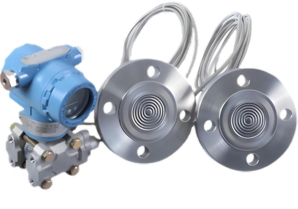
The SHDP and SHGP Series use metal capacitive sensors that work well and are accurate to ±0.1%, ±0.2%, or ±0.5% FSO. These work well in temperatures from -40°C to +105°C, which makes them more useful in extreme conditions.
You can see our full catalog of RS485 pressure transmitters at silverinstruments.com. Detailed datasheets include dimensional drawings, wiring diagrams, and register maps. Our model selection guide helps you find the best transmitter for your needs by taking into account your pressure range, accuracy needs, process media, and environmental conditions.
If you need something special, like a specific pressure range, an unusual material, different diaphragm seal or a unique way to mount it, get in touch with our professional sales engineering team. We make custom pressure transmitters for special uses where standard transducers don't work.
RS485 MODBUS pressure transmitters are the new standard for measuring pressure in industry. They use digital communication to take advantage of proven sensor technology. These transmitters are more flexible, reliable, and able to work with other systems than analog instruments, whether you're upgrading old analog systems or building new ones.
Silverinstruments.com offers these benefits for less than $300, thanks to 30 years of making high-quality products. We have a wide range of products that can meet almost any need for measuring pressure, from low differential pressure to high gauge pressure.
For your pressure measurement needs, choose RS485 MODBUS transmitters from Silverinstruments.com. There, experience, quality, and value all come together.
we will contact you within 24 hours..