
English
Our pressure transmitters cover a wide range of industrial applications, from standard gauge and absolute pressure to differential pressure measurement in corrosive or high-pressure conditions. Available in capacitance, piezoresistive and DP types, with 4-20mA, HART and Modbus output. Not sure which model fits your application? Send us your process conditions and we will help you select.

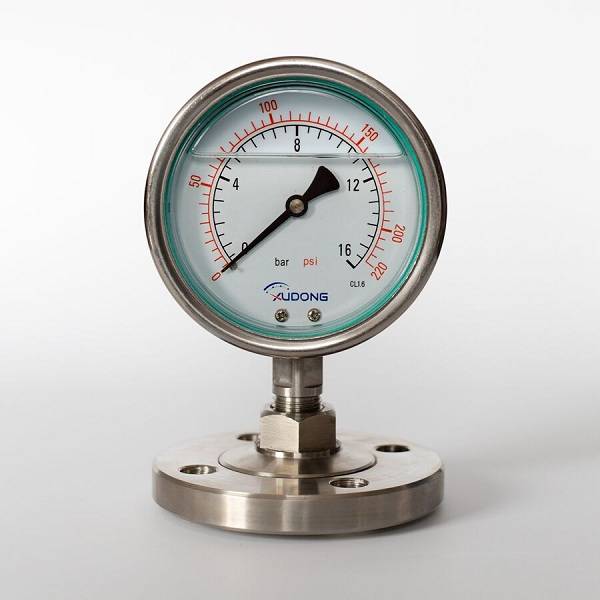
Bourdon tube, diaphragm seal and glycerine filled types
Stainless steel or brass construction
OEM and custom dial available
For gas, liquid and corrosive media
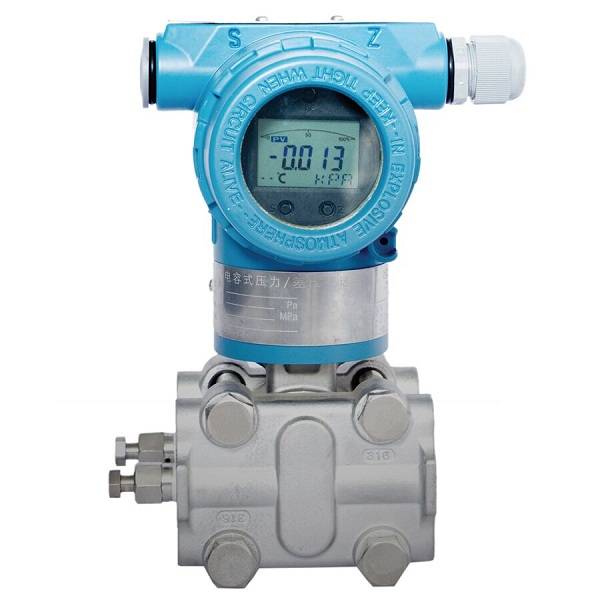
Digital Capacitive Pressure Transducer.
High accuracy 0.1%, 0.2%.
Dp, absolute pressure ,gauge pressure.
Range: 0-20 Mpa (2900 PSI).
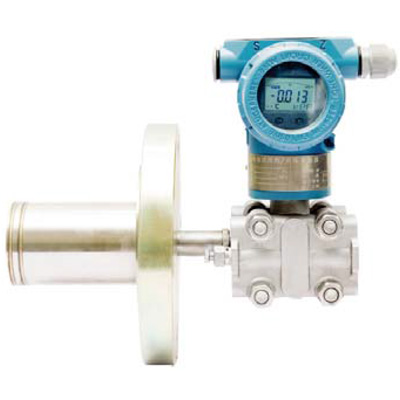
Flange diaphragm Transmitter.
For pressure , level or DP;
Digital transmitters with LCD display;
HART, 4-20mA or MOUBUS;
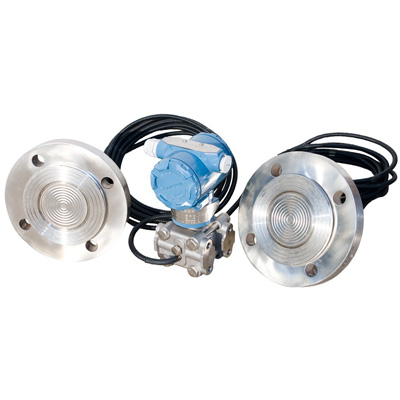
Remote diaphragm for corrosive or viscous fluids.
DP Transmitters or Pressure Transmitters.
316L,HC, Tan, Monel diaphragm.
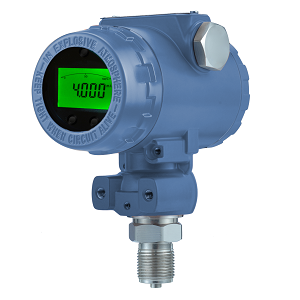
Piezoresistive pressure cost is low;
High pressure transducer max 10000 PSI;
ATEX approved
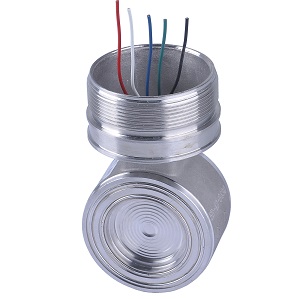
Capacitive pressure sensor or differential pressure sensor 3351; Accuracy: ± 0.1%; 0-40Mpa;
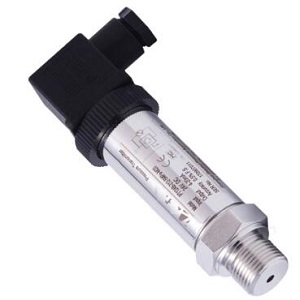
Low cost Pressure sensor.
Piezoresistive sensor.
Compact design.
Pressure sensor with 4-20mA.
For gauge,absolute or negative pressure.
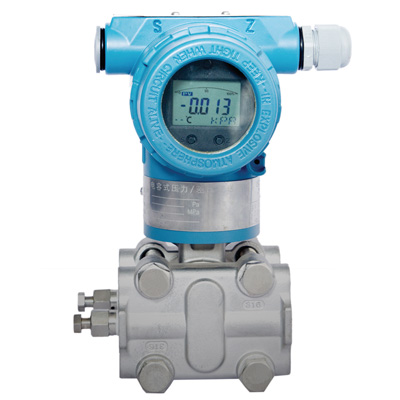
Monocrystalline silicion sensor;
Differential pressure transducers;
High accuracy: 0.075%, 0.1%;
Range: 0-5800 PSI;
Ingress Protection: IP67;
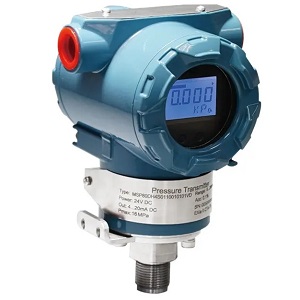
Signal Crystal Silicon Resonant Sensor.
High accuracy: 0.075%, 0.1%.
Absolute pressure and gauge pressure.
Pressure Transmitters and Pressure Gauges: Technology, Selection and Applications
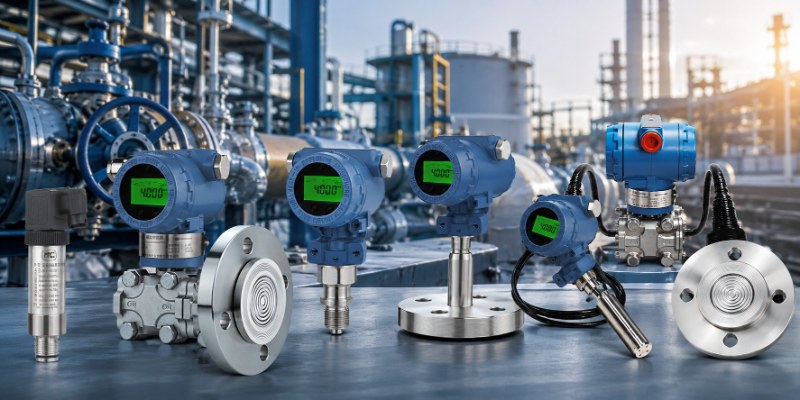
A pressure transmitter senses force per unit area on a diaphragm. It converts that force into a signal, most often a 4-20mA loop current.
Silver Automation Instruments builds that signal path on four sensor technologies rather than one, so accuracy class and overload margin get matched to the process instead of every application landing on the same design.
Silicon piezoresistive, monocrystalline silicon, metal capacitive and ceramic capacitive elements cover gauge pressure, absolute pressure, differential pressure and sealed gauge pressure across a shared family of 4-20mA, HART and Modbus RS485 transmitters. Bourdon tube gauges and resistance-transmitter gauges from the same factory carry the mechanical side of the same product line, for panels that need a dial rather than a loop signal.
Inside the housing, the sensing element deflects under process pressure, and an integrated circuit converts that deflection into a loop current. On Silver's SH308 platform, the same 4-20mA loop can carry a HART digital overlay on top of the analog signal, or the transmitter can run instead on Modbus RS485, reporting a diagnostic alarm current automatically if the sensor itself fails.
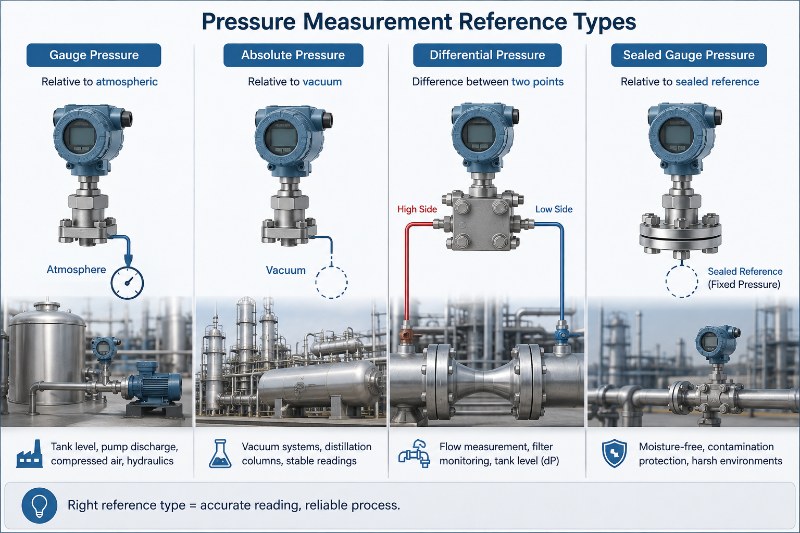
Pressure transmitters measure signals in different ways, and picking the right reference type matters as much as picking the right range. Gauge pressure reads relative to atmospheric pressure at the point of measurement. It is the most common type in industrial systems: tank levels, pump discharge, compressed air lines, hydraulic circuits. A gauge transmitter reports zero when open to atmosphere, so ambient pressure changes do not appear in the output.
Absolute pressure reads relative to a perfect vacuum instead of atmosphere. This matters in vacuum systems, distillation columns, and any process where atmospheric drift would otherwise distort the reading. Absolute transmitters use a sealed reference chamber, so barometric pressure swings from weather or altitude never enter the measurement.
Differential pressure measures the difference between two separate pressure points, not a single point against a fixed reference. It is the standard method for flow measurement across orifice plates and venturi tubes, for filter and strainer monitoring, and for tank level measurement using dP transmitters. Two process connections, high side and low side, feed the sensor directly.
Sealed gauge pressure is a variant worth knowing: instead of venting to atmosphere, the reference side is sealed at a fixed pressure, usually one atmosphere at sea level. This gives gauge-style readings in applications where a vented reference port would risk moisture ingress or contamination.
Choosing between these reference types comes before choosing a range or an output signal. For a full breakdown with selection guidance, see gauge versus absolute pressure and the wider set of pressure types.
Silverinstruments offers different electronic pressure sensor or pressure gauge types share the same electrical interface but behave differently under pressure spikes, static pressure and corrosive media. The table below uses the published specification for each series rather than a general industry figure.
| Sensor type | Accuracy | Overload capacity | Range | Best fit |
| Silicon piezoresistive (SH308) | 0.1%, 0.2%, 0.5% | 150% of range | 0 to 7 kPa up to 70 MPa | General liquid, gas, steam service |
| Monocrystalline silicon (SH308-M) | 0.075%, 0.1% | Up to 50 MPa on a 40 MPa range | 0 to 1 kPa up to 40 MPa, range ratio to 100:1 | Processes with pressure spikes or wide turndown |
| Metal capacitive (SHGP / SHDP) | 0.1%, 0.2%, 0.5% FSO | Static pressure rated up to 32 MPa | 0 to 1.6 kPa up to 20 MPa | Differential, gauge and absolute on one platform |
| Ceramic capacitive (flush diaphragm) | 0.075%, 0.1% | 500% of full range | 0 to 2.5 kPa up to 7 MPa | Corrosive or crystallizing media needing a flush face |
| Bourdon tube (mechanical) | 1.6%, 2.5% | Steady 75% of full scale | 0.06 MPa up to 100 MPa | Local indication, no signal output required |
The reading type, gauge, absolute or sealed gauge, gets fixed before the sensor technology does. Two of Silver's guides walk through that order: picking a pressure gauge by reading type first, and gauge selection in the right sequence. Neither lets the accuracy class drive a decision it should only refine.
The SH308 series silicon piezoresistive series covers the general-purpose middle of the range, 0 to 7 kPa up through 70 MPa at 0.1%, 0.2% or 0.5% accuracy, with a 0.25 second response time and 150% overload capacity. It is the default choice for liquid, gas and steam service that does not need the extended overpressure margin of the monocrystalline silicon line.
Range ratio, the span between the minimum and maximum pressure one sensor can calibrate against, is the number that industrial gauge model selection turns on when a process spikes well above its normal operating point. The SH308-M monocrystalline silicon series reaches a 100:1 range ratio and 50 MPa overload on a 40 MPa range, built specifically for that kind of spike.
Static pressure resets the zero point on a capacitive cell differently than it does on a piezoresistive one, an effect traced through the SHGP and SHDP static pressure rating, up to 32 MPa depending on range.
Ceramic capacitive sensors use a flush alumina ceramic diaphragm and reach 500% overload resistance, with temperature drift as low as 0.01% F.S. per 10 degrees Celsius, the tightest drift figure across the range. That flush face is built for corrosive gas or liquid where a recessed diaphragm would foul or crystallize instead of just corrode.
Related:
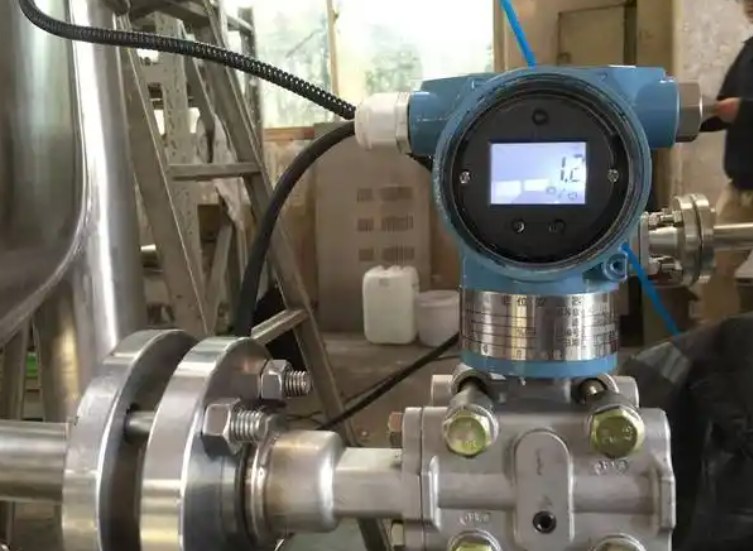
A direct-mount transmitter fails early when the medium is hot, viscous, corrosive or prone to crystallizing on the diaphragm. A diaphragm seal isolates the sensor from the process fluid, and matching the seal's fill fluid and material to the process, not just to the flange size, is the core judgment behind choosing a diaphragm seal case by case.
High temperature, direct corrosive contact and crystallizing buildup are the three conditions that call for a seal most, and each one needs a different fill fluid range. Silverinstruments's remote diaphragm seals extend the working range from minus 40 up to 315 degrees Celsius: normal silicone oil covers minus 20 to 120 degrees Celsius, high-temperature silicone oil covers 15 to 315 degrees Celsius, and fluorocarbon oil covers minus 45 to 205 degrees Celsius. Accuracy stays at 0.2% or 0.5% with 150% overload capacity even with the capillary in place.
A silicone oil-filled capillary seal keeps the transmitter body out of a hot or corrosive line while the capillary carries the pressure signal back to it. Where flange space runs out, a pencil-style transmitter drops straight into a small-bore nozzle instead of a flange fitting.
Abrasive slurry silts up a recessed diaphragm rather than corroding it, which is why a slurry-service transmitter uses the same flush-face logic as a corrosive-service transmitter, just for a different failure mode.
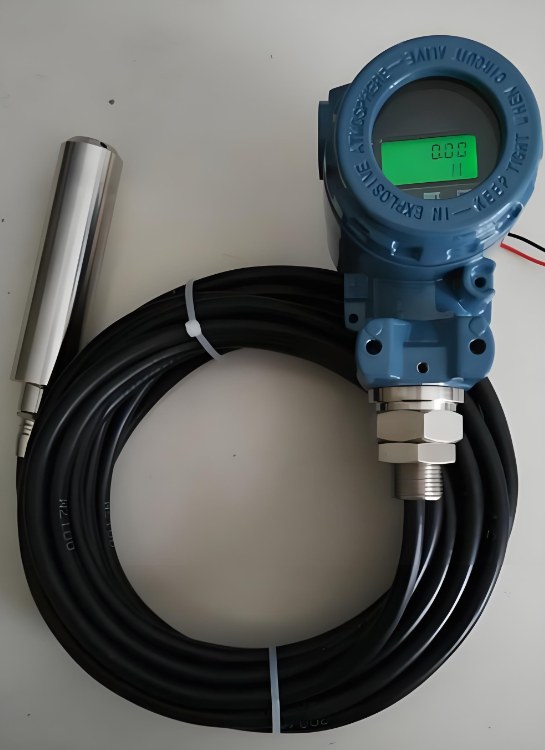
Differential pressure is the difference between two pressure points.
A single transmitter can use that difference to measure flow across an orifice, filter loading, tank level or dome pressure without a second instrument nearby. Flange diaphragm transmitters, available flush or extended, direct or side mounted, cover 6 kPa up to 20 MPa at 0.2% or 0.5% accuracy and reach 315 degrees Celsius when fitted with a remote seal.
Applied to a liquid column, that same relationship becomes hydrostatic level measurement, calibrated in meters of water rather than kPa directly, across a 0.5 to 200 meter range, with liquid density changing the calibration rather than the sensor.
Oxygen service narrows the material list further: an oxygen DP transmitter is limited to fluorine oil filling and fluororubber seals, kept below 6 MPa and 60 degrees Celsius, to avoid an ignition risk in the wetted parts. Dome pressure on a BTF unit runs at a lower magnitude than most flow applications, which is what BTF dome pressure monitoring is built around.
Related:
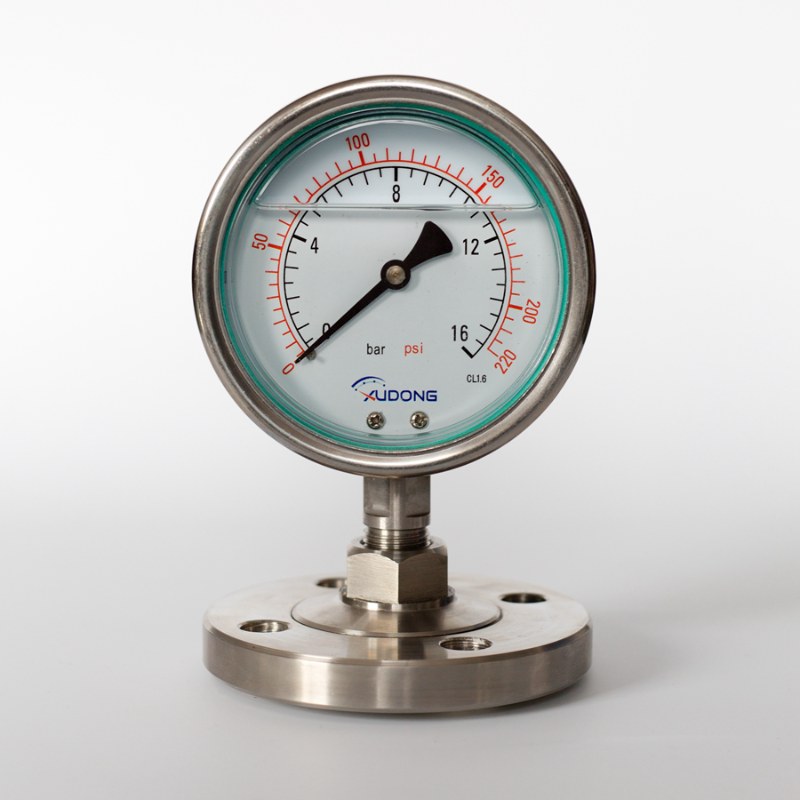
Not every panel needs a 4-20mA loop. A Bourdon tube gauge reads pressure through a mechanical linkage alone, at 1.6% or 2.5% accuracy depending on dial size, across ranges from 0.06 MPa up to 100 MPa on the stainless steel line.
Where a local reading still needs to reach a control room without a full transmitter, a resistance-transmitter gauge combines a Bourdon tube dial with a built-in slide-wire resistance element, at 1.6% accuracy across 0.1 to 60 MPa. A snap-action electric contact gauge adds two switching contacts to the same dial for basic alarm or control duty, rated to 380V AC or 220V DC at 1 amp.
A safety pattern gauge built with a solid baffle wall separates the dial from the tube, so a ruptured tube vents backward instead of blowing the window out toward the operator. Six-month inspection intervals, glycerin fill top-ups and periodic zero checks are the recurring items behind gauge maintenance that keeps a mechanical gauge accurate over years of service.
Pressure transmitters /pressure gauges get reconfigured by wetted material, diaphragm type and process connection for each industry below, rather than sold as separate product lines.
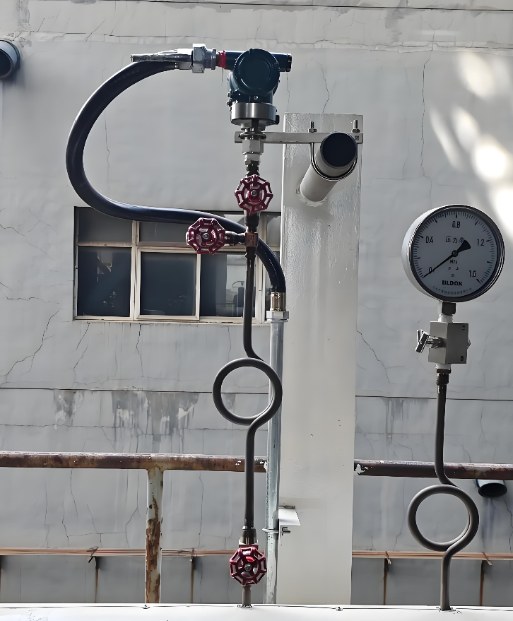
Typical media in this category include superheated steam, saturated steam, fuel oil, diesel, heavy oil and hydraulic oil, each handled with a sensor and wetted material suited to its temperature and viscosity rather than a single generic transmitter across all of them.
This covers cases such as steam service adds condensate to the equation: a steam pressure transmitter needs a pigtail siphon ahead of the sensor so the diaphragm never sees live steam temperature directly.
We supply pressure transmitters for measuring all types of water and general fluids, including wastewater, seawater, pure water, RO water and slurry. Wetted material is matched to the fluid rather than the application name, so corrosive or abrasive water still gets a diaphragm that holds up over time.
To name a few: Booster stations run water pressure sensors on the discharge side, while hot water pressure gauges add a siphon loop of their own to keep boiling water off the Bourdon tube or diaphragm.
Liquid pressure sensors and fluid pressure sensors for general process fluids sized by wetted material rather than by application name
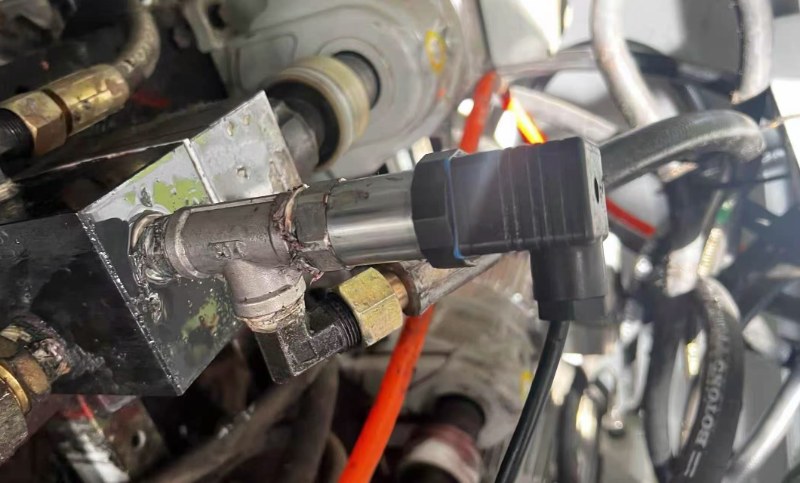
We supply pressure transmitters for all types of gas, corrosive gases like chlorine included, alongside common gases such as compressed air, nitrogen, biogas, propane, LPG, argon and CO2. Range coverage runs from high pressure at 200 bar or 300 bar down to low pressure at 1 kPa or 2 kPa, with gauge, absolute and differential pressure all measurable.
For example: Hydrogen service rules out certain wetted materials outright: a hydrogen gas H2 pressure transmitter needs a diaphragm alloy resistant to hydrogen embrittlement, not just to the gas itself.
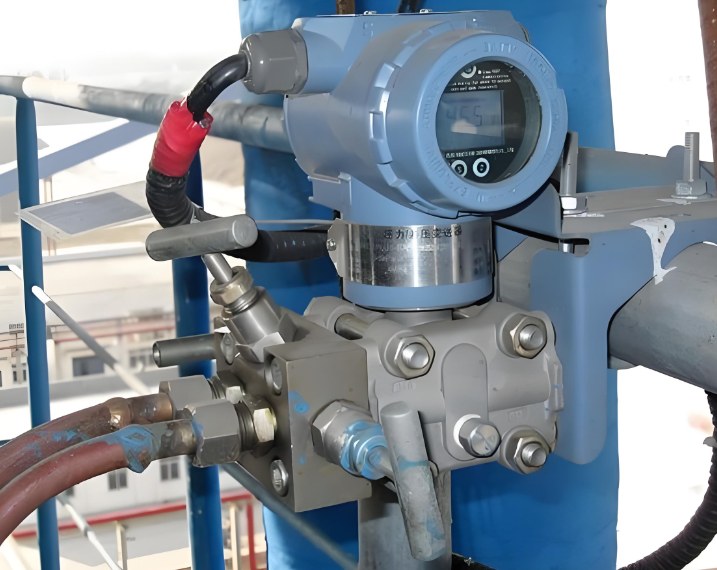
Silver Automation Instruments supplies pressure transmitters and gauges for acidic and corrosive chemical media, including hydrochloric acid, sulfuric acid, nitric acid, sodium hydroxide and similar process fluids. Wetted parts are matched to the medium rather than left as standard 316L, so the diaphragm holds up under sustained chemical contact instead of failing early.
For example: Chlorine pressure gauges and sodium hypochlorite pressure gauges both need diaphragm materials rated for oxidizing, corrosive service, which rules out standard 316L in continuous contact. Paint and coating systems bring solids loading and viscosity rather than corrosion, and a pressure transmitter for paint systems gets chosen around cleanability as much as accuracy.
Liquid sugar level measurement and RBD palm stearin pressure transmitters both track viscous, temperature-sensitive food products where the diaphragm has to stay clean between batches, not just accurate within one.
A Pressure transducer with the right accuracy class still drifts if it is wired, mounted or calibrated incorrectly. SH308 transmitters mount on a 2-inch pipe with a U-bolt bracket or directly on a wall, and keeping the signal wiring at least 15 centimeters clear of parallel power lines is a SH308 mounting and wiring check worth doing before power-up.
Zero and full span on an SH308 adjust through the three built-in buttons on top of the housing, without pulling the transmitter off the line, the same steps covered in SH308 calibration. Wiring polarity, loop resistance and mounting orientation interact more than most installations account for, which is why the fuller installation reference treats them as one procedure instead of three separate steps.
Modbus and HART turn a transmitter into a data source instead of just a loop value, a shift toward Chemical 4.0-style monitoring that plays out across a plant floor moving from analog panels to networked systems.
Pascal is the SI base unit, though bar, psi, kgf/cm2 and mmHg still dominate different regions and industries in practice, a spread covered in pressure units in engineering. Converting between them is faster with the pressure unit converter than with a lookup table.
Send the process conditions and Silver Automation Instruments will confirm a model within one working day. Useful details to include:
Email sales@silverinstruments.com with these details for a quote within one working day.