SILVER AUTOMATION INSTRUMENTS LTD.
Product Category
Blog Updates

By Media
Flow Meter

Compressed Air Flow Meter Installation Guide


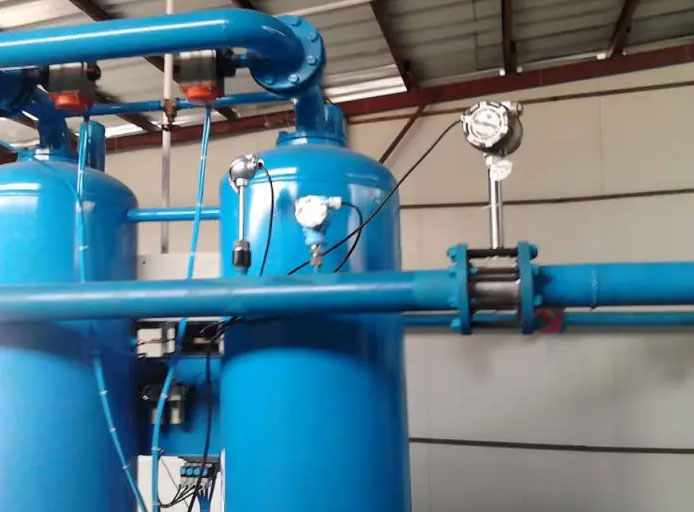
Vortex flowmeter and thermal gas flowmeter are often used to measure compressed air flow rate. Their installations have some differences. Below, I will introduce the installation methods.

Vortex Flow meter for compressed air installation Guide

Vortex flow meter for compressed air

Vortex flow meter for compressed air

For compressed air media, additional attention should be paid: prioritize installing the flow meter after the dryer and in front of the air storage tank, and install a gas-liquid separator upstream to ensure that the air entering the flow meter is dry and free of liquid droplets; At the same time, do a good job of pipeline support and shock absorption to avoid the superposition of airflow pulsation and pipeline vibration affecting measurement stability.

Precautions for Position Installation of vortex type compressed air flow meter

  • Avoid installing vortex flowmeters in areas with strong vibrations and magnetic fields.
  • Stay away from strong electrical and high-frequency equipment, do not share power with these devices, and reduce electromagnetic interference.
  • Avoid places with large temperature fluctuations and do not install flow meters in highly corrosive or extremely humid environments.
  • If the flowmeter is installed outdoors, a protective cover must be added to avoid sun and rain from affecting accuracy.
  • Choose a location around the flowmeter with sufficient space for daily routine inspection, debugging, and wiring operations.

Precautions for Vortex type compressed air flowmeter installation

Flow meters can be installed horizontally or vertically on compressed air pipelines; When installed vertically, the airflow direction must be from bottom to top to avoid the accumulation of condensed water affecting the probe.

The length of the upstream and downstream straight pipe sections of the flowmeter must strictly comply with the requirements of Table 1
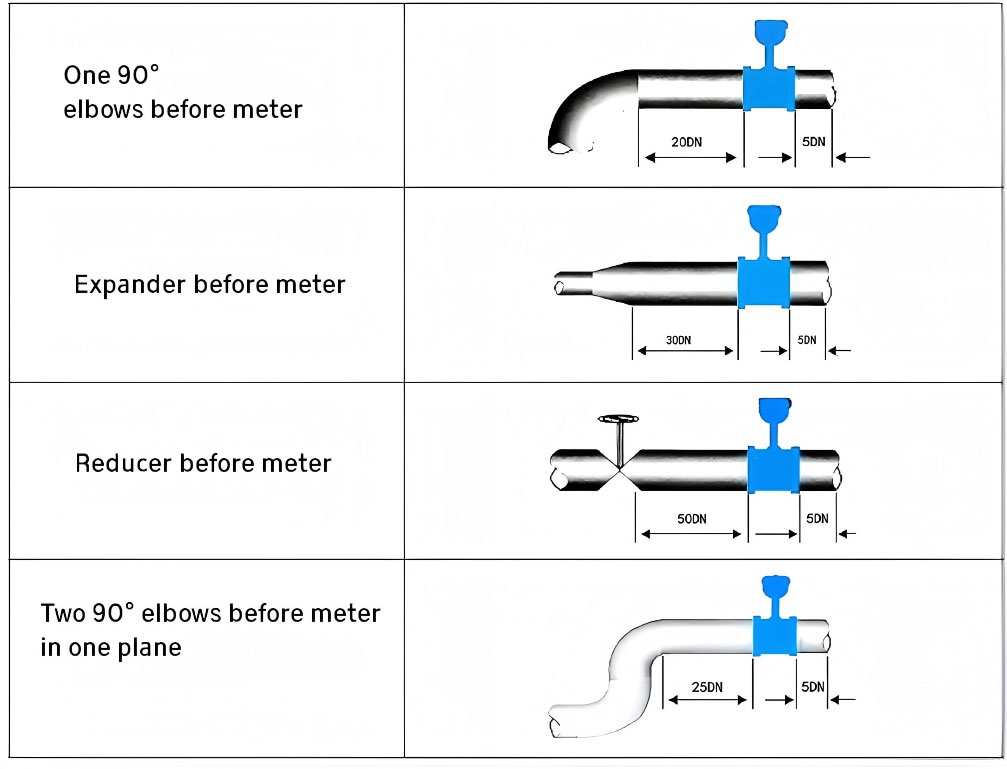
upstream and downstream straight pipe sections of vortex flowmeter

Table 1: The length of the upstream and downstream straight pipe sections of vortex flowmeter

A 90 degree elbow: upstream ≥ 20D, downstream ≥ 5D
Concentric expansion: upstream ≥ 30D, downstream ≥ 5D
Concentric contraction fully open valve: upstream ≥ 50D, downstream ≥ 5D

Two 90 degree elbows on the same plane: upstream ≥ 25D, downstream ≥ 5D
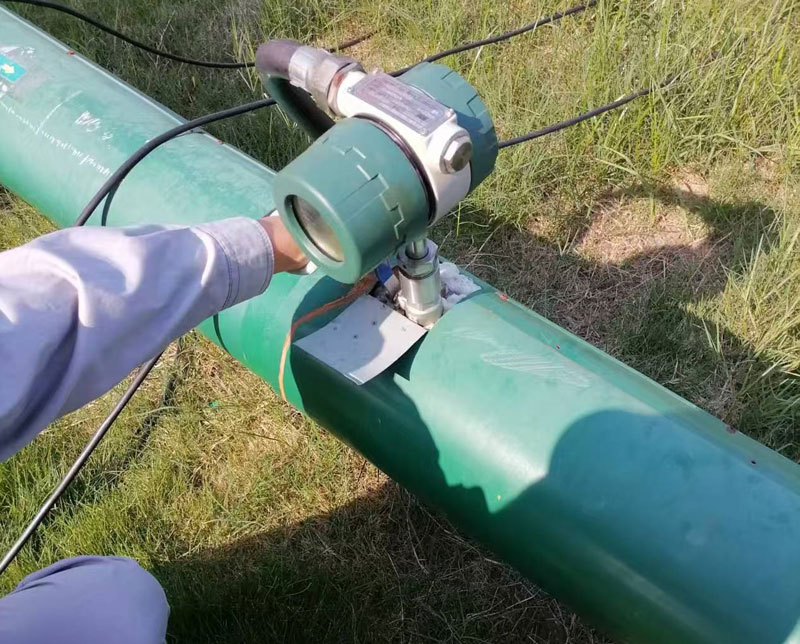
  • Do not place the regulating valve directly upstream of the flowmeter to avoid airflow disturbance affecting the measurement.
  • When the length of the upstream straight pipe section does not meet the requirements of Table 1, a fluid rectifier should be installed upstream to stabilize the flow field.
  • When the pipeline needs to be reduced in diameter, the length of the straight pipe section and gradient pipe should also meet the requirements of Table 1.
  • After pressure and temperature correction, set the pressure and temperature measuring ports according to the positions shown in the diagram to ensure accurate temperature and pressure compensation.
  • Choose a location for installation that minimizes mechanical vibration or impact to the greatest extent possible; If the pipeline vibration is significant, pipeline supports and fastening devices need to be installed.
  • When installing a flowmeter on a high-temperature pipeline, an insulation layer must be added to prevent thermal radiation from affecting electronic components.
  • The flowmeter must be reliably grounded, with a grounding resistance of less than 10 ohms to avoid electrostatic interference.

Installation and Measurement Requirements for Thermal Gas Flow Meter (Compressed Air)

Thermal mass flow meter install for compressed air measurement

Thermal mass flow meter install for compressed air measurement

Installation method selection


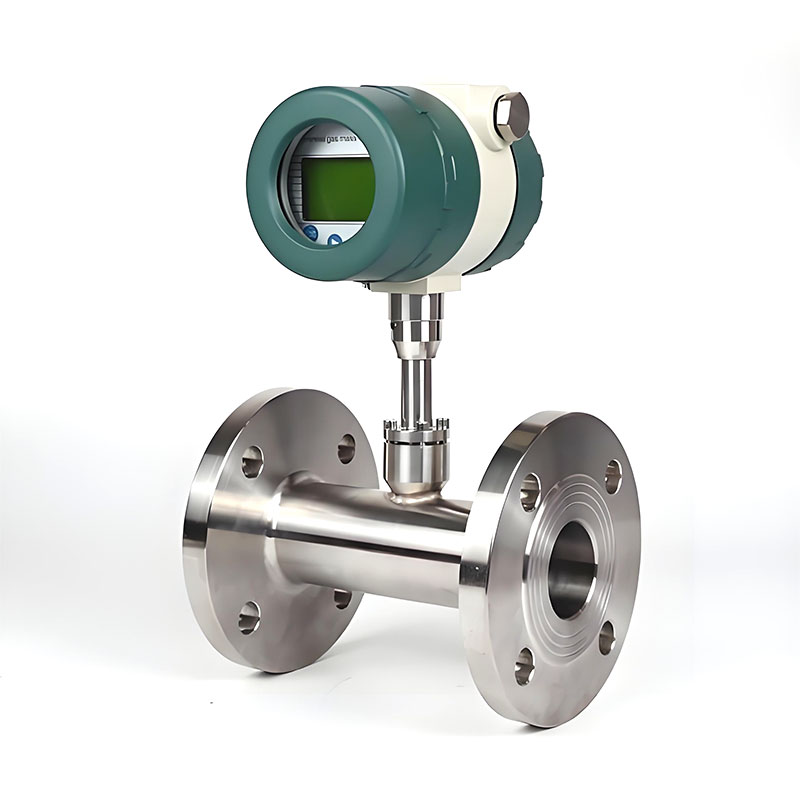
When the nominal diameter of the pipeline is ≤ DN50, pipeline installation is preferred, with optional of compressing fitting, thread or flange connection methods;

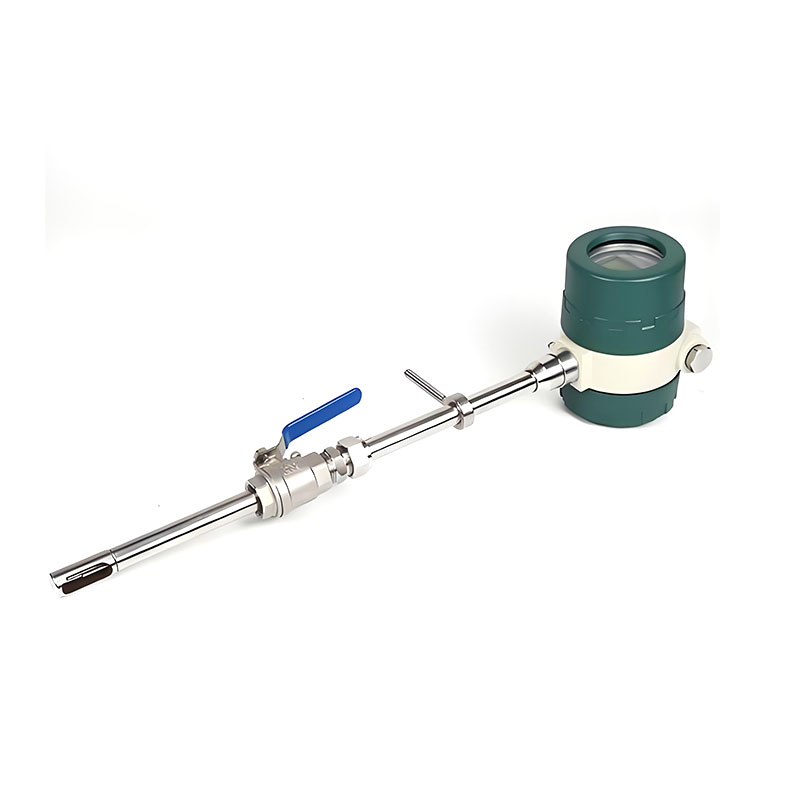
When the nominal diameter of the compressed air pipeline is greater than DN50 (2 inches), insertion type thermal mass flow meter installation is preferred, and threaded or flange connection methods can be selected.

If the on-site pipeline has been installed and no flange has been reserved for installation, insertion installation can be used. When ordering, the on-site working conditions must be clearly explained to the manufacturer.

Insertion installation steps:

  • Open a hole with a diameter of Ø 20 on the pipeline (probe diameter of Ø 19);
  • Weld the welding base provided by the silverinstruments.com to the opening position of the pipeline;
  • Insert the air flowmeter probe into the pipeline, and the insertion depth can be selected at 1/2 of the inner diameter of the pipeline according to the site conditions;
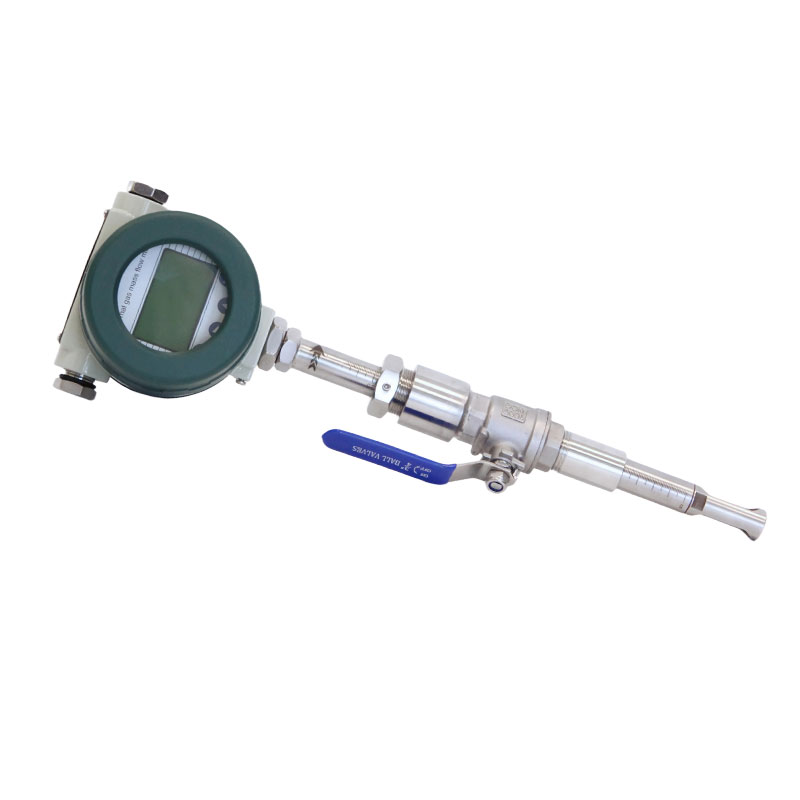
  • For thermal mass flow meter for compressed air with ball valves, screw the ball valves into the welded base to complete the fixation.

Special requirements for compressed air flow measurement

Thermal gas flow meters have clear requirements for the state of compressed air medium to ensure measurement accuracy and instrument life:

Dryness requirement: Compressed air should be thoroughly dried and filtered to prevent liquid water, oil mist, or condensate from entering the flow meter. Liquid media can adhere to the surface of thermal sensors, changing their thermal conductivity characteristics, directly causing measurement distortion, and even permanent damage to the sensors.

Cleanliness requirement: Compressed air should remove solid particles, dust and other impurities to prevent them from depositing on the probe and sensor, affecting heat exchange efficiency, and avoiding local blockage of the pipeline.

Stability of working conditions: Measurement points should be selected as much as possible in pipe sections with small pressure and temperature fluctuations to avoid a decrease in measurement repeatability due to frequent changes in the compressed air state.

Requirements for straight pipe sections

To ensure the accuracy and repeatability of compressed air measurement, the following straight pipe lengths (in multiples of the inner diameter D of the pipeline) need to be met according to the upstream interference type:

Upstream interference type: Upstream straight pipe section A, downstream straight pipe section B

Type of Upstream Disturbance

Upstream Straight Run (A)

Downstream Straight Run (B)

Single 90° elbow or T-junction

15D

5D

Two 90° elbows in the same plane

21D

5D

Two 90° elbows in different planes

40D

10D

Pipe diameter reduction

15D

5D

Pipe diameter expansion

30D

10D

Downstream of a valve

40D

5D

During installation, priority should be given to selecting a location away from sources of interference such as valves, bends, and regulating valves to ensure stable fluid velocity distribution.
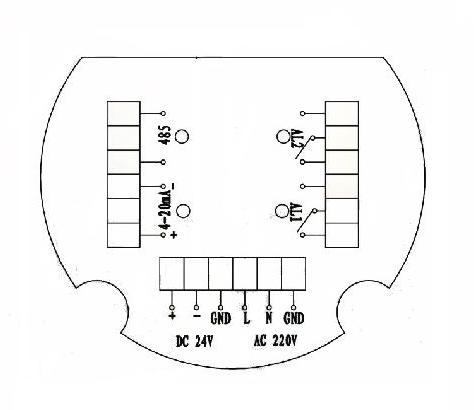
Electrical connection


Integrated display thermal mass flow meter: The air flow transmitter wiring terminals have been exported from the flow meter factory silverinstruments.com, and the instrument housing is isolated from the internal circuit. It can be independently grounded and supports switch power supply.

Integral Display Thermal mass flow meter wiring

SRK-100 series Integral Display Thermal mass flow meter wiring

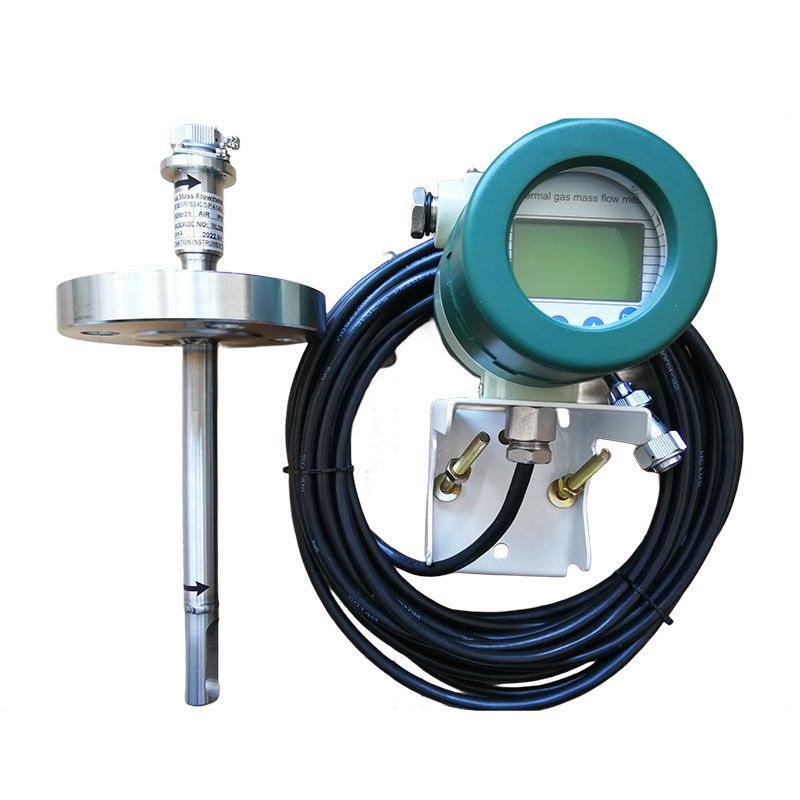
Remote display thermal mass flow meter structure: The sensor and digital display meter are connected using a three wire system and wired according to the marked color:
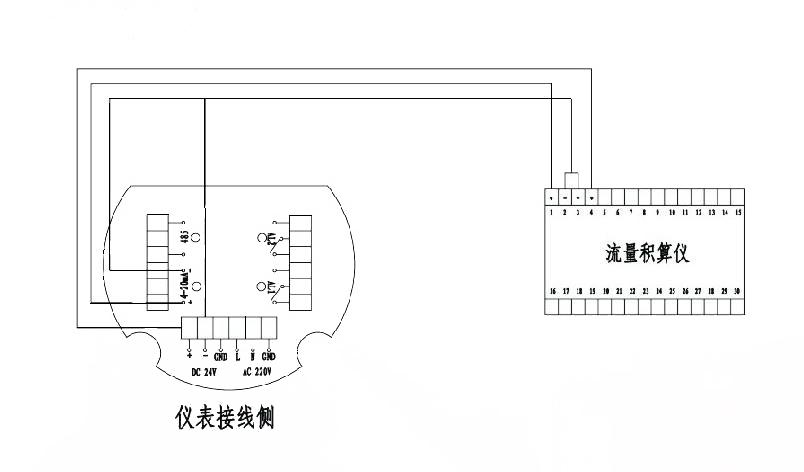
Remote Display Thermal mass flow meter wiring

SRK-100 series Remote Display Thermal mass flow meter wiring

Red → Red: Positive pole of power supply
Black → Black: Negative pole of power supply and negative pole of 4-20mA output
White → White: 4-20mA output positive pole
      Send us an email Email whatsapp WA
      Inquiry Inquiry
      Let's chat on WhatsApp ×
      Hello, welcome to silverinstruments.com, can I help you ?